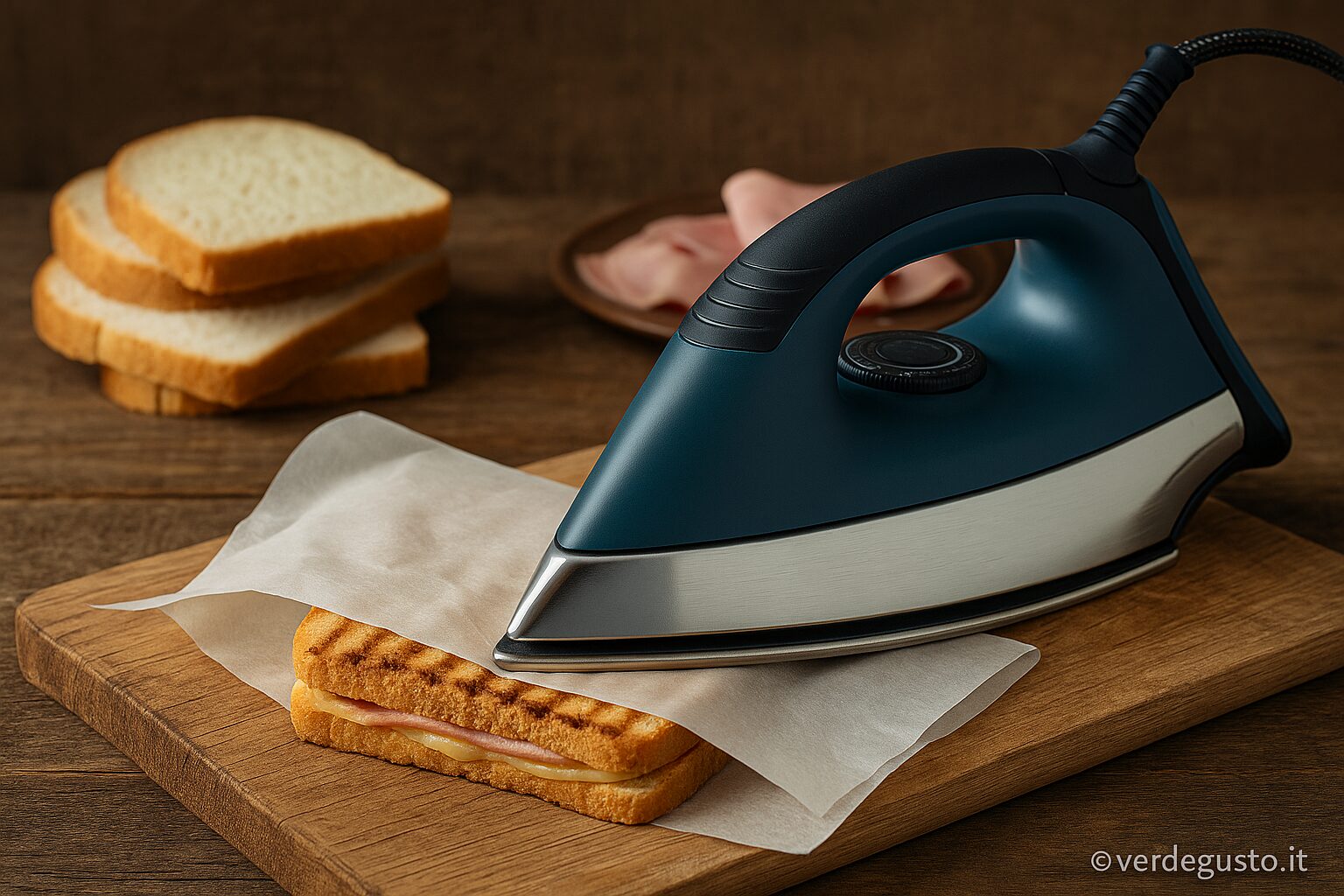

Cooking with the iron: the most absurd (and ingenious) gastronomic curiosity you can try at least once in your life.
Have you ever thought about making a toast directly on the ironing board? Or heating a flatbread under a shirt? This is not just an urban legend: cooking with the iron is an act of inge
A story of camping, dormitories, and rock’n’roll
The image is iconic: broke students, musicians on the road, low-budget travelers improvising hot dishes using an iron and lots of imagination. In the ’80s it was almost a cult in the corridors of American colleges, but Italy also had students away from home who tried to “cook” sandwiches and flatbreads between exams.
And then there are those who still do it today, for fun or necessity: in campsites, hostels, on long business trips where everything is forbidden… except an iron.
What can you really cook with an iron?
Before laughing, know that some foods really lend themselves well to improvised griddle cooking. Here’s a list (tested by many):
- Stuffed toast: sandwich bread, cheese, ham, wrapped in parchment paper and pressed well
- Flatbreads or tortillas: heated on both sides, folded in half with cheese or vegetables
- Slices of bacon: between two sheets of foil, the fat melts and cooks slowly
- Industrial cookies: slightly softened, with a creamy interior (like chocolate sandwich cookies)
- Slices of polenta: compact and already cooked, they can brown nicely
- Scrambled eggs: only with thick foil and a lot of care, an extreme version
How to do it (without burning the house)
A bit of technique and above all common sense are needed.
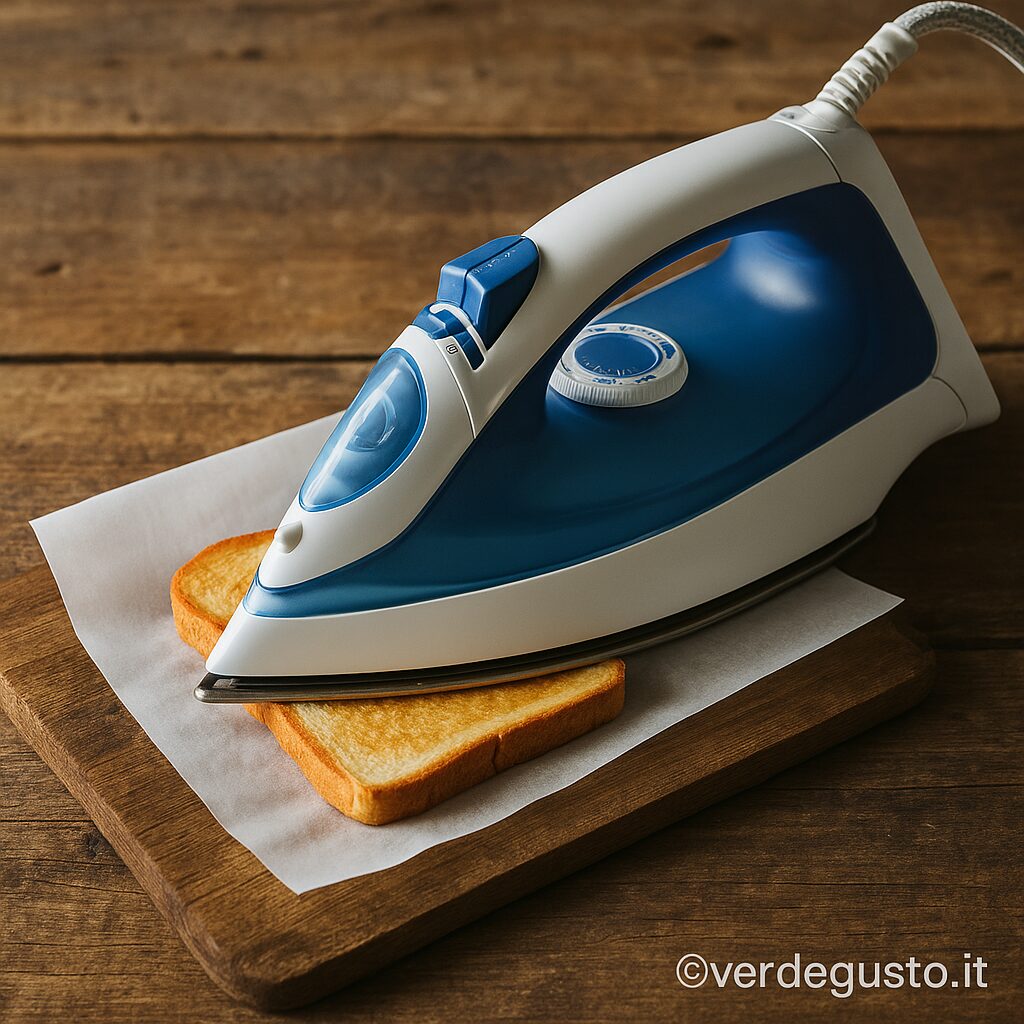
- Use parchment paper or foil to avoid direct contact with the plate
- Avoid foods that are too greasy or liquid (no sauces!)
- Set the temperature to medium, if possible
- Apply constant pressure to promote even cooking
- Place the iron on a stable surface and non-flammable (never on the bed!)
When to do it (and when not to)
It makes sense when:
- You are in a hotel room without a kitchen and you are hungry
- You want to impress friends with an alternative dinner
- You are writing an article on VerdeGusto and want to say you tried it
Don’t do it if:
- You are truly hungry and have a restaurant nearby
- The iron is steam (you risk a disaster)
- You plan to cook raw meat or fried foods (this is not MasterChef)
Why does the idea fascinate us?
Cooking with an iron is not just shenanigans. There is something deeply human in the act of creating a meal where there are no traditional tools. It’s the art of making do, it’s taste design made from nothing, it’s urban survival with a touch of genius.
And above all, it’s a story to tell.
VerdeGusto Tip
Want to try? Start with a simple toast: bread, scamorza cheese, ham, and parchment paper. Place it on a solid base, heat with the iron on both sides pressing lightly. After 5 minutes, you’ll have one of the most bizarre and satisfying experiences of your life. But if you also have a stove… that’s better.
Follow VerdeGusto to discover the most unexpected gastronomic curiosities: because food is also creativity, madness, and ingenuity.