
How to clean the ceramic pan is one of the most frequently asked questions in the kitchen. This type of non-stick coating is delicate and requires specific care: incorrect cleaning can compromise the non-stick quality and reduce its lifespan. In this comprehensive guide, we explore how to remove residues, stains, and crusts without damaging the surface, which natural remedies really work, and which mistakes to avoid.
Why the ceramic pan is different from others
Ceramic pans are appreciated for their non-stick properties and for the absence of traditional coatings such as PTFE. The ceramic coating is made of inorganic materials treated at high temperatures, creating a smooth and durable surface.
However, their lifespan strongly depends on maintenance. Unlike steel or cast iron pans, ceramic does not tolerate well:
- Sudden thermal shocks
- Abrasive sponges
- Harsh detergents
- Prolonged overheating
Proper cleaning is therefore essential to preserve performance over time.
The fundamental rule: never cool abruptly
One of the most common mistakes is placing the still hot pan under cold water. This causes invisible microfractures that, over time, compromise the non-stick property.
The correct procedure is:
- Turn off the heat.
- Let the pan cool completely.
- Proceed with washing only when it is warm.
Correct daily cleaning
After each use, it is important to remove residues before they set.
Procedure:
- Remove any residues with kitchen paper.
- Rinse with warm water.
- Use a soft sponge.
- Apply a little mild detergent.
- Rinse thoroughly.
- Dry immediately with a soft cloth.
Drying prevents the formation of halos and lime residues.
How to clean a burnt ceramic pan
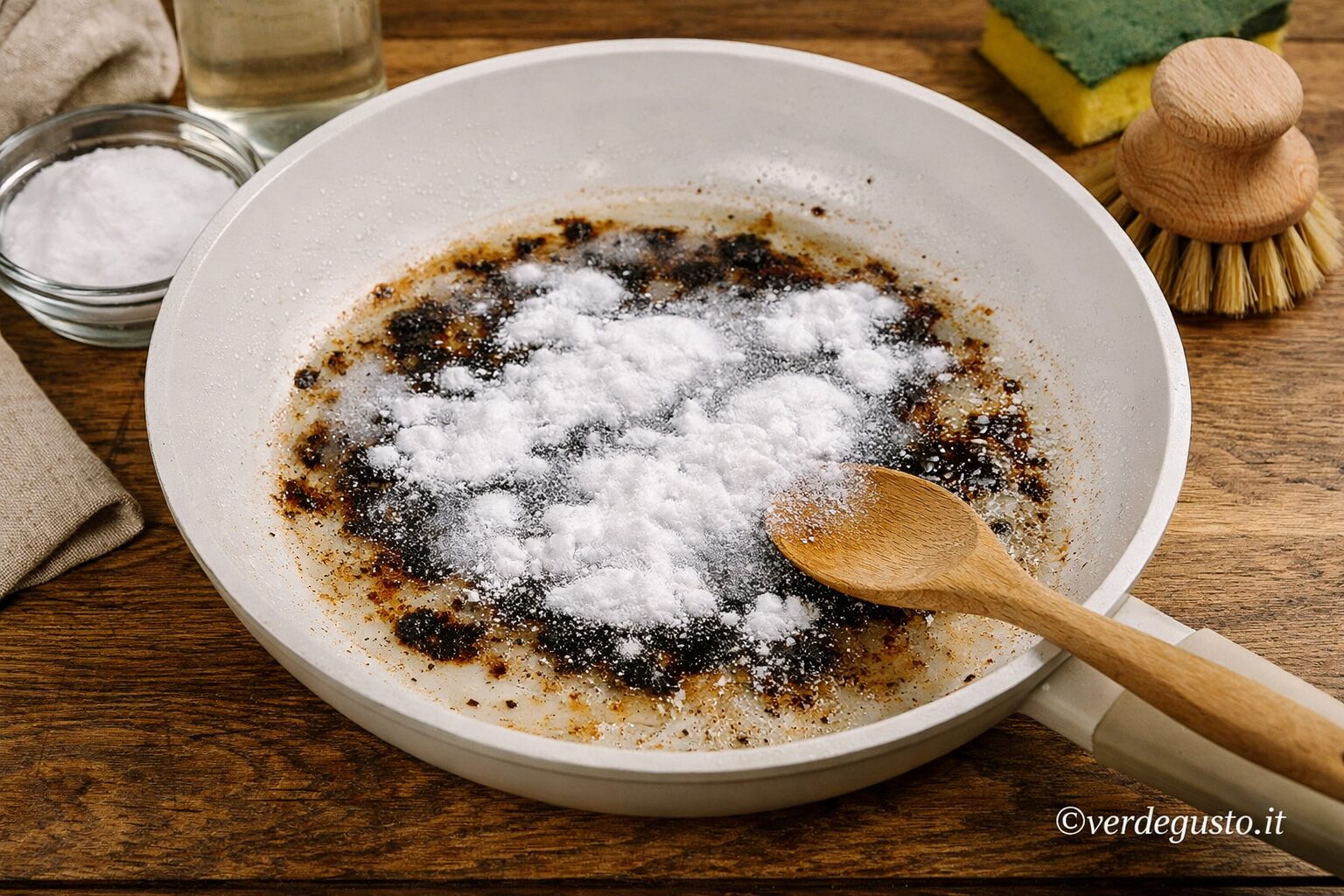
When the bottom has crusts or dark rings, a more targeted intervention is needed.
Method with baking soda
Baking soda is one of the most effective and safe natural remedies.
- Fill the pan with hot water.
- Add 2 tablespoons of baking soda.
- Let it sit for 30–60 minutes.
- Gently rub with a soft sponge.
For tougher stains, you can bring the water to a light boil for 5 minutes before turning it off.
Method with white vinegar
Vinegar effectively dissolves burned-on greasy residues.
- Cover the bottom with water.
- Add half a glass of vinegar.
- Bring to a gentle boil for 3–5 minutes.
- Turn off and let cool.
- Wash as usual.
Method with coarse salt
For light encrustations:
- Sprinkle the bottom with coarse salt.
- Add a few drops of water.
- Rub with a soft cloth.
Never use salt as a dry abrasive.
How to remove black marks from the outer bottom
Often the problem is not inside but outside.
Procedure:
- Mix baking soda and a few drops of water until a paste forms.
- Apply to the outer bottom.
- Let sit for 20 minutes.
- Rub with a non-abrasive sponge.
Can it be put in the dishwasher?
Many manufacturers state dishwasher compatibility, but frequent use reduces the coating’s lifespan. High temperatures and harsh detergents accelerate wear.
To prolong the life of the pan, hand washing is preferable.
Why the pan loses its non-stick property
It’s not always a manufacturing defect. The most common causes are:
- Invisible buildup of carbonized grease
- Overheating
- Use of metal utensils
- Overly aggressive cleaning
A periodic deep cleaning with baking soda can help restore some of the properties.
How to make your ceramic pan last longer
- Use wooden or silicone utensils.
- Do not preheat it empty for long periods.
- Avoid prolonged maximum temperatures.
- Do not stack it without protection.
- Always dry it after washing.
How often to do a deep cleaning
If used frequently, a deep cleaning every 3–4 weeks helps prevent invisible build-ups.
FAQ
How to clean a burnt ceramic pan without damaging it?
Use hot water and baking soda, letting it sit for at least 30 minutes before gently scrubbing.
Does vinegar damage the coating?
No, if used diluted and for a few minutes.
Why is my pan no longer non-stick?
Probably due to the buildup of carbonized fats or repeated overheating.
Conclusion
Understanding how to clean your ceramic pan correctly means preserving its quality over time. With small daily care tips and effective natural remedies, it’s possible to keep it performing for years, avoiding premature replacements and unnecessary waste.