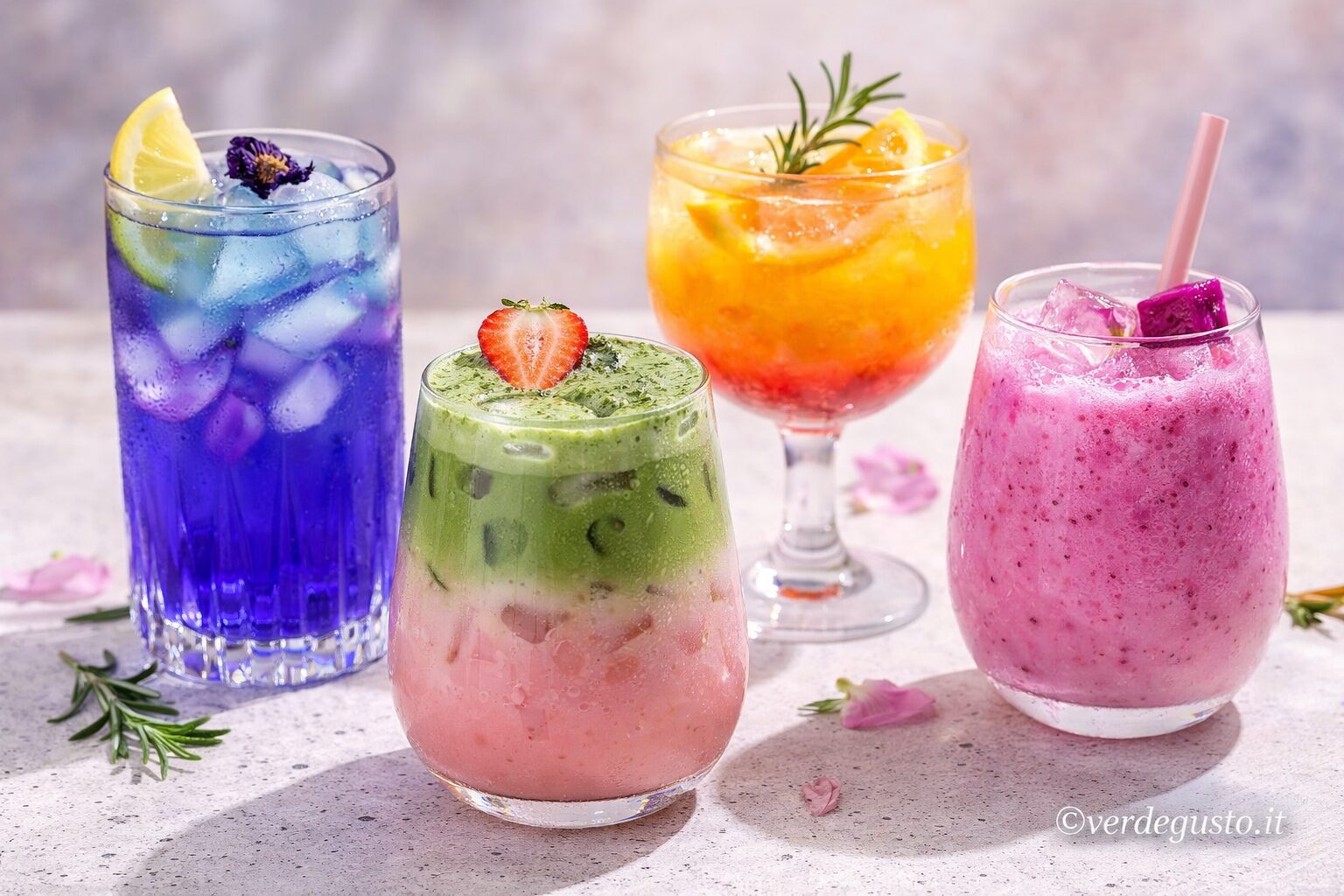

The color of beverages is not just an aesthetic matter. It influences taste perception, emotions, and even purchasing decisions. Even before tasting, our brain forms expectations based on the liquid’s hue. In this in-depth analysis, we explore the psychology of color in beverages, the neuroscientific bases of multisensory perception, the global success of aesthetic drinks, and why today we drink first with our eyes and then with our palate.
The brain tastes before the eyes
Taste perception is a complex multisensory process. It’s not just about the tongue. Sight, smell, memory, cultural expectations, and even the environmental context collaborate to create the final experience.
When we look at a beverage, our brain automatically activates interpretative schemas built over time:
- Red suggests sweetness, red fruits, ripeness.
- Green recalls freshness, acidity, herbs, or lime.
- Yellow evokes citrus, energy, brightness.
- Brown is associated with roasting, cocoa, coffee.
- Blue generates surprise and curiosity because it’s rare in nature.
These associations are not random. They derive from repeated experiences, taste memory, and culturally layered constructions over time. Even before the beverage touches the lips, the brain has already “decided” what to expect.
Neuroscience and color perception in beverages
Numerous neuroscience studies demonstrate that color modifies taste interpretation. The phenomenon is known as crossmodal correspondence, meaning the correspondence between different sensory stimuli. If a clear liquid is artificially colored red, many people will describe it as sweeter. If the same liquid turns green, it will be perceived as more acidic or herbal. The chemical composition does not change. The expectation does. And expectation alters the real experience. This means color is not a decorative element: it is an integral part of the sensory construction of taste.
Experiments demonstrating the influence of color
In various controlled tests, identical beverages served in different colors were judged differently for intensity, sweetness, and even freshness. Some recurring results:
- Darker beverages are perceived as more intense.
- Pastel shades convey lightness.
- Pink increases the perception of sweetness.
- Blue alters expectations because it is not associated with common natural flavors.
Color, therefore, is an emotional accelerator.
The rise of aesthetic drinks
Beverages made to be photographed
With the explosion of Instagram, TikTok, and visual content, aesthetics have become central in the beverage world. The drink must not only taste good: it must be photographable, shareable, memorable. Pink milk, blue matcha, layered cocktails, rainbow mocktails, purple cappuccinos: the visual effect becomes part of the experience. The drink is no longer just a product but a narrative object.
The role of social media in color diffusion
Social media have amplified the chromatic value of beverages. A visually striking drink generates:
- More sharing.
- Longer viewing time.
- Higher chances to become a trend.
- Greater perception of innovation.
Color becomes a lever for organic marketing.
Natural ingredients that change color
The success of butterfly pea, which shifts from blue to purple with the addition of lemon, is a perfect example of natural spectacle. Today many aesthetic drinks use natural pigments:
- Blue spirulina for intense and vibrant hues.
- Beetroot for pink and fuchsia.
- Turmeric for bright yellows.
- Matcha for bright greens.
- Activated charcoal for deep blacks.
The contemporary challenge is to combine visual spectacle with naturalness.
Color and premium perception
Drinks with carefully studied colors, harmonious and coherent with a strong visual identity, are often perceived as more innovative and premium. A layered drink with sharp color transitions communicates craftsmanship. A pastel latte suggests delicacy. A monochromatic mocktail communicates contemporary minimalism. Color design becomes brand language.
The role of culture
Color perception is not universal. It is mediated by culture. In some Asian traditions, green is associated with health and purity. In the West, red is linked to energy and passion. Blue, in the Western food world, remains less common and therefore more surprising. Beverage companies consider these variables when designing products for different markets.
Color, memory, and emotion
Color also triggers memories. An orange drink can evoke childhood and orange juice. A deep red can recall summer and ripe fruits. This emotional dimension makes color a very powerful tool in building the food experience.
The risk of artificiality
While artificial color was once a symbol of modernity, today consumers are more attentive. The demand for transparency and natural ingredients is growing. A color that is too bright can generate suspicion. A natural but vibrant color communicates authenticity and innovation. The current trend is clear: spectacle yes, but credible.
The future of beverage design
The drink of the future will be:
- Visually powerful.
- Naturally colored.
- Experiential.
- Shareable.
- Coherent with a narrative identity.
It’s not just about taste. It’s about the complete experience.
FAQ
Does color really influence taste?
Yes. The brain creates sensory expectations based on the observed hue, altering the real perception of flavor.
Why is blue so used in modern drinks?
Because it is rare in nature and creates surprise. On social media it attracts attention and curiosity.
Are aesthetic drinks just a trend?
More than a trend, they represent the evolution of the food experience in a visual and narrative key.
Are natural colors as effective as artificial ones?
Yes, thanks to plant-based ingredients that allow intense shades without compromising the perception of authenticity.
Conclusion
The color of beverages is not just aesthetics: it is psychology, neuroscience, culture, and marketing. In an era dominated by images, the visual experience precedes the gustatory one. Today we choose what to drink with our eyes even before our palate. And in that first glance, half the experience is already at play.