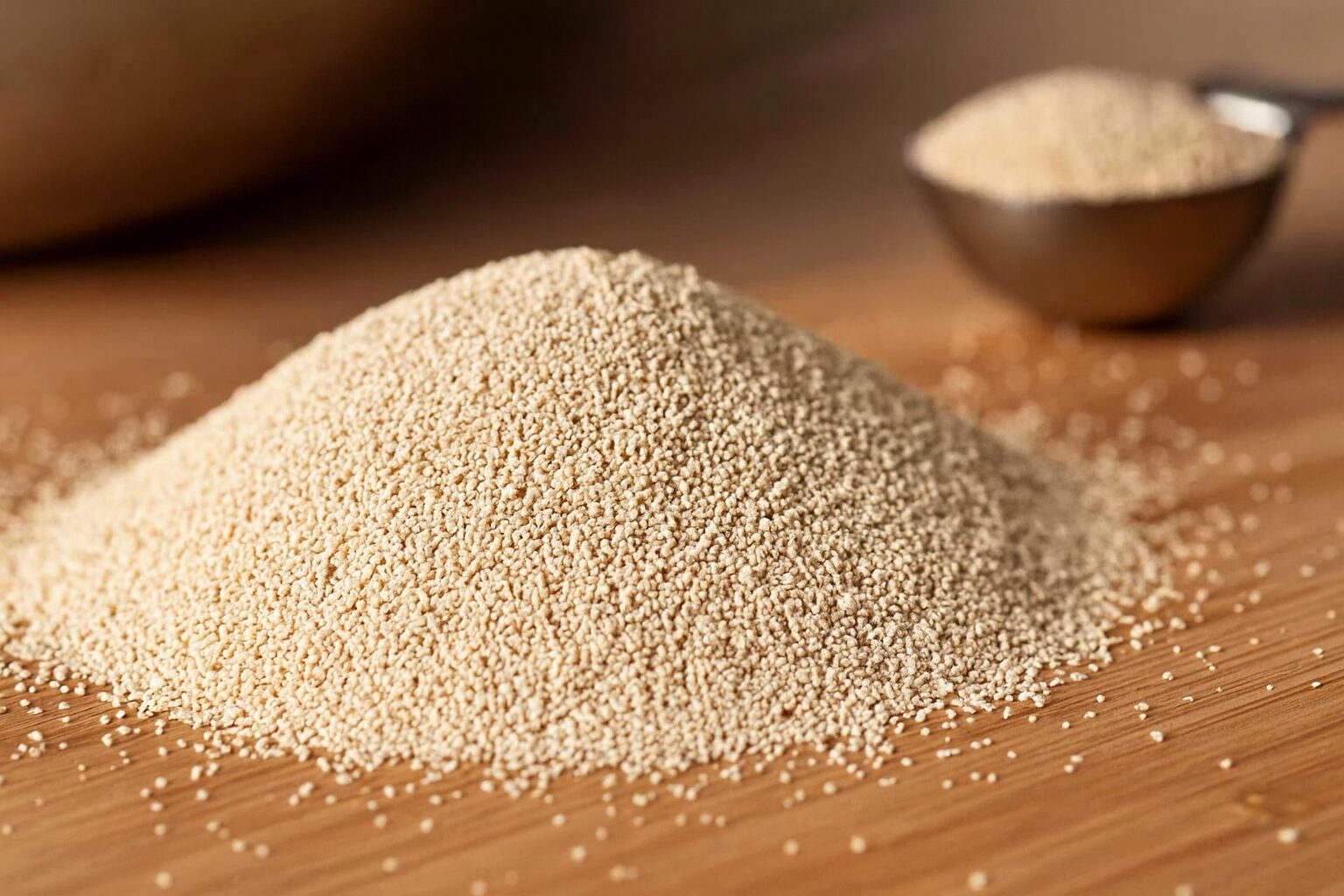
Talking about beer without mentioning yeast would be impossible. If water, malt, and hops are the visible ingredients, yeast works behind the scenes transforming sugars into alcohol and creating that extraordinary variety of aromas that makes each beer unique. But what yeasts are used in brewing and what distinguishes them? In this detailed article, we explore all types of yeast, from the most traditional to the most innovative, with practical examples and curiosities. Before diving into the details, if you want an overview of the styles you can read Getting to know beers: from lager to ale, a complete guide.
Top-fermenting yeasts: Saccharomyces cerevisiae
The Saccharomyces cerevisiae is the historic yeast of brewing, protagonist of Ale. It works at temperatures between 15 and 24 °C and tends to rise to the surface during fermentation, hence the name top-fermenting yeast. The result are complex, aromatic beers rich in fruity and spicy notes. Examples of Ale beers include IPA, Stout, Porter, Pale Ale, and Belgian Ale. In these styles, yeast is critical: the banana notes in German Weizens or the spicy ones in Belgian Saisons are directly linked to the yeast’s metabolism.
The strength of this strain is its ability to express a wide aromatic spectrum, from tropical fruit to clove, making each craft production unique.

Bottom-fermenting yeasts: Saccharomyces pastorianus
Discovered relatively recently, Saccharomyces pastorianus is the yeast of Lager. It works at low temperatures (7–13 °C) and acts slowly at the bottom of the fermenter. Its metabolism produces cleaner, fresher beers with less intrusive aromas compared to Ales. It is the most widespread yeast worldwide since Lagers represent the majority of global production.
From Pilsners to Helles, and even Bocks, this yeast is synonymous with balance and drinkability. Its spread is also linked to technological advances, such as refrigeration, which made it possible to control fermentation at low temperatures.
Anyone wanting to learn how to recognize quality beer can read Craft Beer: how to recognize it in a few steps.

Wild yeasts: the allure of spontaneous fermentations
Not all yeasts are inoculated by the brewer. In some brewing traditions, like the Belgian one, spontaneous fermentation is used: the wort is left exposed to the air, allowing natural yeasts and bacteria to start the fermentative process.
The most famous are the Brettanomyces, which give rustic, earthy notes, sometimes described as “funky.” Along with them, lactic and acetic bacteria come into play, contributing to developing acidity and complexity. The Lambic and the Gueuze are iconic examples of this method.
These beers require years of barrel aging and offer the taster an unrepeatable sensory journey. They are the opposite of standardization: each vintage and each barrel has a different personality.
Hybrid and experimental yeasts
The craft beer revolution has opened new paths. Many breweries are selecting local strains, rediscovering forgotten varieties, or creating hybrids to expand the aromatic range. Some labs work on non-Saccharomyces yeasts, capable of imparting novel notes of fruit, flowers, or controlled acidity.
These experiments reflect the desire to personalize the product and root it in a territory. It is not uncommon for a brewery to use native yeasts isolated from fruits, flowers, or even from the wood of the barrels.
The link between yeast and container
The choice of the container in which to serve a beer is never accidental. The work of the yeast, with its production of aromas and carbonation, finds the right enhancement only in glasses designed to exalt every character. If you’re interested in learning more, I recommend Beer containers: discover the ideal choice to enjoy the perfect beer.

A story that goes far back
The relationship between man and yeast is very ancient. Already in the first Sumerian and Babylonian beers, fermentation was spontaneous. Only in modern times, thanks to Louis Pasteur, was the role of yeast as a living organism understood. This marked a revolution in brewing, allowing to select specific strains and reproduce the same aromatic profiles in a controlled manner.
If you want to discover the origins of beer and curiosities related to its invention, read Who invented beer? History, origins, and curiosities.
Conclusion
From the top fermentation of Ales to the bottom fermentation of Lagers, through the wild Brettanomyces and the new experimental yeasts, the world of beer is a universe of invisible but fundamental microorganisms. Every brewer’s choice is a piece that completely changes the result in the glass. The next time you sip a beer, remember you are not drinking just water, malt, and hops, but also the fruit of the tireless work of yeast, the true director of taste.
{
“@context”: “https://schema.org”,
“@type”: “FAQPage”,
“mainEntity”: [
{
“@type”: “Question”,
“name”: “Quali sono i principali lieviti utilizzati nella birra?”,
“acceptedAnswer”: {
“@type”: “Answer”,
“text”: “I lieviti più comuni sono Saccharomyces cerevisiae, usato per le birre ad alta fermentazione come le Ale, e Saccharomyces pastorianus, utilizzato per le birre a bassa fermentazione come le Lager. Esistono anche lieviti spontanei, come i Brettanomyces, impiegati nelle Lambic e in altre birre selvagge.”
}
},
{
“@type”: “Question”,
“name”: “Che differenza c’è tra alta e bassa fermentazione?”,
“acceptedAnswer”: {
“@type”: “Answer”,
“text”: “L’alta fermentazione avviene a temperature più elevate (15–24 °C) con lieviti che salgono in superficie, producendo birre aromatiche e complesse. La bassa fermentazione avviene a temperature più basse (7–13 °C) con lieviti che lavorano sul fondo, dando vita a birre fresche, pulite e dal gusto delicato.”
}
},
{
“@type”: “Question”,
“name”: “Cosa sono i Brettanomyces nelle birre?”,
“acceptedAnswer”: {
“@type”: “Answer”,
“text”: “I Brettanomyces sono lieviti selvaggi utilizzati soprattutto nelle birre belghe a fermentazione spontanea. Conferiscono note rustiche, terrose e fruttate, tipiche di Lambic e Gueuze, rendendo la birra complessa e unica.”
}
},
{
“@type”: “Question”,
“name”: “Si usano ancora fermentazioni spontanee nella birra?”,
“acceptedAnswer”: {
“@type”: “Answer”,
“text”: “Sì, alcuni birrifici tradizionali e artigianali utilizzano ancora la fermentazione spontanea. Il mosto viene lasciato esposto all’aria per catturare lieviti e batteri naturali. Questo metodo è tipico delle birre belghe Lambic e Gueuze, ma è stato ripreso anche da birrifici moderni in tutto il mondo.”
}
},
{
“@type”: “Question”,
“name”: “Che ruolo hanno i lieviti sperimentali nelle birre artigianali?”,
“acceptedAnswer”: {
“@type”: “Answer”,
“text”: “I lieviti sperimentali o non convenzionali vengono utilizzati dai birrifici artigianali per creare nuove sfumature aromatiche. Possono derivare da ceppi autoctoni, da incroci ibridi o da microrganismi non-Saccharomyces, ampliando la creatività e l’identità territoriale della birra.”
}
}
]
}