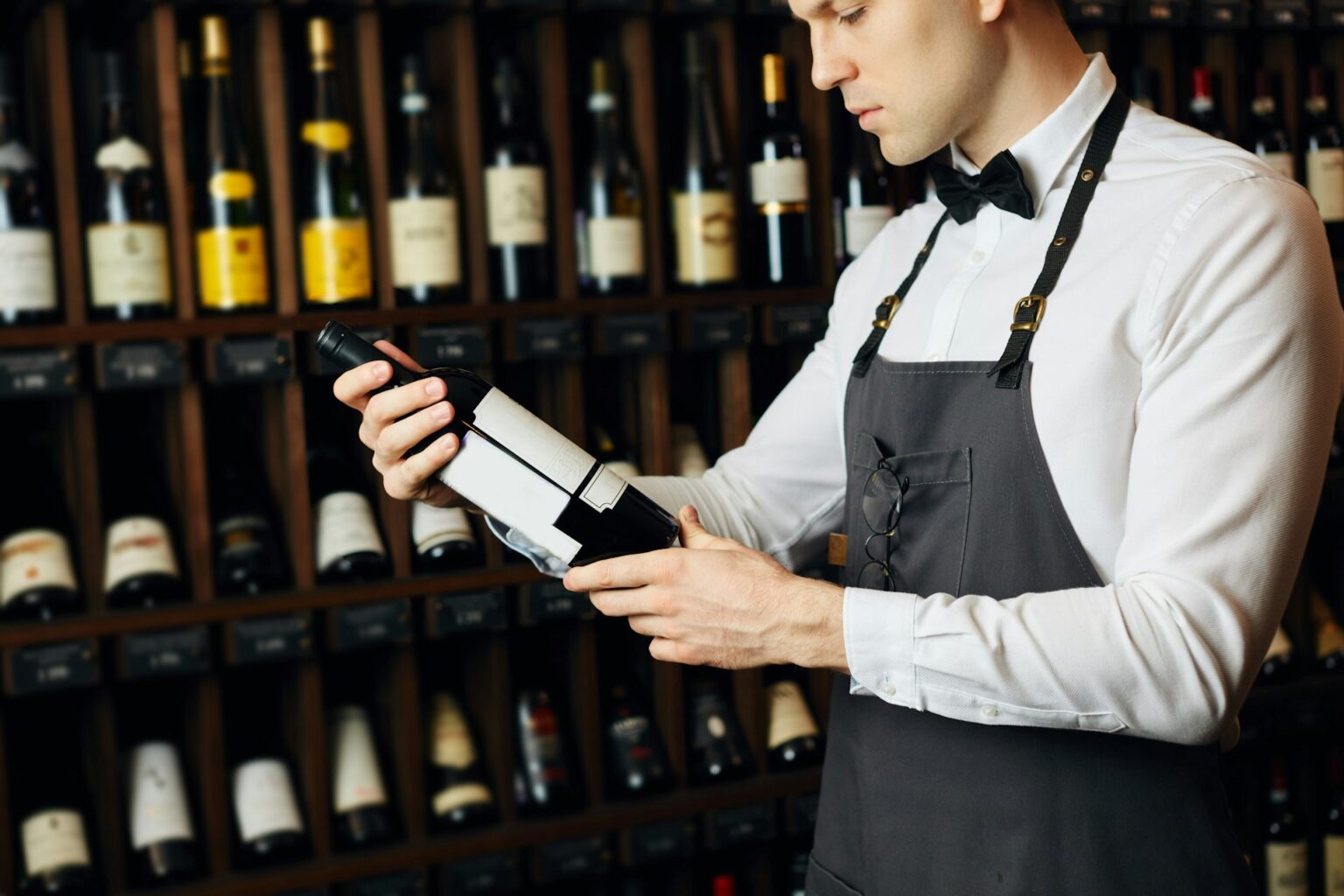

The wine label contains more information than it seems. Knowing how to read it helps you recognize quality, origin, and authenticity. In this guide, we explain how to interpret the abbreviations, distinguish the designations, and choose each bottle more consciously, from the supermarket to the cellar.
What a wine label tells (and does not tell)
The label is the wine’s identity card, but also its first story. When we grab a bottle from the shelves, the label is the first contact with what we are about to taste. Some data are legally mandatory, others are communication tools from the producer. Reading it means knowing how to distinguish between what is a legal declaration and what is an enological promise.
Mandatory elements according to EU regulations
European regulations require certain fundamental information to be present on the wine label:
- Sales denomination (e.g., “red wine”, “quality sparkling wine”)
- Alcohol content (% vol)
- Nominal volume (e.g., 0.75 L)
- Name and address of the bottler
- Country of origin
- Indication of allergens present (e.g., “contains sulfites”)
- Production batch
These elements represent the “technical” part of the label, but they are also the starting point to understand the seriousness and traceability of the product.
Designations: DOC, DOCG, IGT
One of the most relevant aspects is the designation of origin. In Italy, there are three main categories:
- DOCG – Controlled and Guaranteed Designation of Origin: the highest classification. It involves strict regulations, quality controls, and territorial recognizability.
- DOC – Controlled Designation of Origin: protects the origin and production method of a wine linked to a specific geographical area.
- IGT – Typical Geographical Indication: more flexible, allows experimentation but still guarantees territorial traceability.
These abbreviations help consumers navigate the complex world of Italian wine. They do not always indicate absolute quality but are indicators of control and consistency with the territory.
Other important labels
Besides the mandatory elements, we often find additional information:
- Vintage: indicates the year of harvest. Not all wines display it: for example, many sparkling wines are “non-vintage.”
- Grape variety or blend : important to understand which grapes the wine is made from. In Italy, it is often indicated only on IGT or varietal wines.
- Production area : more detailed than just “produced in Italy.” For example: “produced and bottled in Castiglione Falletto – CN.”
- Production method : for sparkling wines, for example, “traditional method” or “Charmat” may be specified.
These labels make the bottle more transparent and tell the producer’s philosophy.
Who is the bottler?
A key detail often overlooked is the indication of the bottler. Seeing “bottled at origin by…” means the wine was produced and bottled in the same place. If instead you see “bottled by…” followed by an acronym, it may be a third-party bottler. This information is useful to understand whether the winery works with its own grapes or buys musts and wines from other producers.
How to read the back label
Not all bottles have it, but the back label often provides additional information on:
- Organoleptic characteristics (color, aromas, taste)
- Recommended pairings
- Serving temperature
- Company or environmental notes (organic, sustainable, zero added sulfites)
This section, although not binding, can help less experienced people in choosing and consuming.
Italian labels vs foreign labels
In Italian wines, a technical and regulated approach prevails. In many foreign countries instead, the label is a powerful communication tool. Think of French wines, where the area is often more important than the grape variety; or American wines, where brands dominate. Learning to read these differences also helps to better travel in the glass.
Producer communication
A label can tell a lot also through graphics: style, colors, font choice. A bottle with a minimalist label and an evocative name often targets an expert audience. Conversely, a more didactic graphic appeals to a less experienced but attentive consumer. This is also a language to learn to decode.
Tricks to read between the lines
- If the vintage is missing, the wine is often meant to be consumed young.
- If the production area is very broad (“Italy”), the wine is probably made from grapes coming from different regions.
- If the bottler is a different party than the producer, you are dealing with a “commercial” wine, not necessarily of low quality, but less tied to the territory.
Did you know that…?
- The label “contains sulfites” is mandatory above 10 mg/l, even in natural wines.
- Some producers also indicate the number of bottles produced to reinforce the idea of craftsmanship.
- There is no obligation to indicate the grape variety in DOC or DOCG wines: it depends on the regulations.
- Environmental symbols (organic, vegan, carbon neutral) are not standardized but increasingly present.
Conclusion: read the label to choose consciously
Learning to read the wine label is like learning a language: at first it seems complicated, then everything makes sense. Behind every abbreviation, every area, every bottle, there is a world of work, culture, and territory. Being able to decipher this information allows us to make more informed choices, appreciate the work of serious producers, and above all enjoy every sip better. The next time you pick up a bottle, pause for a moment: the label is already speaking to you.
Summary table: how to read the wine label
| Element | Meaning |
|---|---|
| Sales denomination | Type of wine (e.g., red wine, quality sparkling wine) |
| Alcohol content | Percentage of alcohol present (e.g., 13% vol) |
| Nominal volume | Quantity contained in the bottle (e.g., 0.75 L) |
| Name of the bottler | Who bottled the wine, useful to understand the origin |
| Country of origin | State where the wine was produced |
| Allergens | Presence of sulfites or other substances to be declared |
| Denomination (DOC, DOCG, IGT) | Classification of origin and quality of the wine |
| Vintage | Harvest year, indicator of the wine’s evolution |
| Grape variety or blend | Type(s) of grapes used |
| Production method | Technique used (e.g., traditional method, Charmat) |