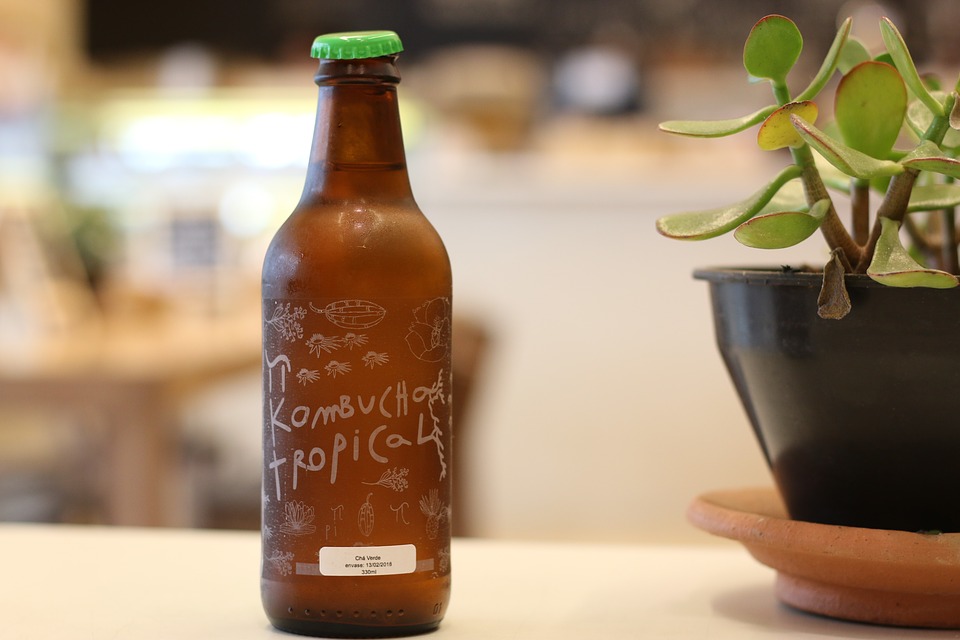
Kombucha is produced by fermenting black or green tea leaves. The fermentation occurs by adding sugar and a substance called SCOBY, which stands for “Symbiotic Culture of Bacteria and Yeast.” Like apple cider vinegar, SCOBY is also called a “mother” because the floating milky organisms give rise to, or more appropriately in biochemical terms, act as a catalyst in the fermentation process. Real Kombucha begins with prepared tea, which is then combined with a bacterial culture called Symbiotic Colony of Bacteria and Yeast, or SCOBY. The mixture sits for two weeks or more, creating a sparkling fermented beverage. Many choose to add flavorings such as herbs, citrus, or fruit juices.
Thanks to the fermentation process, kombucha contains traces of alcohol. Low-alcohol kombucha takes about two weeks to ferment before it is ready to drink.
Kombucha is believed to originate from China and Japan and is thought to have numerous benefits, such as improving gut health and immunity and fighting inflammation. The main strength of Kombucha is that, as a fermented product, it contains gut-friendly microorganisms that contribute to a healthy microbiome.
Its properties probiotic make it excellent for the very important microbiome (fancy words for “your gut”), which helps with many health issues. However, while major brands are creating their own beverages, the shelves are becoming a bit crowded.
Kombucha properties and benefits
Kombucha essentially has three capacities: antioxidant, antibacterial e antifungal. In addition, this beverage produces gluconic acid, a substance also produced by the liver (also present in foods like honey, wine, and fruit), which is an important cleansing agent for the body against various harmful substances. As with other fermented foods, the benefits of Kombucha are linked to the presence of probiotic substances that nourish and diversify the bacterial flora. Described as a cure-all, the truth is that, like every fermented food, it may or may not agree with our intestinal flora: therefore, some will find possible benefits in consuming Kombucha while others may not tolerate it.
The tradition of Kombucha in the world
Kombucha is a beverage widely used by Asian populations and those of Eastern Europe, particularly Russia. There are various, sometimes conflicting, theories about its origins, but it is fairly certain that it was invented in Asia. Some sources claim it was invented in 220 B.C. in China and was called the “tea of immortality.” Used for millennia as a food-medicine by Asian populations, it only appeared in Europe and America in the last century. Some reports indicate that in Germany, for example, it was used to enhance athletes’ physical performance during the Cold War, and it is still known among the German population for its general health benefits.
Kombucha in Italy
In Italy it is not yet very widespread, however, the first Kombucha bar opened in December 2018, where preparations based on SCOBY are offered. On the other hand, one cannot ignore that the online debate has also started in Italy, where more and more people are attracted by the properties of this tea and want to try it.
Kombucha helps to lose weight? Kombucha appears to have some positive effects on body shape, as it helps with weight loss (a few kilos), especially around the waist. Among the properties of Kombucha, one seems to be accelerating metabolism, thanks to its probiotic activity within the intestinal tract (thus reducing weight). However, there are not yet enough official and substantial studies to confirm its effectiveness.
Kombucha: contraindications and side effects
Reports of adverse effects related to Kombucha consumption are fortunately quite rare and not enough to consider it dangerous, especially because they are side effects not definitely linked to Kombucha, also due to the few serious studies carried out.
In any case, the serious main issues are caused by the fermentation process. If the procedure is done correctly, no worries are needed, but if necessary controls are lacking, especially if homemade, unpleasant contraindications may occur.
It is important to remember that Kombucha contains sugar, caffeine (present even in reduced amounts if decaffeinated tea is used) and a very low percentage of alcohol that theoretically should be below 0.5%. However, often a beverage with a higher alcohol level is obtained, especially if subjected to a second fermentation. Therefore, it is not recommended for immunocompromised individuals, pregnant women, and children under 4 years old.