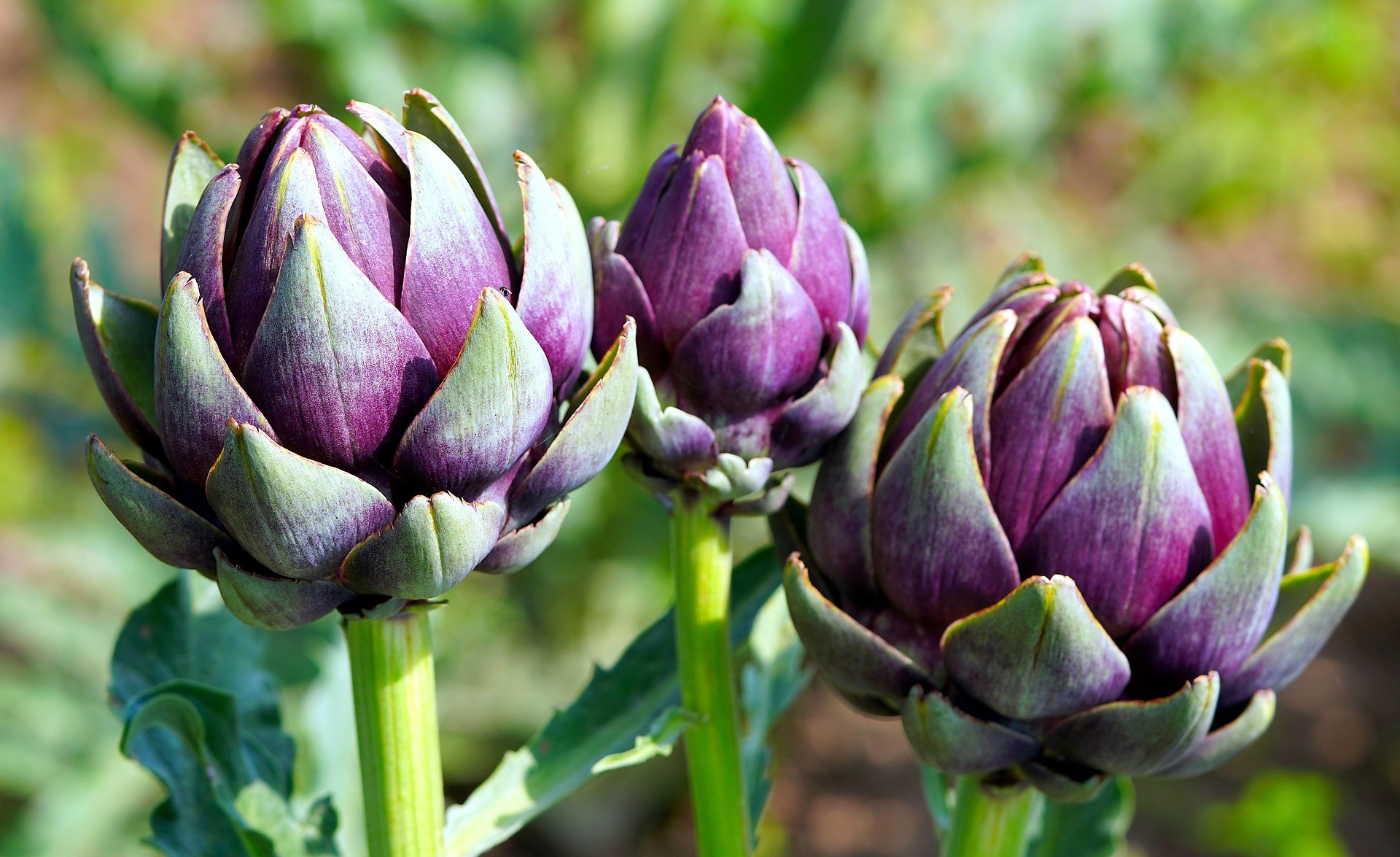
The artichoke has origins in the Mediterranean basin. It is a member of the thistle family and evolved from these plants. It is the part of the plant’s bud before it blooms, which is edible. It consists of triangular scales around the central choke known as the heart, and only the lower half or fleshy part of each scale can be eaten, but the heart is the most delicious part of the artichoke. The immature bud can be eaten whole. They are harvested just before the bud opens when the petals are still tightly closed.
Since the times of the Greeks and Romans, this plant was also used for medicinal purposes due to its high fiber content and antioxidant properties. French and Spanish immigrants brought the artichoke to America in the 19th century, while Italians made it popular in the United States.
Artichokes are rich in nutrients to the point of being considered a superfood. They have a high fiber content and are rich in antioxidants, vitamin C, and folic acid. They also contain B-complex vitamins and vitamin K. Artichokes are rich in minerals including copper, potassium, calcium, iron, manganese, and phosphorus, granting them healing qualities that reduce the incidence of many diseases and help maintain the body healthy.
- Artichokes are a great tool to fight cancer thanks to their high content of antioxidants and phytonutrients such as quercetin, rutin, gallic acid, and cynarin. These elements effectively absorb and eliminate free radicals that cause cellular mutation resulting in malignant tumors.
- Artichokes are a factor in cardiovascular disease control because they contain cynarin which is an element that balances cholesterol levels in the body. The bud also plays a role in reducing inflammation that relaxes the circulatory system and improves blood flow. It not only reduces the risk of coronary diseases but is also helpful in reducing incidents of metabolic disorders.
- Artichokes support a healthy liver function thanks to their high content of cynarin which stimulates bile production. Bile is essential in breaking down fatty acids for proper absorption. Artichokes also contain silymarin, a potent antioxidant flavonoid that contributes to liver health.
- Artichokes help to maintain a normal digestive system, healthy and in excellent working condition. They are directly helpful in producing gut flora, which is also essential in food digestion and reduces the risk of digestive diseases. Artichokes can help relieve symptoms of irritable bowel syndrome, constipation, diarrhea, bloating, and other digestive problems. The digestive system is also a factor for a healthy immune system and artichokes help strengthen the immune system.
- The high fiber content in artichokes is a factor in diabetes control. Fiber acts as a control that balances blood sugar levels eliminating spikes and drops in insulin flow. It allows glucose to be absorbed slowly into the bloodstream because it is a substance that does not require insulin for digestion.
Other health benefits include promoting healthy skin, strengthening the skeletal system, increasing iron levels, which prevents anemia and weight control.
How to cook them
When purchasing artichokes, look for petals that are tightly closed with a fresh green color. To be sure the bud is fresh, press the petals together, they should emit a squeaky sound. Artichokes can be prepared boiled, baked, or steamed which is considered the best method because it preserves their nutritional qualities. To cook them, remove the tips at the ends and strip the bud of its petals. Cover with olive oil and seasoning and cook for forty-five minutes to an hour; to use the boiling method, place the bud in boiling water and simmer for thirty minutes.