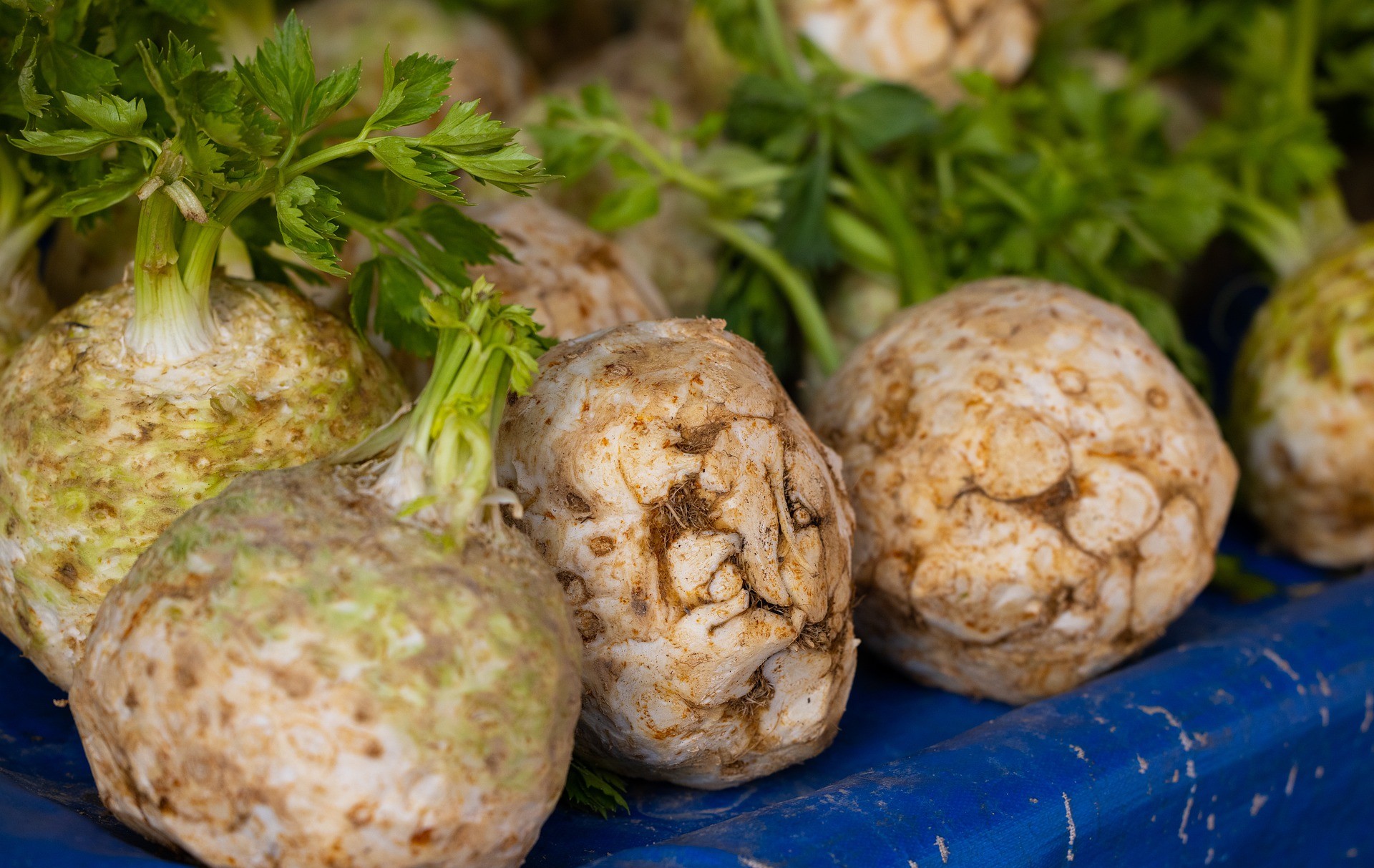
Celeriac is a relatively unknown vegetable, although it is rich in important vitamins and minerals that can offer significant health benefits. Moreover, it is extremely versatile and can be easily incorporated into your diet as an alternative to potatoes and other root vegetables.
Celeriac is a root vegetable closely related to celery, parsley, and parsnip, and is also known as “celery root.” It originates from the Mediterranean and belongs to the same plant family as carrots. Celeriac was originally discovered by Swiss and Italian botanists growing wild in the Mediterranean and Northern European areas and is considered a medicinal herb for treating many health problems. The root is rich in nutrients including vitamins and minerals.
It is a large, knobby, bulbous root with a tough, fibrous, brown outer skin and variable size. The flesh is creamy white with a crunchy and firm texture that has a sweet, nutty flavor with a hint of celery combined with parsley. This winter root vegetable must be peeled before use and can be mashed and served as a side dish or as an ingredient in stews and soups. Although its peak season runs from September to April, celeriac is generally available year-round.
Properties and benefits of celeriac
- Celeriac is rich in fiber and a good source of vitamins B6, C, and K. It is low in fat and calories.
- Celeriac contains folate, choline, folic acid, and lutein. Mineral content includes calcium, iron, magnesium, phosphorus, potassium, sodium, zinc, manganese, selenium, and copper. Other components are fiber, protein, and carbohydrates.
- Nutrient-rich celeriac helps maintain a healthy digestive system thanks to its high fiber content, which reduces the risk of constipation that leads to the development of hemorrhoids and colon cancer. Because it is rich in vitamin C, celeriac helps fight harmful free radicals that develop in the body and can cause cancer. Celeriac also contains riboflavin, which raises energy levels.
- Celeriac is rich in antioxidants and some nutrients associated with health benefits. These include protection against certain types of cancer and improvement of digestion as well as heart and bone health.
- Most people can safely eat celeriac. However, people with blood clotting disorders or kidney problems, those who are pregnant, or those taking diuretics should limit or avoid it.
How to prepare or store celeriac
Celeriac can be eaten raw or cooked and makes a great addition to many dishes. Choose a medium-sized celeriac that is not hollow in the center to ensure freshness and optimal flavor. It is recommended to put cut raw celeriac in water and lemon to prevent browning. It can be served mashed by boiling the cubes for fifteen to twenty minutes and then mashing them with potatoes. It is a great ingredient to add to stews and soups.
It is best to store celeriac in an unsealed plastic bag in the fridge, where it can be kept for up to three weeks before use.