Turnips have been a staple food since prehistoric times, also used for livestock feed since the Middle Ages, and in modern agriculture they are planted in fields for animal grazing. Turnips are easy to grow and, if stored properly, can last through all the winter months. They are a high-protein vegetable, making them an ideal food for vegans. Turnips can be boiled, roasted, baked, steamed, and fried, and the turnip greens are used in salads. This root is a highly nutritious vegetable containing many vitamins, minerals, and other beneficial nutrients.
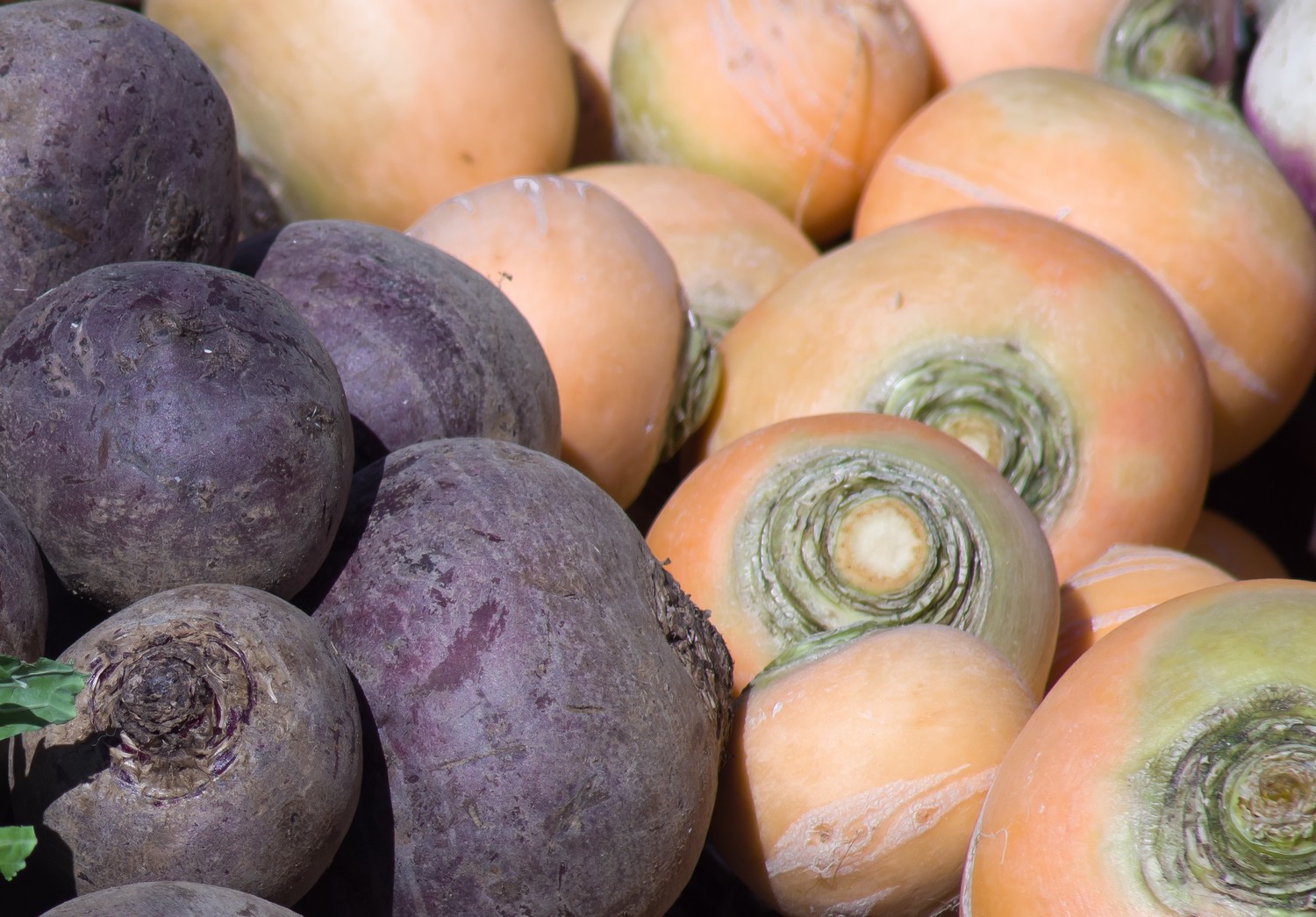
Turnips are a round root, cream or white in color with a purple ring around the top; their shape resembles large red radishes. Immature turnips have not developed the purple ring and look like white radishes. Turnips in their immature state are known as baby turnips. They are small, white radish-shaped, and harvested early in the growth period. They have a milder flavor than mature turnips and are used raw in salads, adding their unique sweet flavor to many recipes.
In spring and autumn, turnips are displayed with their greens, and during winter, turnips are sold without their greens. To pick a good turnip, choose one that feels heavy for its size and firm to the touch, without imperfections. Turnips keep for several months in the refrigerator and are used in soups, soufflés, and many other recipes.
Properties and benefits of turnips
- For cancer prevention, turnips are an excellent food to include in the diet. They contain indoles, which reduce the risk of lung and colorectal cancer by killing cancer cells. Turnips also have a high content of glucosinolates, antibacterial and anti-inflammatory substances that can decrease the risk of developing prostate cancer.
- Turnips are rich in vitamins, minerals, and other nutrients found both in the root and in the greens. The list includes vitamins C, E, K, A, and others; and minerals including copper, calcium, iron, magnesium, manganese, and zinc. Turnips have a high carotenoid content; they also contain protein, fiber, and folates. These nutrients are beneficial for a healthy digestive tract and help maintain a healthy immune system.
- Turnip juice has been shown to effectively reduce body odor incidence when applied to the underarms. Turnip water is an excellent foot soak that can heal cracked and dry skin on the soles of the feet. It also softens the skin, helping to maintain foot health.
- The turnip greens have a high vitamin A content, which is an anti-inflammatory substance that frees the body from free radicals and promotes eye health. It reduces the risk of developing many eye disorders that occur during the aging process. One cup of cooked turnip greens provides more than 100% of the recommended daily amount of vitamin A.
They are a root vegetable full of health benefits for humans and livestock. Both the root and the greens are used in many recipes including main dishes and side dishes, soups, and soufflés. They are available year-round and especially during the winter months in the northern hemisphere. Turnips keep well in the refrigerator, and it is advisable to purchase firm, medium-sized roots, as larger roots tend to be tough. Turnips have earned the title of superfood.