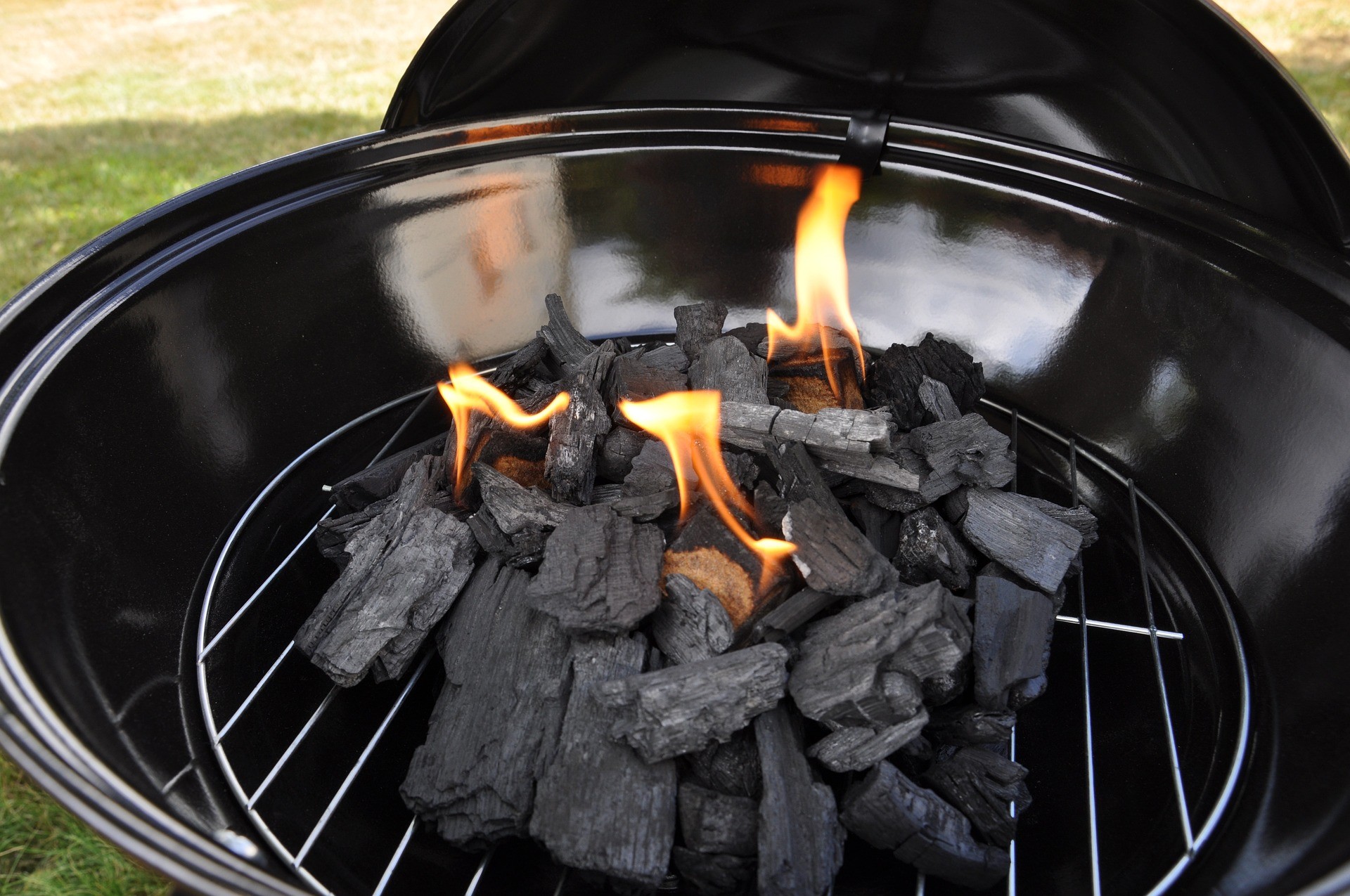

Charcoal grilling can be dangerous. You don’t have knobs to immediately adjust the flame, there’s no ignition button to magically light the fire, and unlike universally consistent propane, each charcoal burns differently. While these compositional variables might seem like a headache, with some basic charcoal knowledge you can learn to embrace, and eventually leverage, these irregularities to become a much better griller.
Types Of Charcoal
Charcoal Briquettes
This is what’s inside that big Kingsford bag at your grocery store. Made by compressing wood bits, sawdust, and additives into uniform nuggets, briquettes are often the cheapest and most accessible form of charcoal. Because they are densely packed and identical in size and material, briquettes are known to burn longer and more evenly than other charcoal. However, there are downsides: briquettes produce a lot of ash, burn relatively cooler, and additives can give food a chemical taste.
Lump Charcoal
Lump charcoal is simply good wood that has been burned down to charcoal. Free of binders and additives, the pieces vary in shape and size, burn at high temperatures, and produce little ash. Lump is made from a variety of woods, though oak and hickory are the most common, each of which can impart its own distinct smoky flavor to whatever you’re grilling. Often locally produced, lump charcoal helps incorporate the flavors of a specific environment into your cooking, while probably having a lower carbon footprint due to shorter shipping distances and relatively less greenhouse gases produced when burned. Naturally, there are some drawbacks: lump is often more expensive and burns faster and less evenly than briquettes.
How To Choose Charcoal
1. Look At Your Grill
There are three main types of charcoal grills: kettles (the basic Weber grill), barrels (which look like a sideways oil drum), and ceramic kamados (think: Green Egg). Kettles and barrels are versatile: they work well with both briquettes and lump. For kamado ceramic grills, lump is strongly recommended, as the grill is not designed to absorb the amount of ash produced by briquettes.
2. Note The Temperature And Cooking Duration
If you’re cooking something quick and very hot, like a steak, asparagus, or a focaccia, lump is the best choice. If you’re undertaking a bigger project (like beer-can chicken) or planning to grill for a whole afternoon, opt for briquettes.
3. Find Your Taste
If you like incorporating a natural smokiness into your food and are willing to pay close attention to your coals, choose lump. If you don’t mind the slightly chemical flavor and prefer to keep grilling as relaxed as possible, grab a bag of briquettes.