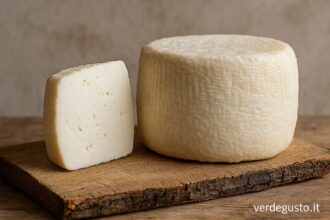

Milk is not all the same and this is why it is appropriate to refer to it in the plural: that is, to talk about milks. In Italy, on the market, there are cow, goat, sheep, buffalo, and donkey milks. Many milks, then, and therefore many different kinds of cheese.
Here are some cheeses that represent a tradition, identify a community and a place, its pastures and its history, and owe much to local breeds, sometimes unfairly considered minor.
Sheep cheeses
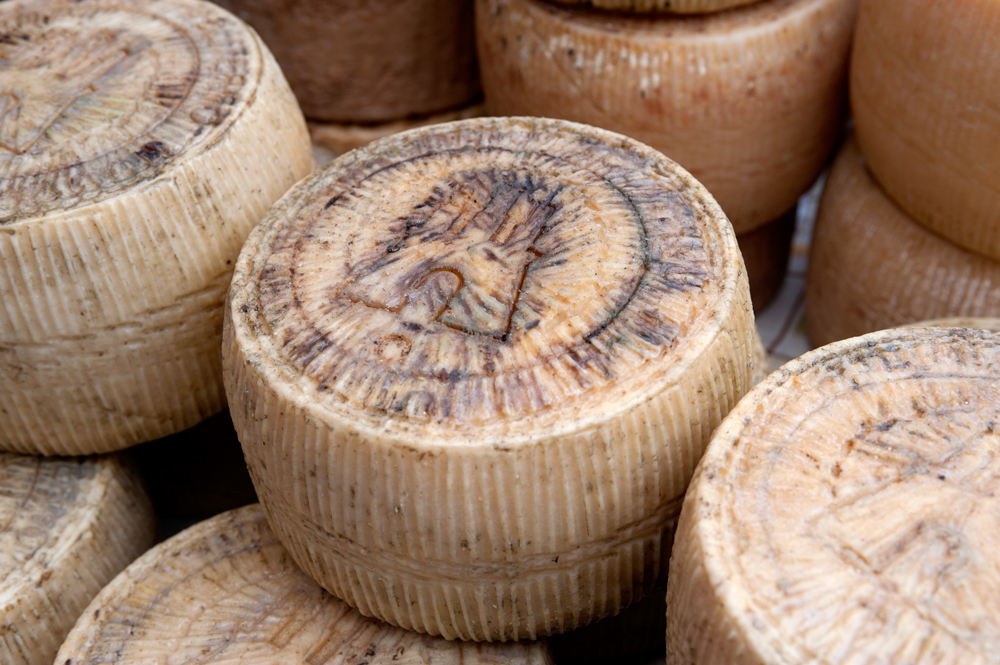
Let’s start from Sardinia with the fiore sardo dei pastori, a Slow Food Presidium: it is a cheese made from raw and whole milk milked from Sardinian sheep breed, an ancient native breed known for the quality of its milk. The milk from a single milking, without any treatment, is placed in a vat and coagulated with kid or lamb rennet paste; then the curd is broken down. The pecorino is formed by placing the mass into truncated cone-shaped molds called pischeddas. The fiore sardo ages for a couple of weeks near embers which give a slight smoky flavor, and then in rooms where the wheels are placed on the floor for several months.
Another cheese, another island: let’s move to Sicily to discover the vastedda della valle del Belìce, the only sheep cheese with stretched curd, recognized as a Slow Food Presidium. The protagonist in this case is the sheep of the Belìce valley, widespread particularly in the provinces of Agrigento and Trapani but present throughout the region and also in nearby Calabria. A curiosity about this cheese: the name derives from the dialect term vasta, meaning “spoiled, gone bad”: local cheesemakers, in fact, created it to recover pecorino cheeses that had defects by stretching them at high temperature.
In Basilicata there are two recognized sheep milk cheeses: the Pecorino di Filiano and the Canestrato di Moliterno (which, however, according to regulations, must be blended, albeit with 20/30 % goat milk).
In Tuscany there is the pecora massese: lead gray fleece, shiny black hair, dark spiral horns, bright protruding eyes, found in Emilia, Liguria and naturally in Tuscany: in the Pistoia mountains in particular, there are producers who make the pecorino completely following tradition: sheep grazing, raw milk and natural rennet. Curious to taste it? It is a Slow Food Presidium.
In the province of Cuneo, in the Langhe area, lives a sheep with a white coat, without horns and with the characteristic ears carried forward and downward: it is the Langhe sheep, a breed now endangered and included in Slow Food’s Ark of Taste, to which we owe the tuma, a cheese with a cylindrical shape, weighing between 200 and 300 grams, without rind and whose paste is soft and straw-white in color.
Goat cheeses
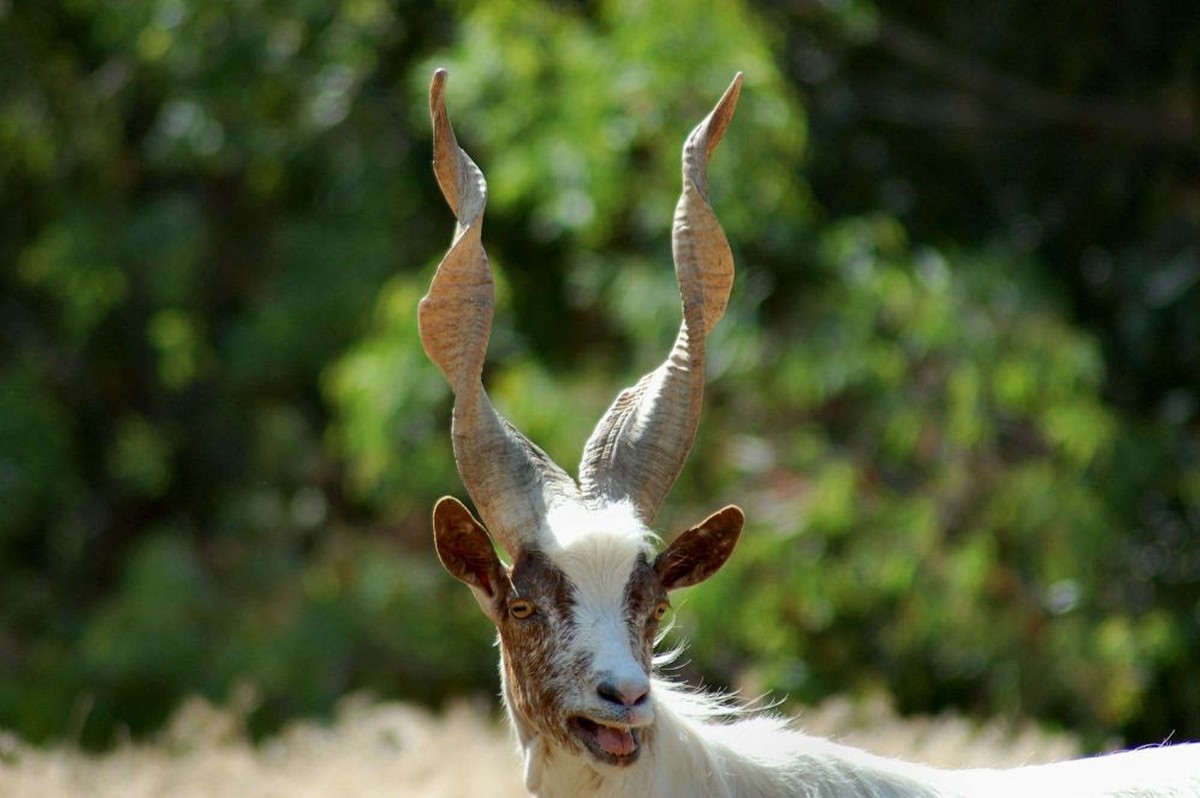
The Orobic goat is a Slow Food Presidia breed: its milk is used for traditional raw milk cheeses such as matuscin of Valtellina, formagìn of Valsassina, and roviola of Val Brembana. It is a rustic goat, characterized by imposing horns, able to live and graze along the steep slopes of the Orobic Alps, in the provinces of Sondrio, Bergamo and Lecco. A thousand kilometers farther south lives another goat with excellent milk: the girgentana, which owes its name to the old name of the Sicilian city of Agrigento (Girgenti). How to recognize it? Simple, by looking at the horns: those of the girgentana are unmistakable, spiral-shaped. Its milk, thanks to the excellent balance between fat and proteins, is used for the tuma ammucciata.
We conclude the tour among Italian goats (and their derivatives) by looking at the garganica, native to the eponymous Apulian promontory. Slow Food Presidia, with its milk the canestrato and the cacioricotta are produced. The garganica goat is raised free-range and is immediately recognizable: thanks to its long, smooth, raven-black hair, its head characterized by a tuft and the long beard under the chin, and its somewhat laterally flattened horns.
Cow cheeses
If we think of cows, it is likely that our imagination returns the image of a white cow with large black spots: well, that is the Dutch Friesian breed cow. In Italy, however, there are cows of all colors! First of all theAlpine grey cow(Slow Food Presidium), mainly concentrated in the province of Bolzano and Trento with some presence in Veneto and Friuli Venezia Giulia, which for centuries has been raised by local populations especially in marginal and extreme contexts such as high-altitude farms: it is indeed able to perfectly adapt to the harsh environmental conditions of these mountainous regions, proving to be the ideal breed for the mountain rural economy. What cheeses does it produce? Alpine cheeses: some leaner because butter production is prioritized, others with washed rind because during aging they are moistened with salted water.
Let’s move to Piedmont to learn about the Pezzata Rossa d’Oropa cattle breed (included in the Slow Food Ark of Taste), a close relative of the Valdostana. It adapts well to the difficult environmental conditions of mountain pasture and plays an important role in environmental and landscape protection, as well as providing the milk used to produce the raw milk butter of Alto Elvo, a Slow Food Presidium.
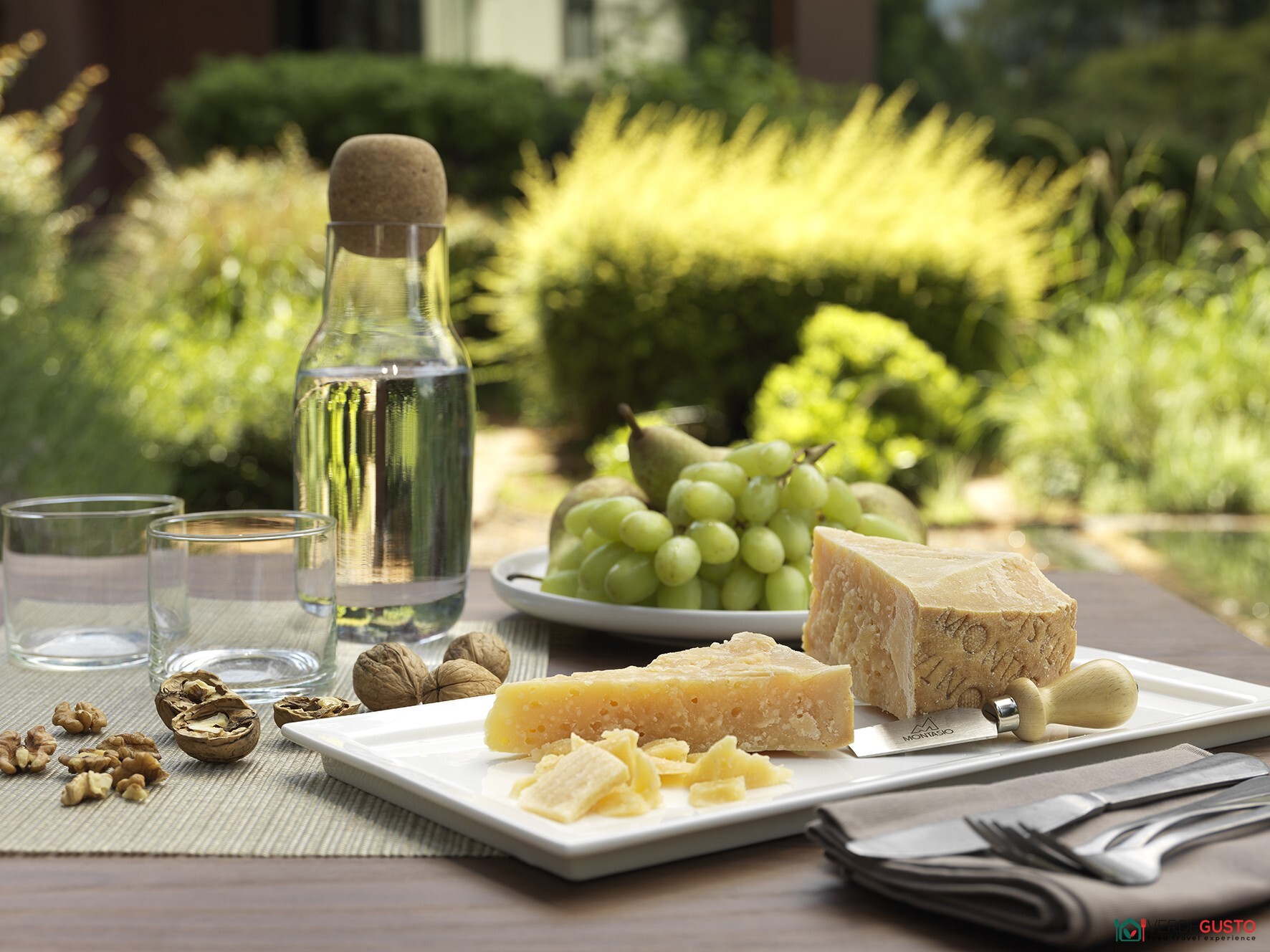
Who has never tasted Parmigiano Reggiano? Yet many do not know that until the post-war period, the undisputed queens of Parmigiano Reggiano were two native breeds: the Bianca Modenese and the Rossa Reggiana. Since the 1950s, they have been replaced by the Friesian breed, famous for its productivity and having udders perfect for mechanical milking. Both the Bianca Modenese and the Rossa Reggiana produce milk whose characteristics are excellent for Parmigiano Reggiano production, yet their numbers have drastically declined: both are recognized by Slow Food, the former protected by a Presidium and the latter included in the Ark of Taste.
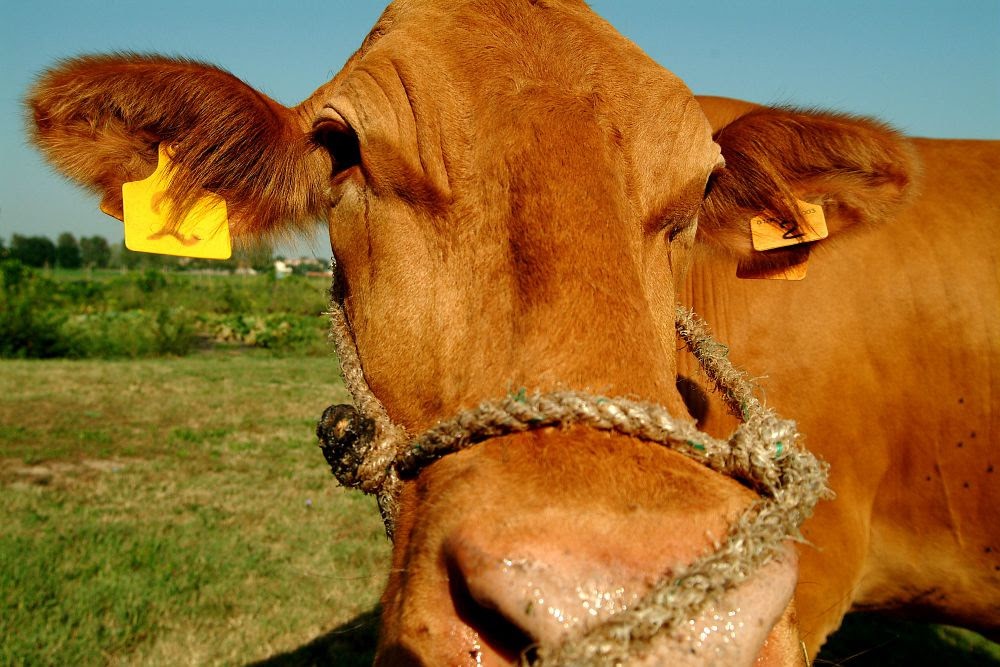
Let’s conclude our virtual tour in southern Italy by talking about the Podolica breed cow and the caciocavallo, the cheese symbolizing southern cheesemaking tradition and the emblem of the “pasta filata” technique. This technique was developed over centuries to ensure the preservation and safety of cow milk cheeses. Slow Food has two Presidiums on caciocavallo made from Podolica cow milk: one in Gargano and one in

.