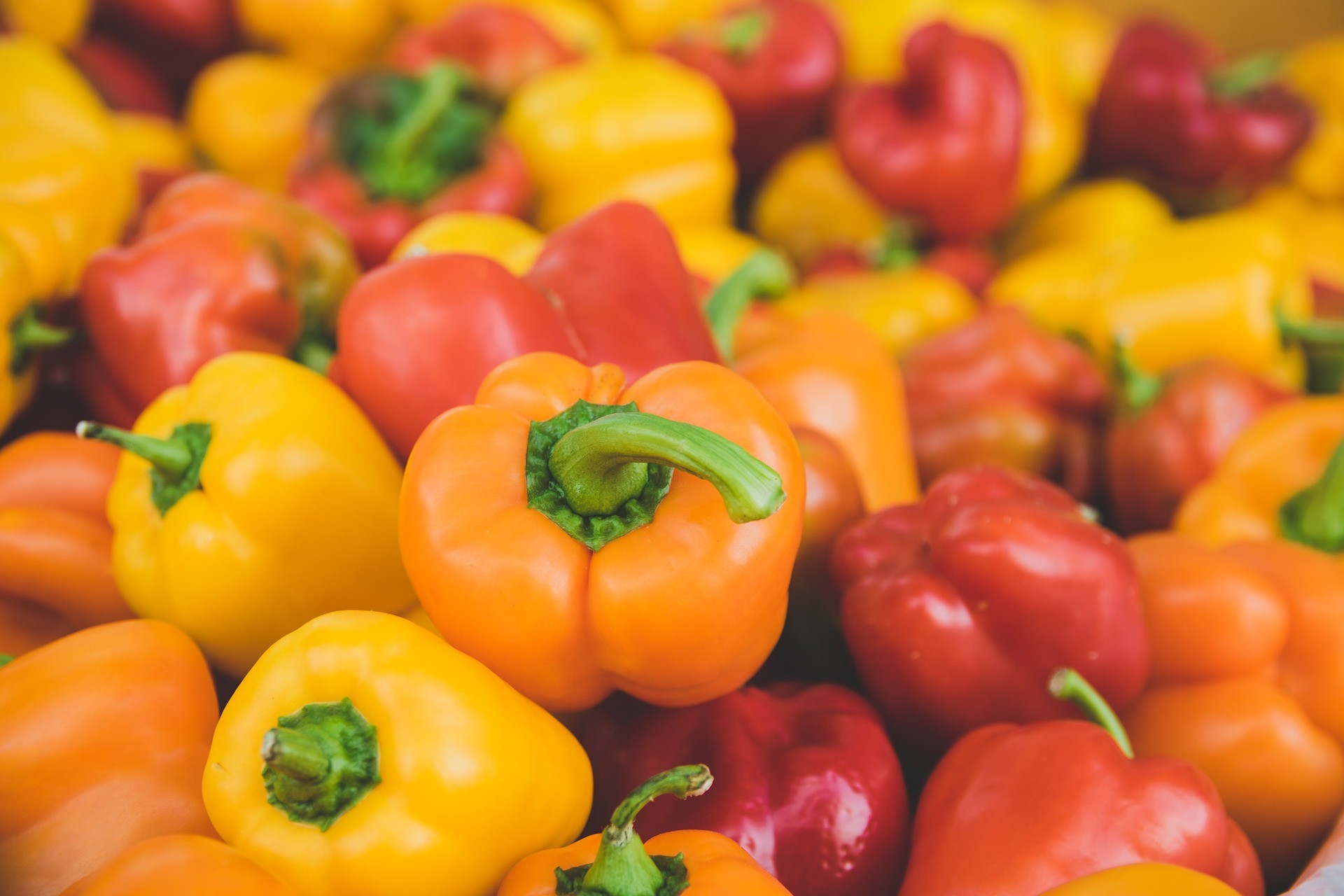
Peppers are native to Central and South America and have been cultivated for about 9000 years. Peppers, also known as sweet peppers or bell peppers, can be consumed both raw and cooked. They come in various colors, such as red, yellow, orange, and green. Peppers have a shiny outer skin that starts as a deep green and changes shade as it matures to red, yellow, and orange; some rare varieties mature to white, purple, blue, brown, or black. These color varieties depend on the harvesting time. The most common are green peppers, which are the least sweet in flavor and have a slight bitter taste, as well as purple varieties. The more mature red, orange, and yellow peppers have a sweet and fruity flavor.
They are rich in nutrients and have many health benefits and can be stored in the refrigerator for about a week but will lose some of their nutrient benefits. They also represent a main ingredient in the preparation of some condiments. Peppers are a versatile food that can be eaten raw, prepared in many ways, and used as an ingredient in a multitude of recipes.
Peppers are low in calories and exceptionally rich in vitamin C and other antioxidants, making them an excellent addition to a healthy diet.
Properties and benefits of peppers
- A pepper has twice the vitamin C of an orange. Vitamin C is a powerful antioxidant that helps free the body from free radicals and keeps the skin and blood vessels healthy and strong. The vitamin C in peppers can also help prevent arthritis or slow the progression of the disease. Vitamin C: a medium-sized red pepper provides 169 percent of the daily intake of vitamin C, making it one of the richest dietary sources of this essential nutrient.
- Peppers also provide beta-carotene, an antioxidant that has been linked to a reduced risk of eye diseases such as cataracts (red peppers seem to have higher levels than other colors). And, due to their high water content, peppers of all shades are high volume and low calorie.
- Vitamin B6: pyridoxine is the most common type of vitamin B6, important for red blood cell formation.
- Vitamin K1: a form of vitamin K, also known as phylloquinone, K1 is important for blood clotting and bone health.
- Potassium: this essential mineral can improve heart health.
- Folate: folate has a variety of functions in your body and adequate folate intake is important during pregnancy.
- Vitamin E: a powerful antioxidant essential for healthy nerves and muscles.