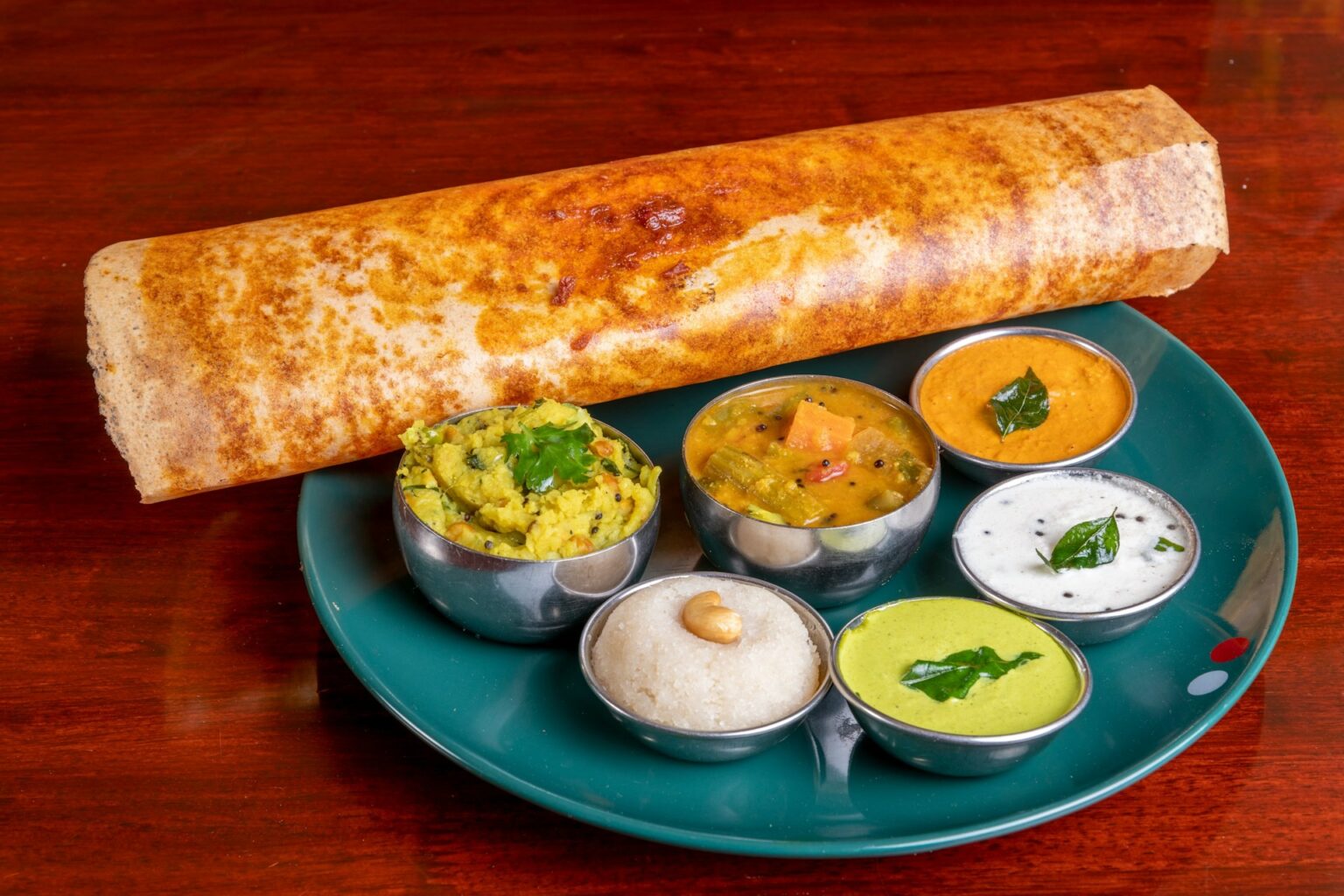

Masala dosa is one of the great icons of Indian street food: a very thin crêpe, crispy at the edges and softer in the center, filled with spiced potatoes and served with sambar and chutney. It is cheap, quick to prepare, almost always cooked on the spot and, above all, it perfectly tells the everyday soul of India. If you are building a food itinerary among the best street foods in the world, masala dosa is a must-stop.
In Street food around the world: the best street foods to try on every continent we have already drawn a global map of flavors eaten on the street. In this guide, we stop in India and focus on masala dosa, to better understand where it comes from, how to eat it, which variations to look for and how to include it in a trip, without limiting ourselves to a simple list of ingredients.
What is masala dosa and why has it become so famous
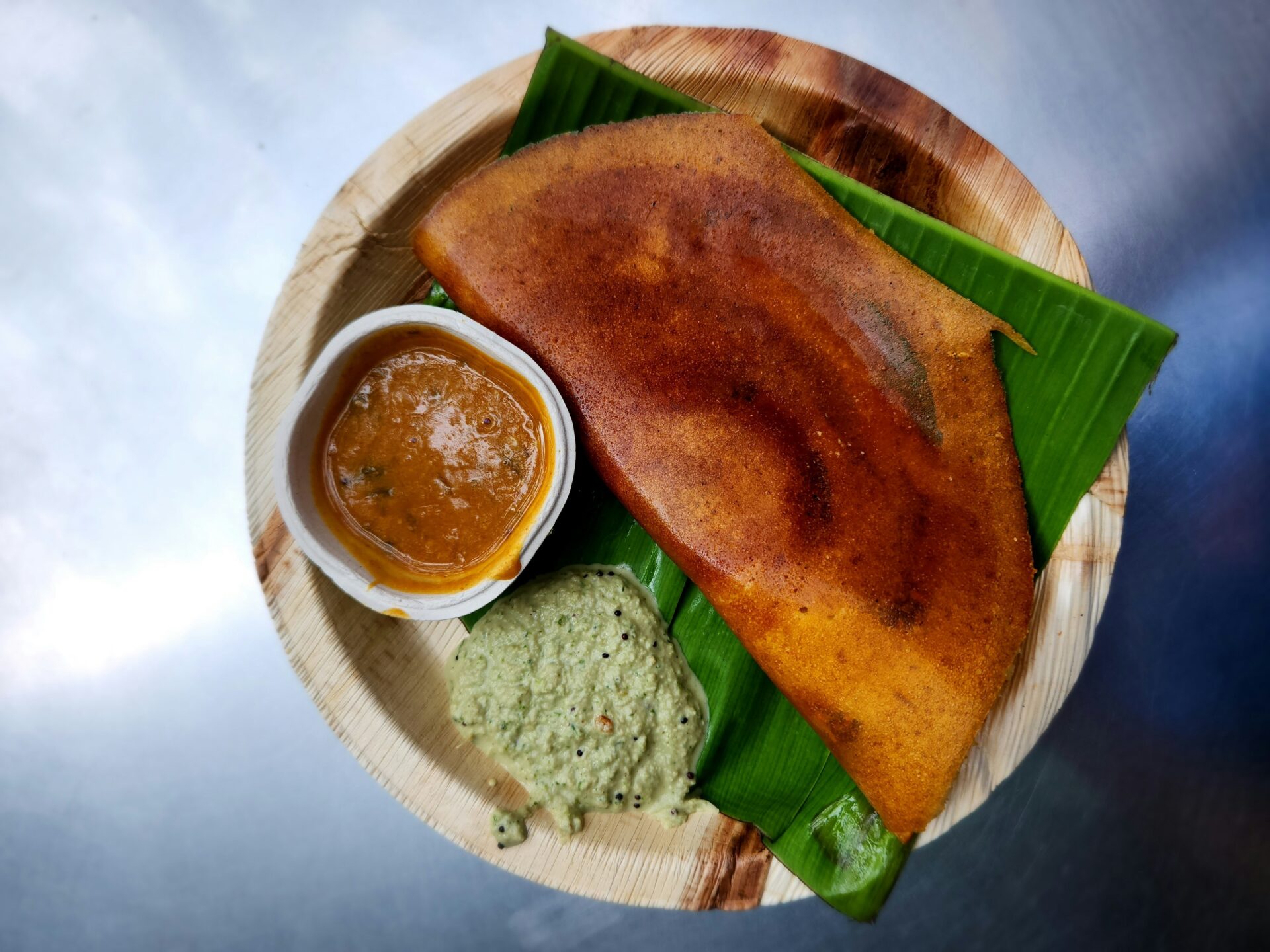
Dosai (or dosa) is originally a kind of savory crêpe made with a batter of rice and peeled black lentils (urad dal), left to ferment for many hours. The result is a slightly sour batter that, spread on a large hot griddle, becomes very thin, fragrant and irresistibly crispy. The masala dosa version is stuffed with a soft filling of potatoes, onions and spices, often colored yellow by turmeric.
Compared to other Indian street foods, such as pani puri, samosas and tandoori, masala dosa is less “on the go” and more suitable for a simple table, a counter or a steel plate. However, it remains a fully-fledged street food: born in the South regions as a popular, cheap dish, easily replicable and perfect to quickly feed students, workers, families, and travelers.
Where masala dosa originated: the heart is in South India
Its roots are particularly linked to Karnataka, Tamil Nadu, and the cooking style known as Udupi cuisine, famous for its vegetarian tradition and expert use of spices, legumes, and fermentations. Here, dosa stops being just a “crêpe” and becomes part of a ritual: the batter is prepared in the evening, left to ferment slowly, and cooked in the morning for breakfast or brunch.
Masala, meaning the spiced potato filling, comes only later, introduced after the spread of potatoes in the colonial era. But this addition completely changed the destiny of dosa: from a simple fermented crêpe, it became a complete dish, richer, nutritious, and instantly recognizable. That’s why today, outside India, when people talk about “dosa” many immediately imagine the stuffed version, which over time has become the most representative.
How to eat masala dosa: the stall experience
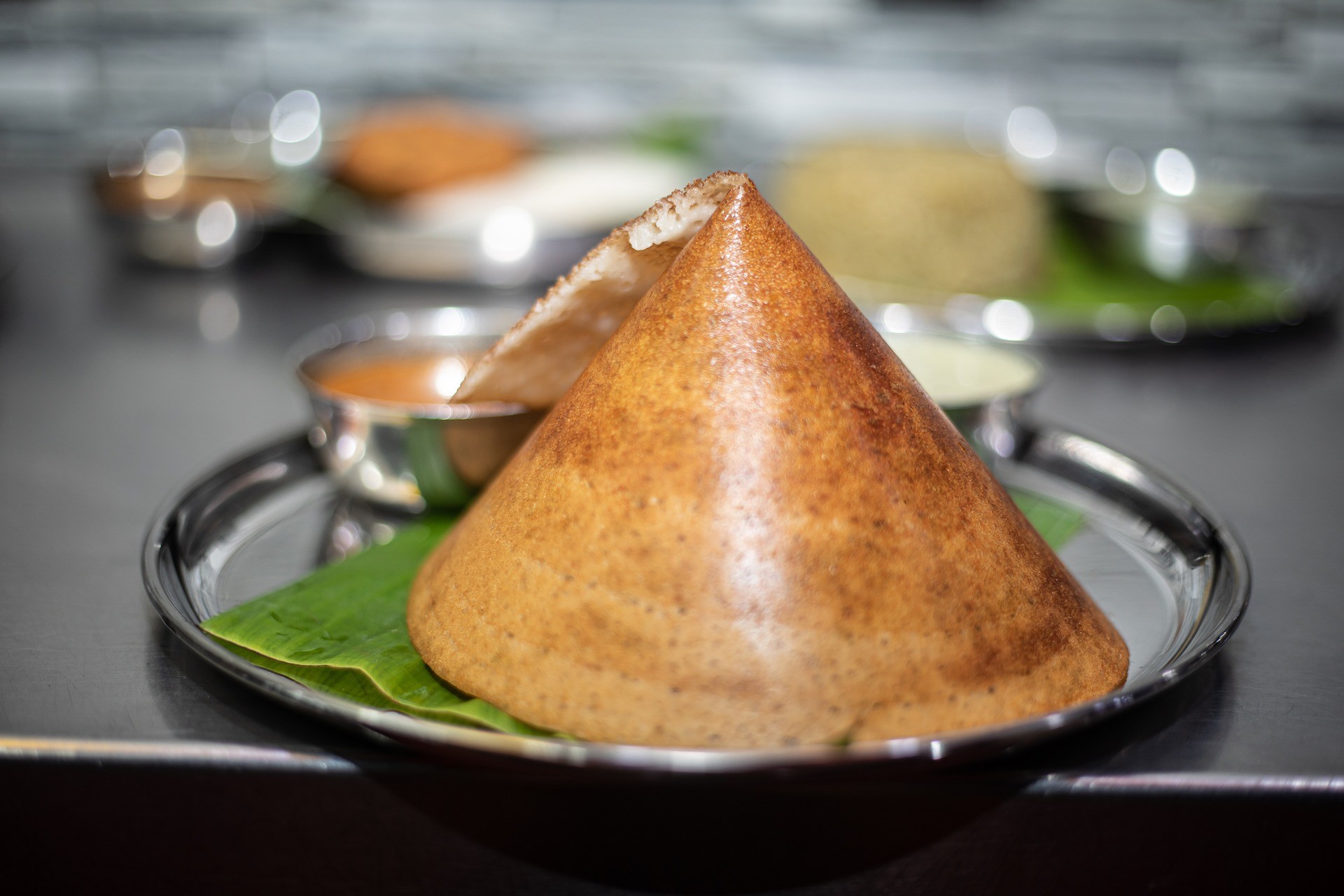
The typical scene is this: a large round griddle, often visible from the street, the cook spreading the batter in concentric circles, the light sound of the surface sizzling. Halfway through cooking, ghee or oil is added, then the spiced potato filling is placed in the center; finally, the dosa is folded, rolled, or closed like a half-moon and served with small bowls of sambar and chutney.
It is eaten strictly with the hands, breaking small pieces of dosa and using them as a “spoon” to scoop up masala and sauces. It is an informal, convivial dish, where you often end up sharing the table with other people. It is also one of the easiest ways to break the ice with locals: just ask which chutney is best or if the dosa is very spicy to start a conversation.
When to eat masala dosa: breakfast, lunch, or dinner?
One of the most surprising curiosities for those coming from Europe is that masala dosa, in many areas of India, is considered a perfect dish for breakfast. A hearty, savory, complete, and very filling breakfast. In other cities, it has become a classic: you can find it at any time, as a mid-morning snack, quick lunch, or informal dinner.
For the traveler, this means great freedom: you can plan at least one masala dosa a day, adjusting it based on your itinerary. In the morning as a local breakfast, at lunch as an affordable and safe meal (the hot griddle is a valuable ally), in the evening as a lighter alternative to spicier or more complex dishes.
The main dosa variations to look for while traveling
Within India, dosa has dozens of variations, some related to the composition of the batter, others to the filling or sauces. The most interesting to try if you love street food are:
- Mysore masala dosa: stronger and spicier, with a red chili paste spread inside before the potato filling.
- Paper dosa: very thin, huge, very crispy, and spectacular in size; often served rolled like a cone or a long wafer.
- Rava dosa: made with semolina (rava), it has a surface full of small holes and an almost “mesh-like” appearance. More fragile but irresistibly crispy.
- Dosa set: three small, thicker and softer crêpes, served together, often with generous curry and chutney.
- Cheese masala dosa or with extra butter: “rich” versions mainly found in big cities, designed to win over more Western palates.
To get a broader picture of how masala dosa fits into the Indian street food scene, you can pair this guide with reading the article dedicated to the most famous Indian street foods, featuring pani puri, samosas, and grilled specialties.
Where to eat an authentic masala dosa
The best way to taste an authentic masala dosa is to go to South India. Cities like Bangalore, Chennai, Mysore, Kochi, or smaller towns in the states of Karnataka and Tamil Nadu are full of simple establishments specializing in dosa and idli. Here you will find it prepared almost obsessively, with batters left to ferment to the perfect point and fillings calibrated to local habits.
That said, masala dosa is now widespread throughout India: in Mumbai, Delhi, and many other metropolises, vegetarian chains or “Udupi restaurants” are a safe bet for those wanting to try it without traveling far. In more touristy contexts, you will often find the label “South Indian breakfast” with dosa, idli, and vada: it’s a great opportunity to familiarize yourself with this world.
Outside India, many Indian restaurants specializing in South Indian cuisine include masala dosa on the menu. In Europe, the fermentation is not always identical to the original, but it remains an excellent way to approach the dish before traveling, especially if you like to mentally prepare your itinerary through flavors.

Masala dosa: is it spicy? Is it suitable for vegetarians?
Two questions travelers often ask are: “Is it very spicy?” and “Is it suitable for vegetarians?” The reassuring answer is:
- Spiciness: it depends on the cook’s hand and the area, but generally masala dosa is moderately aromatic, not overly spicy. The potato filling and the sweet-sour batter tend to balance the heat of the spices.
- Vegetarian: traditionally, masala dosa is a vegetarian dish. It can become vegan if cooked with oil instead of ghee, but this depends on the establishment and must be explicitly requested.
If you want to go further into the details of ingredients, quantities, and possible adaptations, you can deepen your knowledge by reading the content dedicated to masala dosa: street food of Indian cuisine and its ingredients, where we focus on the more technical aspects and the recipe structure.
Masala dosa and other street foods not to miss
The great thing about masala dosa is that it fits perfectly into a broader journey, made of many small tastings. You can start with a dosa for breakfast, move on to a panipuri or a samosa by midday, and finish with a smoky tandoori in the evening. It’s the most authentic way to know India: through street food, the rhythms of the cities, the queues in front of the most famous stalls.
For an overview and to compare masala dosa with other iconic street foods around the world – from the Neapolitan cuoppo to Sicilian specialties – you can return to our main guide Street food around the world: the best street foods to try on every continent, where masala dosa finds its place alongside the great classics of global street food.
In summary, masala dosa is a dish worth a travel detour: it is simple and complex at the same time, reassuring and surprising, traditional and always alive in the hands of the vendors who prepare it every day. If you are planning a trip to India, put it on your must-try list: it will tell you much more than it seems on a steel plate.