


Lenstore has conducted a study analyzing the possible risks arising from excessive caffeine consumption in the short and long term, including blurred vision, muscle pain, and insomnia, imagining them in a photograph. Furthermore, the study reveals the ranking of the most caffeine-addicted cities in the world.
For many of us, the morning doesn’t start without a cup of coffee. What gives us the boost is caffeine, a substance also found in many other foods such as tea, chocolate, energy drinks, and Coca Cola. Its benefits are numerous: it lowers the risk of type 2 diabetes, protects against Alzheimer’s and dementia, and even helps burn fat.
However, although it is a valuable ally for health, caffeine can cause various problems if we consume too much. Lenstore has conducted a study analyzing the possible risks arising from excessive caffeine consumption in the short and long term, including blurred vision, muscle pain, and insomnia, imagining them in a photograph.
What are the effects of excessive caffeine consumption
A healthy adult should not consume more than 400 mg of caffeine per day, which is almost four cups of coffee. In Italy, the average coffee consumption per capita is 3.7 kg. So, what are the risks we face if we don’t change our habits?
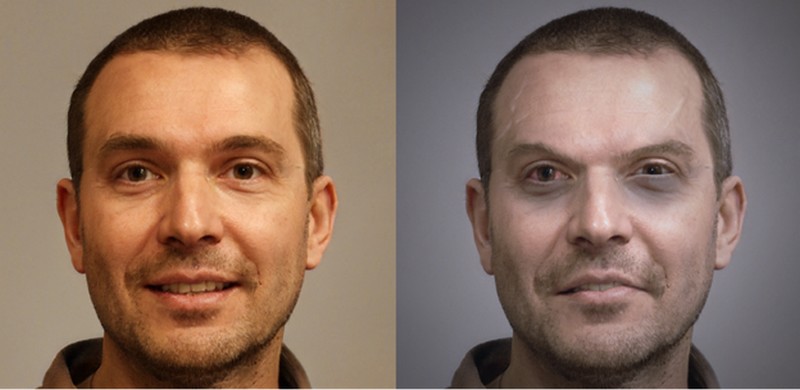
- Anxiety
Caffeine stimulates the production of adrenaline, the hormone behind the fight or flight response (in English fight or flight). Consuming it excessively intensifies these effects, causing nervousness, anxiety, and tension. It has also been shown to increase stress levels, regardless of the ingested dose.
- Insomnia
If you love coffee, remember not to drink it before going to sleep. Caffeine, in fact, alters sleep cycles and prevents good rest (according to various studies, it can remain in circulation for up to nine hours). Insomnia can cause many vision problems, such as dry eyes. To alleviate it, use a moisturizing eye drop and avoid wearing contact lenses as much as possible.
- Migraine
Did you know that caffeine can both cause and cure migraines? This is supported by a survey conducted in the United Kingdom: 22% of respondents stated they had headaches after caffeine intake, while 43% said the opposite. How is this possible? This substance constricts blood vessels around the brain, reducing inflammation and therefore bringing relief. Not surprisingly, it is present in many over-the-counter painkillers. However, it is this same mechanism that can cause migraines. In fact, when caffeine is not consumed for some time, blood vessels expand again, and the pain returns.
- Dizziness and lightheadedness
Just like other stimulants (e.g., tobacco), caffeine also reduces blood flow to the brain, and abusing it can cause dizziness and lightheadedness.
- Muscle tremors
Too much caffeine can also cause various types of spasms, such as eyelid or hand tremors. Often these are only fleeting sensations, but sometimes they may mean it is time to reduce coffee consumption.
- High blood pressure
Caffeine does not seem to affect the risk of heart disease, but according to several studies, it raises blood pressure. That is why you should be careful about how much you consume if you already suffer from high blood pressure: if you abuse it, you could have a higher risk of heart attack or stroke.
- High blood pressure and vision
High blood pressure can damage the tiny blood vessels that supply blood to the eyes. Retinopathy is a possible complication affecting the retina and can lead to blurred vision, ocular bleeding, and even blindness. Hypertension is also responsible for various problems in the nervous system, which plays an important role in eye health. An example is choroidopathy, a condition that causes fluid accumulation in the retina, compromising vision.
Several studies also show a correlation between excessive daily caffeine consumption and the risk of glaucoma for those with a genetic predisposition to high ocular pressure. The symptoms of glaucoma are eye pain and redness, seeing rings around a light source, and blurred vision. If untreated, it can lead to blindness.
- Confusion and hallucinations
Irritability, anger, confusion: caffeine can trigger a series of strong emotions, even if not consumed for a certain period. Reactions range from difficulty concentrating to depression. If you notice your mental health is affected, talk to your doctor. Additionally, excessive coffee consumption can raise stress levels (and therefore adrenaline) causing confusion or even hallucinations. Caffeine withdrawal, on the other hand, can often cause mental fog. If you have experienced these problems, it means you need to start reducing your intake of this substance.
- Blurred vision
Excessive caffeine consumption can cause a sudden increase in blood sugar levels. Possible consequences are blurred vision, eye spasms, and potentially a burning or tingling sensation around the eyes.

Which capitals drink the most coffee?
To discover which are the 20 most caffeine-loving capitals, Lenstore examined several parameters: coffee consumption, the number of bars per square mile (2.59 km2) and the average cost of a cup of coffee. Let’s see the results.
| Country | City | No. of bars | Bars per square mile (2.59 km2) | Bars per 10 square miles (25.9 km2) | Coffee consumption per capita (kg) per year | Cost of a coffee (€) |
| Greece | Athens | 261 | 17.4 | 174.0 | 2.4 | 2.96 |
| Slovenia | Ljubljana | 45 | 0.7 | 7.1 | 6.1 | 1.86 |
| Italy | Rome | 677 | 1.4 | 13.6 | 3.4 | 1.30 |
| Finland | Helsinki | 113 | 0.4 | 4.1 | 9.6 | 3.97 |
| Portugal | Lisbon | 169 | 4.3 | 43.3 | 2.6 | 1.78 |
| Hungary | Budapest | 340 | 1.7 | 16.7 | 3.1 | 1.51 |
| Sweden | Stockholm | 144 | 2.0 | 19.7 | 8.2 | 4.01 |
| Netherlands | Amsterdam | 186 | 2.2 | 21.9 | 6.7 | 3.53 |
| Iceland | Reykjavík | 41 | 0.4 | 3.9 | 9 | 4.15 |
| Costa Rica | San José | 40 | 2.4 | 23.5 | 3.7 | 2.20 |
| Spain | Madrid | 484 | 2.1 | 20.8 | 3 | 2.02 |
| South Korea | Seoul | 2192 | 9.4 | 93.7 | 2.6 | 3.65 |
| Germany | Berlin | 689 | 2.0 | 20.0 | 5.2 | 3.05 |
| Colombia | Bogotá | 156 | 0.3 | 2.5 | 1.4 | 1.11 |
| Austria | Vienna | 287 | 1.8 | 17.9 | 5.5 | 3.46 |
| Estonia | Tallinn | 71 | 1.1 | 11.5 | 4.2 | 2.81 |
| Belgium | Brussels | 68 | 1.1 | 10.8 | 4.9 | 3.15 |
| France | Paris | 287 | 7.0 | 70.0 | 3.2 | 3.83 |
| Czech Republic | Prague | 438 | 2.3 | 22.8 | 2.3 | 2.30 |
| Ireland | Dublin | 234 | 5.1 | 50.9 | 3.5 | 3.54 |
%%FLI_PROTECTED_1%% in third place among the capitals where the most coffee is consumed
With 677 bars, Rome ranks third among the capitals where the most coffee is consumed, just after Berlin (689) and London (1570). The Eternal City is also one of the cheapest places in the world to drink a coffee (€1.30), beaten only by Bogotá (€1.11) and Istanbul (€1.13).
Athens, on the other hand, ranks first as the city most obsessed with coffee in general. It actually has more than 174 bars per 10 square miles, followed by South Korea (94) and France (70).

Which countries drink the most coffee?
The Nordic countries dominate the top 10, including Finland, Iceland, and Sweden. Finland even has an annual per capita consumption of 9.6 kg of coffee, more than triple that of countries like the United Kingdom (1.7 kg), New Zealand (1.3 kg), the USA (3.1 kg), and France (3.2 kg).
At the bottom of the ranking is Turkey, with a per capita consumption of just 0.4 kg per year. Strangely, the United States consumes less coffee than most other countries (3.1 kg) and the United Kingdom is among the last seven.
The 10 cities where a coffee costs the least
| City | Country | Cost of a coffee (€) |
| Bogotá | Colombia | 1.11 |
| Istanbul | Turkey | 1.13 |
| Rome | Italy | 1.30 |
| Budapest | Hungary | 1.51 |
| Lisbon | Portugal | 1.78 |
| Ljubljana | Slovenia | 1.86 |
| Mexico City | Mexico | 2.00 |
| Madrid | Spain | 2.02 |
| San José | Costa Rica | 2.20 |
| Bratislava | Slovakia | 2.21 |
Bogotá claims the title of the cheapest city to have a coffee: it costs only €1.11, almost a fifth of the price found in Copenhagen (€5.35). Overall, Europe and South America dominate the rankings: Rome, for example, ranks third with €1.30.
The 10 cities with the highest number of bars per square mile (2.59 km2)
| City | Country | Bars per square mile (2.59 km2) |
| Athens | Greece | 17.4 |
| Seoul | South Korea | 9.4 |
| Paris | France | 7.0 |
| Tokyo | Japan | 6.0 |
| Dublin | Ireland | 5.1 |
| Lisbon | Portugal | 4.3 |
| London | United Kingdom | 2.6 |
| Copenhagen | Denmark | 2.5 |
| San José | Costa Rica | 2.4 |
| Prague | Czech Republic | 2.3 |
Based on these statistics, how serious is your caffeine obsession?
Methodology used for the study
For the purpose of this study, Lenstore analyzed the long and short-term effects of high caffeine consumption, both physically and psychologically. To discover in which capitals the most coffee is consumed, it then examined: per capita coffee consumption, the average cost of a coffee, and the number of bars per square mile. Finally, it used Google Keyword Planner to obtain a seed list with the most beloved types of coffee in 38 countries.
Sources:
- https://www.healthline.com/health/caffeine-and-anxiety#caffeine-and-anxiety
- https://silversteineyecenters.com/blog/2017/02/does-caffeine-affect-vision/
- https://www.healthline.com/health/caffeine-effects-on-body
- https://www.healthline.com/nutrition/caffeine-side-effects#TOC_TITLE_HDR_11
- https://iris.ca/en/blog-post-detail/how-does-caffeine-affect-your-eyesight
- https://www.bbcgoodfood.com/howto/guide/how-much-caffeine-tea
- https://www.mayoclinic.org/healthy-lifestyle/nutrition-and-healthy-eating/in-depth/caffeine/art-20045678#:~:text=Up%20to%20400%20milligrams%20(mg,two%20%22energy%20shot%22%20drinks.
- https://www.numbeo.com/
- https://www.tripadvisor.co.uk/
- https://en.wikipedia.org/
- https://www.caffeineinformer.com/caffeine-what-the-world-drinks
- https://public.knoema.com/hvfyqyb/world-coffee-consumption?country=1000370-chile
- Google Keyword Planner