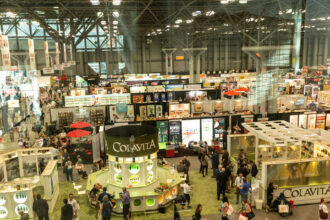

Not just tastings, masterclasses, and great wines: Slow Wine Fair is above all an opportunity for discussion and debate for winegrowers and vignerons from all regions of Italy and the world. Nearly 300 exhibitors have already been selected by the Slow Wine tasting commission for the second edition of the event to be held at BolognaFiere, from February 26 to 28, 2023. Among them are producers who adhere to the international network of the Slow Wine Coalition and who uphold the principles set forth in the Slow Food Manifesto for good, clean, and fair wine: environmental sustainability, landscape protection, and the cultural and social role that wine companies can play in the territories in which they operate. From the north to the south of the country, here are some small previews of the Italian wine landscape that will be present at the Slow Wine Fair.
Slow Wine Fair, the fair for good, clean, and fair wine, returns for the second edition at BolognaFiere from Sunday, February 26 to Tuesday, February 28, 2023. Organized by BolognaFiere and SANA, International Organic and Natural Products Exhibition, with artistic direction by Slow Food, Slow Wine Fair was born from the union between BolognaFiere’s thirty-year experience in the organic sector with SANA and Slow Food’s longstanding commitment to biodiversity, environmental sustainability, and social equity.
The fair is supported by ICE – Agency for the Promotion Abroad and Internationalization of Italian Companies of the Ministry of Foreign Affairs and International Cooperation, FederBio, sponsored by the Emilia-Romagna Region, and in partnership with Amaroteca and ANADI – National Association of Italian Amaro.
Italy’s wine at Slow Wine Fair 2023
Aosta Valley
Besides Elvira Rini, present at the company Di Barrò of Saint-Pierre (Ao), is also her son Andrea Barmaz, who now works permanently in managing the company. A new generation emerging that will continue the story of this winery born more than 20 years ago, which has been able to gradually grow without ever losing the sense of craftsmanship.
Trentino-Alto Adige
In San Giuseppe Lago, a hamlet of the municipality of Caldaro, in the autonomous province of Bolzano, Tenuta Manincor carries forward a perfect symbiosis between biodynamic viticulture and spontaneous fermentations. Sustainability and tradition are indeed the pillars that Michael Goëss-Enzenberg has passed down since 1996, following an enlightened vision that has found in enologist Helmuth Zozin sure hands to be best realized.
Lombardy
It has been a few years since Francesca Seralvo, the third generation of the family that owns the Tenuta Mazzolino from Corvino San Quirico (Pavia), decided to throw himself headlong into managing the company. He did so with humility, vision, and a desire to learn from the most virtuous colleagues of Oltrepò. Without forgetting the determination that forty years ago pushed his grandfather Enrico to exploit the potential that the so-called Pinot Noir hill could offer.
Piedmont
Despite his young age, Marco Capra has made the family business a reference point for artisanal production in Santo Stefano Belbo (Cuneo), a town too often associated only with the sparkling wine industry. On the hill of Seirole, between Langhe and Monferrato, Marco carries on the family tradition giving it the right innovative boost, favoring native wines, the result of the best combination between grape variety and territory, and a limited production that fully expresses the potential of the vineyard.
Veneto
Set on the banks of the Adige river, between Monte Baldo and the Lessinia Plateau, the Roeno farm of Brentino Belluno (Verona) stands in the so-called Land of the Forts, a border outpost where the Fugatti family has preserved over two hundred years of history, strongly influenced by coexistence with these harsh and rugged valleys carved by the second-longest river in Italy. The curiosity and uninterrupted study of the territory’s potential have made the company, run by siblings Giuseppe, Cristina, and Roberta, one of the most expressive witnesses and interpreters of the area’s wines. This is also thanks to an enviable heritage of century-old vineyards, among which stands out the own-rooted enantio vineyard, this year recognized as a Slow Food Presidia.
Friuli Venezia Giulia
Rooted for centuries in the Zegla area, the Keber family of Cormons (Gorizia), starting as all-around farmers, specialized with Edi in quality wine production. Now the son Kristian, active in the wine sector with a venture in his name across the border, assisted by his sister Veronica, leads the family business with the desire to bring it back to its polyculture origins, with a complex project of production for self-sufficiency.
Emilia Romagna
In Imola (Bologna), the Tre Monti company preserves the work of two generations: that of the founders, Sergio Navacchia and his wife Thea, and that of their sons David and Vittorio, who have been able to grow the company without ever stopping in the fields of research and experimentation, even changing the style of their wines. The reds are an example, always consistent with the origin areas, made lighter thanks to a reduced impact of wood.
Tuscany
“Waste is a resource”: this is the forward-thinking idea that guides Francesco Galgani e Flavia Del Seta, owners of the Cappella Sant’Andrea farm located in San Gimignano (Siena). Protagonists of a rural rebirth that has remained faithful to the scents and flavors of the past, Francesco and Flavia carry on this biodynamic reality in which vines, fruit trees, and animals coexist in perfect synergy, according to a closed-cycle farm vision aimed at preserving biodiversity. A fundamental value also for Erta di Radda, the project by Diego Fenocchi born in 2006 from the steep slopes of vineyards located a few steps from the historic center of Radda in Chianti (Siena). The company is the fruit of Diego’s bond with the territory, worked according to the principles of organic production, respecting the environment and the soil.
Lazio
The farm Damiano Ciolli is located in Olevano Romano, a medieval village at about 600 meters above sea level, at the foot of Monte Celeste, 45 kilometers east of the Capital. In this area known for viticulture, Damiano started his activity in 2001, backed by a family tradition dedicated to the sale of bulk wine. From the beginning, he focused on quality production, convinced that precious wines can be obtained from Cesanese. Today, together with his partner Letizia Rocchi, he tries to best express the interaction between soil, microclimate and grape variety through increasingly careful work in the field and great knowledge of the territory.
Marche
A few kilometers from Ascoli Piceno, in the hamlet of Colonnata Alta, Federica and Francesca from the Pantaleone farm carry forward their father Nazzareno Pantaloni’s courageous choice, who saw in those steep lands interspersed with woods the right potential to create special grapes. Balance, nature, and territory are the key words of this organic reality, where enhancing native vines is joined by the desire to leave better land and vineyards to future generations.
Umbria
Filippo Antonelli is the dynamic soul of Antonelli San Marco, a family business from Montefalco, in the province of Perugia, which over the years has written memorable chapters of Umbrian wine. Since 2009, the company has fully converted to organic farming, while the winery is being expanded: an underground route is being created that includes all production phases, from when the harvested bunch enters the press until bottling.
Abruzzo and Molise
The conceptual wines of the Cataldi Madonna farm nestled in the Forno d’Abruzzo, the plateau that lies beneath the only glacier of the Apennines, the Calderone, are an expression of the territory of Ofena (L’Aquila) and of owner Luigi’s philosophy: “To do, one must first think, and without thought one cannot make wine. Thought, like art, multiplies nature.” Vinified pure and in reduction, that is in absence of oxygen, all wines come from organically certified grapes since 2016 and reflect the exclusivity and authenticity of the production area.
Campania
An expression of the heroic viticulture of Tramonti (Salerno), in the green heart of the Amalfi Coast, Tenuta San Francesco is the ambitious adventure started in 2004 by Gaetano Bove together with partners Vincenzo D’Avino and Luigi Giordano. The farm, which extends over 14 hectares, produces wines from ultra-centennial pre-phylloxera vines, among which stand out native grape varieties of the territory: tintore, piedirosso and aglianico for reds, falanghina, biancolella, biancazita, biancatenera, pepella and ginestra for whites.
Puglia
Surrounded by about 100 hectares of vineyards and olive groves, in Cutrofiano (Lecce) in the heart of the heel of Italy halfway between Gallipoli and Otranto, Masseria L’Astore is the ideal place to immerse yourself in the culture and tradition of Salento. The project to make wine from the vineyards around the family farm and its ancient underground oil mill was born in the nineties, but the dedication and awareness of Paolo Benegiamo, a farmer doctor, radically transformed it: international grape varieties gave way to native ones, and the desire to express the terroir has become a guiding star.
Basilicata
A young winery with an ancient heart, Arteteke was born in 2017 with the idea of making wine by recovering the styles and languages of farmers, improving them with the knowledge and oenological technique of Luca Faccenda. The name, which in dialect means restlessness, is also a social inclusion project for young people with disabilities.
Calabria
The vineyard that rises on the family property of Casa Comerci, Nicotera (Vibo Valentia) is called Badia, it is planted with magliocco canino and was completely renovated in 2001. Another vineyard located 3 kilometers away was purchased in 2008 and, in addition to magliocco canino, also boasts vines of greco bianco.
Sardinia
A Sorgono (Nuoro), a small town in the center of Sardinia, Pietro Uras, Renzo Manca, and Simone Murru define themselves as Garagists. While in France this term is used for niche wines with rather inaccessible prices, here it refers to the fact that the cultivated grapes are then processed right in a garage in the village, with simple but effective equipment. The rest is done by the territory, history, vocation, and passion of the producers united by a dream: to enhance the ancient vines planted by their grandparents and parents to make the region of Mandrolisai the new frontier of Sardinian wines.
Sicily
From harvest to winery, from marketing to distribution: at the farm Possente in Salaparuta (Trapani), in the Belice Valley, every phase is followed with the utmost care. The siblings Stefania, Maria, and Antonio share the experience passed down from their father and continue to work in the vineyard respecting the soil and enhancing indigenous varieties, such as Catarratto, Grillo, and Zibibbo, which in recent years have acquired greater varietal and territorial definition.
Among the confirmed events on the calendar, masterclasses, conferences, appointments in the Arena, and of course the tastings at the tasting counter. Here are the first previews of the Slow Wine Fair program.
Scheduled events
The masterclasses
The masterclasses, guided tastings aimed at enthusiasts or professionals in the sector and dedicated to exploring the Italian and international wine landscape and the fascinating world of bitters, are confirmed. The first of the two masterclasses already bookable online concerns prestigious labels from a vintage that, thanks to ideal weather and climate, approaches perfection and in which authentic jewels have been created that tempt wine collectors worldwide. Although it is not a vintage so far back in time, already today, also due to the huge success on the overseas market, it has become quite difficult to find bottles of these wines. In this masterclass, the Banca del Vino from Pollenzo opens its treasure chest to embark on a beautiful journey through 2010 with three of the most prestigious and iconic denominations in Italy: Barolo, Amarone della Valpolicella, and Brunello di Montalcino.
The second masterclass instead looks at the Caucasus, the cradle of viticulture, through a tasting of some of the most significant wines that tell the story of the Slow Wine Coalition, the international network that today counts over 1000 members including producers and enthusiasts who recognize a common philosophy, and is widespread in 37 countries worldwide. The focus on the Caucasus will introduce and highlight magnificent Georgian, Azeri, and Turkish wines.
Other masterclasses – being defined – include an amazing selection of labels from the portfolio of Tannico the largest online wine shop specializing in the sale of Italian and foreign wines, spirits, craft beers, and champagne and numerous offers to explore the vast and, in many respects, still little-known world of bitters.
The conferences
Organized online in the weeks preceding the Slow Wine Fair, the conferences focus on the three main themes at the heart of the event’s debate allowing experts and enthusiasts worldwide to connect and participate using interpretation services.
Wine and the climate crisis
February 8, 2022, 6 p.m.
2022 will be remembered by many as the hottest and driest year ever experienced until now. And the effects of global warming are obvious and catastrophic, especially to those who work in the fields. In 2022, from the privileged observatory of the Slow Wine guide, with its 300 collaborators throughout Italy, many problems were identified. Faced with such a great emergency, winemakers responded by trying to interpret the needs of the plants and drew valuable lessons for the future, thinking on a small and ecosystemic scale. They have closely perceived the message coming from nature. Now we must dedicate ourselves to dialogue, study, scientific research, and systematize the positive and negative experiences of each one of them. How is climate change addressed starting from soil care? What signals can growers pick up from the vines? What are the useful and fundamental steps in the vineyard, in the cellar, and up to distribution to reduce their climate impact?
We asked Adriano Zago, with a degree in Agriculture from the University of Padua and a specialization in Viticulture and Enology from Montpellier, who has been working for about twenty years as an agronomic and enological consultant. At the Slow Wine Fair, he will speak together with agronomist Martina Broggio and Franco Meggio, professor at the University of Padua, to address the topic of the climate crisis in the vineyard. “We will talk about three areas: the plant, the soil, and man. We will try to explain what is happening, with the climate crisis, in the soil and the plant, and how man is reacting, understood as business organization.” One thing is certain, adds Zago: “The climate crisis is bringing the issue of soil fertility to attention. In other words, to better react to any climate change soils must have highly developed fertility in terms of organic matter cycle.” Drought and extreme weather events are more frequent than before, and, to avoid losing the harvest, soils with specific characteristics are necessary: “In case of major droughts, we need soils that can retain water and allow the roots to go very deep,” continues Zago, “while in case of excessive rains, we need soils that can drain.” Solutions exist, both regarding the care of the soil fertility itself and the vineyard landscaping systems: “For example, shorter rows can be organized to allow water excess to flow off more easily.”
Soil, plant, and man: a wine company must invest in all three aspects.
“In my opinion, the climate crisis tells us that fertility, good plant operation, and business organization are three fundamental topics: making a good wine and worrying about bringing home healthy grapes is no longer enough, objectives that have become too weak in a historical time very different from the past. When I talk about business organization, for example, I mean that it is appropriate to be able to make decisions more quickly: to do this, you have to know your business even better.” So it is necessary to invest in the elements composing work teams, training them and promoting their integration within the business reality itself.
Denominations, common good?
February 15, 2022, 6 p.m.
In Italy in 2022 there were 341 Doc and 78 Docg: 419 denominations in total, with Piedmont leading numerically. But beyond the numerical data, what are the positive elements of denominations in Italy and in the European context? And which elements would need a re-reading? Finally, what phenomena should make us reflect carefully?
Regarding the absolute value of denominations of origin we have no doubts. Inside them, in fact, there is an idea of defense and enhancement of wine territories that has ancient roots and a reason for being at least justified by the sprawling development of agri-food sector industries, which tend to flatten everything, dilute the (also cultural) value of products, and erode the economic margin of those who do farming and direct processing.
On the other hand, the list of denominations provides an overall view that is too fragmented and inconsistent from the point of view of strategic and political choices adopted over time; certain denominations appear marginal if not even inconsiderable; and finally, there is a lack of a united vision at the national level, and also from region to region.
In an enormous panorama rich in nuances and criticalities – which deserves specific in-depth study – a trend is increasingly emerging that demands reflection. Recently, a theme that disturbs the world of wine enthusiasts and professionals from several perspectives has caught attention: cases of winemakers leaving a DOC or DOCG are multiplying, while at the same time tasting commissions of consortia reject wines that should fully belong to the denominations, and which are often even awarded in industry guides. A conference dedicated to exploring the reasons for the growing distrust in this system but also reflecting on how to revise and adapt it to the current situation.
Organic is life
February 22, 2022, 6 p.m.
Although we are going through a phase of great and epochal changes, organic confirmed the growth trend throughout 2022. Exports reached +11%, with some sectors, such as wine, reaching up to 19%. It is not hard to guess the reason for this success. Organic products are perceived as carriers of quality, their territorial origin is better understood, and their production method is rewarded, certainly healthier compared to conventional agriculture. Increasingly present in the HoReCa sector and specialized stores, organic labels still face some difficulties at the family consumption level, a difficulty due to their higher price which, in this delicate economic phase – for consumers and producers – can be a problem.
Sometimes, however, organic risks being perceived only as a fashion, while a further step is necessary to make the public increasingly aware of the benefits this agricultural practice brings to soil fertility – thanks to the use of only organic matter –, plants, a more conscious and sparing use of resources – primarily water – and also as a form of contrast and prevention of climate change.
Thanks to the valuable partnership with the Italian Federation of Organic Agriculture andbiodynamic (Federbio) we propose a conference to reflect on organic farming that, starting from the analysis of the current situation, also outlines the future scenarios of this sector.
A year of Slow Wine Coalition
The international network that brings together winemakers and vignerons, professionals and enthusiasts of the wine world, is celebrating its first anniversary. Guided by the Manifesto for good, clean, and fair wine, which stems from the experience Slow Food has gained over all these years, the network’s protagonists have consolidated alliances, welcomed new participants, and developed important projects for the future. Looking at the numbers, after this first year the Manifesto already counts over 1100 signatories from 37 countries, who have contributed to organizing more than 80 events across Italy and four internationally. After the success of Slow Wine Fair 2022, the Coalition is now preparing for the second edition, to jointly discuss the main challenges in the wine world related to climate change, landscape protection, and the safeguarding of vineyard workers. In recent months, the first community part of the network was also created in Turkey, with the aim of protecting and mapping native grape varieties and old vineyards in the territory. In Latin America, the first Slow Wine Latam Day will be celebrated on November 24 to promote and encourage the production of good, clean, and fair wine on the South American continent. Additionally, the Slow Wine guide was presented for the first time in Chinese and Macedonian.
The events of the Slow Wine Fair Arena
All these topics will also be the subject of the events at the Slow Wine Fair Arena, the privileged place for meetings and debates of the Slow Wine Coalition. From Latin America to Croatia, from China to the United States, through the valuable contributions of event partners, the Slow Wine Arena reports on the ferment that characterizes the international viticulture world.