 Portata:
 Ingredienti:
 Cotture:
 Cucina:
 Difficoltà:
 Menu:
Menu:






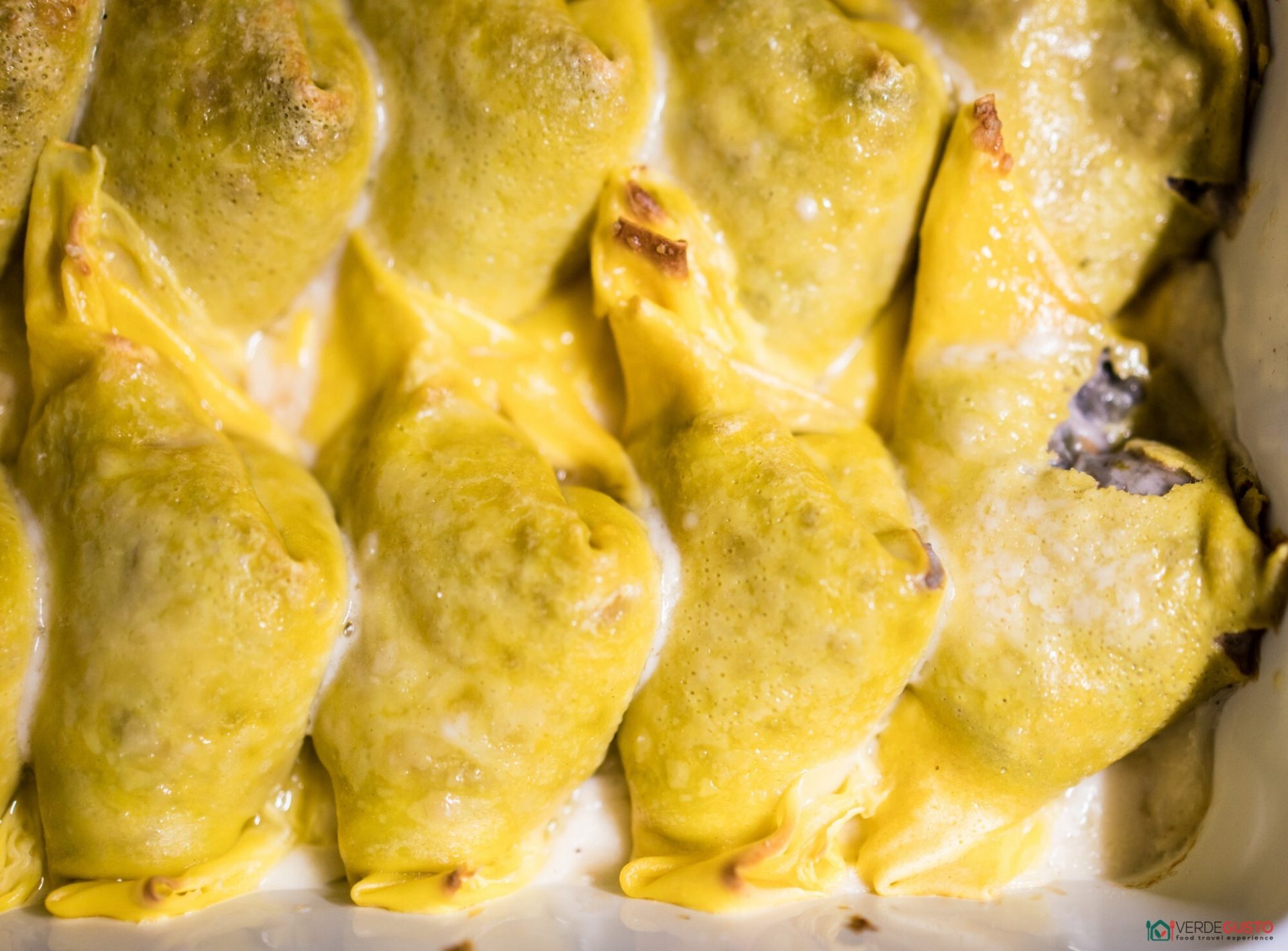
The Apostle’s Finger, also known as Fingers of the Apostles, is a delicately shaped dessert with an evocative name, deeply rooted in Salento tradition. A dessert that combines simplicity and symbolism, capable of crossing centuries with a story that mixes devotion, legend, and popular memory. Even today it is prepared during festivities, especially around Carnival, keeping alive a tradition that dates back to the Middle Ages.
History and Legend of the Apostle’s Finger
According to an ancient Salento legend, the dessert’s name originated in the convent of Santa Maria and the Holy Apostles. It is said that a monk, after preparing this dessert, advised his brethren not to touch it until evening. However, at dinner time, a part of the dessert was missing. The monk responsible for the transgression was discovered and punished severely: he was said to have had a finger cut off for disobedience. From this symbolic and severe episode comes the name “Fingers of the Apostles,” which has endured over time as a moral tale and warning. As often happens in folk traditions, the legend became a story, the story a symbol, and the symbol a dessert.
From Tradition to Modern Version
Over time, the Apostle’s Finger has been reinterpreted to refine its shape and enrich its flavor. In some Salento families and pastry shops, the traditional recipe has been modernized with a soft egg dough and creamy fillings based on ricotta and cream, lightly flavored with cinnamon on top.
From a simple preparation, an elegant and recognizable dessert was born, able to adapt to contemporary tastes without losing the ties to its origins.

Dito d’Apostolo, traditional recipe from Salento
Ingredients
Equipment
Method
- Lavora la ricotta ben sgocciolata con lo zucchero fino a ottenere una crema liscia e omogenea.
- Aggiungi il cioccolato grattugiato e, se gradito, il liquore dolce. Copri e lascia riposare in frigorifero per circa 20 minuti.
- In una ciotola monta leggermente gli albumi con un pizzico di sale e la scorza di limone, fino a renderli spumosi ma non troppo sodi.
- Scalda una padella antiaderente leggermente unta con una noce di burro e qualche goccia di olio extravergine d’oliva.
- Quando è ben calda, versa un cucchiaio di albumi e distribuiscili rapidamente per ottenere una crespella molto sottile.
- Cuoci le crespelle per pochi secondi per lato, il tempo necessario a rassodarle senza farle colorire. Prosegui fino a esaurire il composto.
- Lascia raffreddare le crespelle, poi farciscile con il ripieno di ricotta e arrotolale delicatamente fino a formare dei piccoli cannoli.
- Servi i Diti d’Apostolo spolverizzandoli con zucchero a velo e una leggera nota di cannella.
Notes
- Le crespelle devono essere sottilissime: è questo il segreto della riuscita del dolce.
- Il ripieno può essere preparato anche senza cioccolato per una versione più delicata.
- Consumare preferibilmente in giornata. Si conservano in frigorifero per massimo 24 ore, ben coperti.
Most Popular Variations
Alongside the classic version, numerous variations have developed over time, designed to satisfy different tastes:
- pistachio
- chocolate
- cinnamon
- with additions of creams like hazelnut or pistachio
Each variant retains the iconic shape of the dessert while reinterpreting the filling.
A Cherished Recipe
As with many traditional sweets, every family or workshop jealously guards its own version. In some cases, the recipe is passed down from father to son, kept secret and protected as part of a specific gastronomic identity.
It is precisely this family and territorial character that keeps the Apostle’s Finger alive, capable of creating a strong emotional bond with those who taste it, often described as “a sweet addiction.”
VerdeGusto Editorial Note
At VerdeGusto, the Apostle’s Finger is presented as a sweet from the Salento tradition, referring to a medieval legend of convent origin. Any trademarks, registered recipes, or proprietary versions are considered modern reinterpretations, without attributing them the historical origin of the dessert.