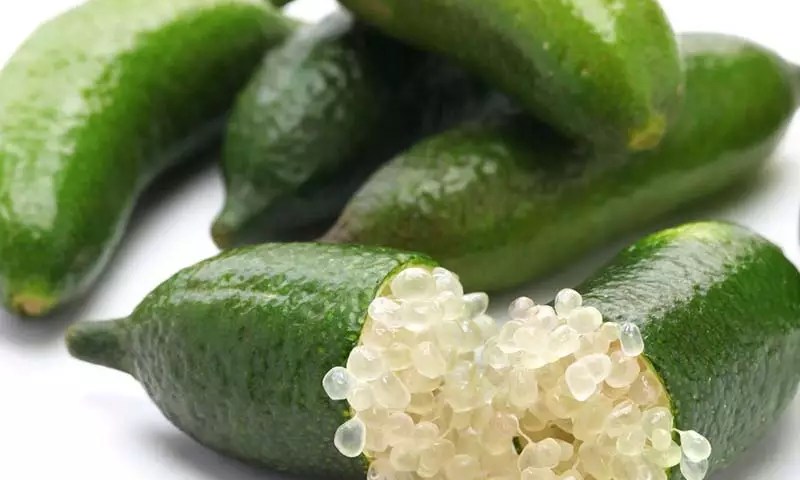
Finger limes are also known as the caviar of citrus fruits .The tree is native to Australia and can now be found in the rainforests along the borders of southeastern Queensland and northern New South Wales, where they grow abundantly sheltered from direct sunlight.
Finger limes were once abundant, but invading Europeans cleared the land for settlement, destroying much of the trees. The fruit has been used for millennia by Aboriginal tribes, not only as food but also for medicinal purposes. They applied it as a topical antiseptic and used it to treat illnesses.
Benefits of Finger Limes
- The finger lime is rich in vitamins C and E and contains a significant amount of potassium and folic acid. Its vitamin C content is three times richer than that found in mandarins. The pink varieties have a significantly higher vitamin E content compared to other sources. Other nutrients present in finger lime are fiber, calcium, and iron. Scientists have discovered that there are not only known essential oils present in the peel, but six unique essential oils.
- The high vitamin C content in finger lime can reduce the risk of developing cancer and influenza. It helps heal wounds and sores and when applied topically, reduces wrinkles and other skin aging issues. They also reduce episodes of acne, , psoriasis, and rosacea and help prevent uneven skin pigmentation.
- The amount of potassium in finger lime significantly supports healthy blood pressure levels. Adding finger lime to the diet reduces the risk of developing heart disease and stroke. It reduces the risk of developing kidney stones due to calcium buildup by maintaining healthy calcium levels in the body. Another nutrient present is vitamin A, which supports eye health and reduces the incidence of night blindness and other vision diseases.
- Finger lime has been used to make products like perfumes, shampoos, aromatic oils, and moisturizers. The fruit is a substitute for caviar in a vegan diet and is used in the preparation of vegan sushi. They can be added to cocktails and transformed into jams and jellies. The leaves can be ground to flavor meat and fish dishes and are used in baked goods.