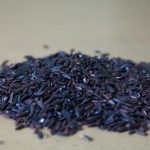
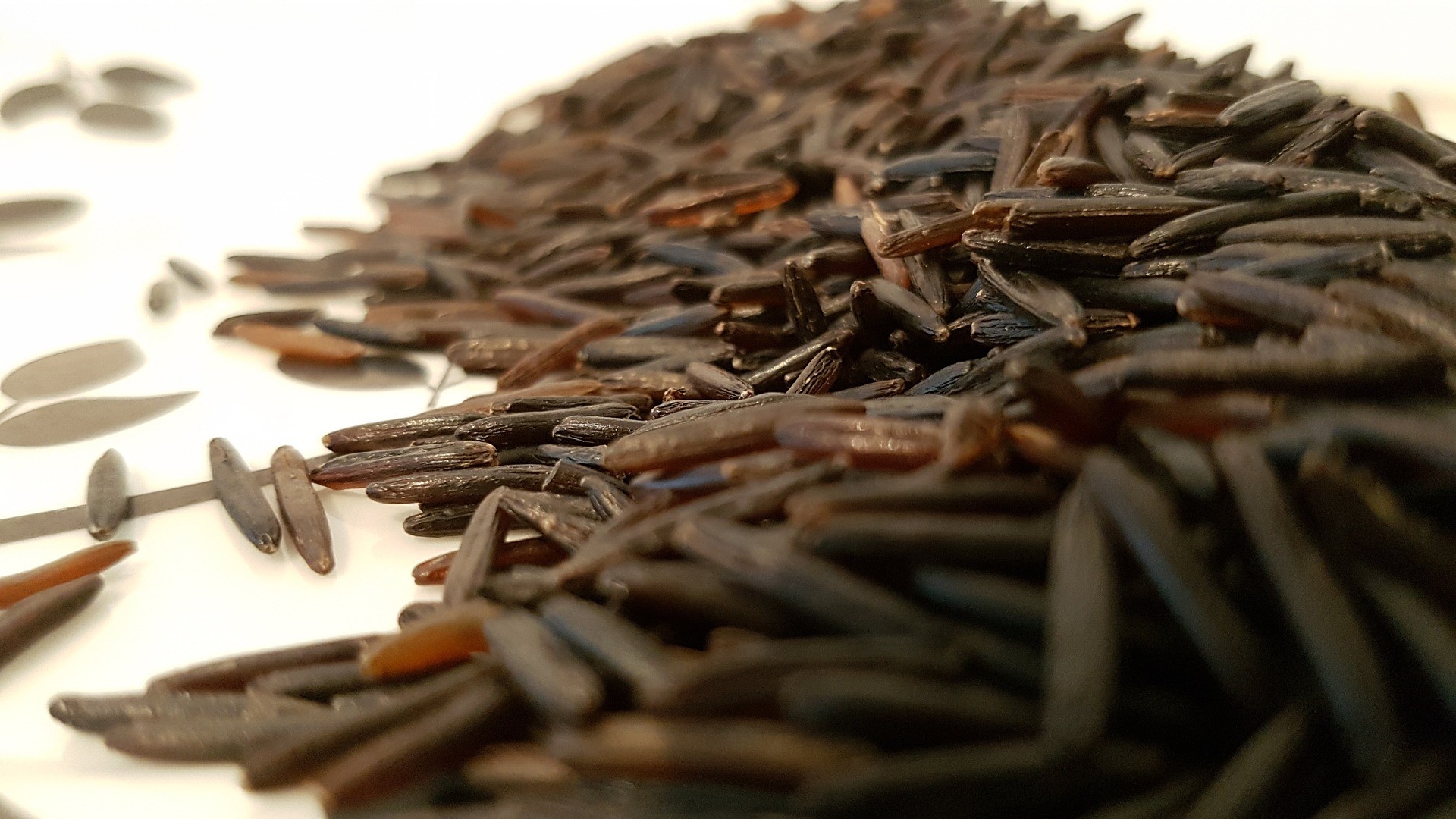
Wild rrice is not exactly rice but the seed of a semi-aquatic grass species found from southern Canada to the eastern United States along the Atlantic coastal marshes.
It was the staple food for the Ojibwa and the Chippewa people who harvested it by canoe and roasted the seeds in fire. They called it “manoomin” which means “good berry” and is a much more accurate nomenclature than the contemporary “wild rice“.
There are four varieties: eastern wild rice grows along the Atlantic and Gulf of Mexico coasts; northern wild rice is native to the North American Great Lakes region and mainly grows in Minnesota, Wisconsin, northern Michigan, Ontario, Manitoba, and Saskatchewan; Texas wild rice grows in a small area in central Texas along the San Marcos River; and the nearly extinct Manchurian wild rice species is native to China.
The plant is annual, growing up to about three meters tall. The thin seeds fall in clusters and are easily removed when ripe. The Ojibwa people continue to harvest the seeds by canoe. However, most of the wild rice sold in stores is genetically modified and grown in artificial ponds in Minnesota and California using chemicals, pesticides, and herbicides in their production. The seeds are rich in proteins, amino acids, fibers, vitamins, and minerals.
Properties and benefits of wild rice
- A serving of wild rice contains six and a half grams of protein, thirty-five grams of carbohydrates, and three grams of fiber. The protein content mainly comes from lysine, methionine, and linolenic acid. Included in a serving are a significant amount of B vitamins, vitamins A, C, and E plus minerals like phosphorus, potassium, magnesium, zinc, and folic acid.
- Wild rice contains more protein than wheat and contains all essential amino acids. This makes it a valuable food for growth and repair of bodily functions. Proteins are used to form cells, enzymes, antibodies, and hormones.
- Wild rice helps strengthen the immune system and prevents and treats various viral infections. It promotes skin health and proper tissue formation. It is also a catalyst for providing vitamin A to the liver. It is helpful in treating cold sores, burns, diaper rash, and acne.
- Containing a remarkable amount of magnesium, it works with calcium to maintain a healthy skeletal system. It strengthens the muscular system, rebalances blood circulation, and maintains a normal heart rhythm, making it a healthy food for the heart.
- With a high antioxidant content, wild rice controls free radical formation, thus protecting the body from diseases. It is rich in fiber that helps maintain a healthy digestive system and reduce cholesterol levels. It is low in calories, making it a useful aid in weight reduction.