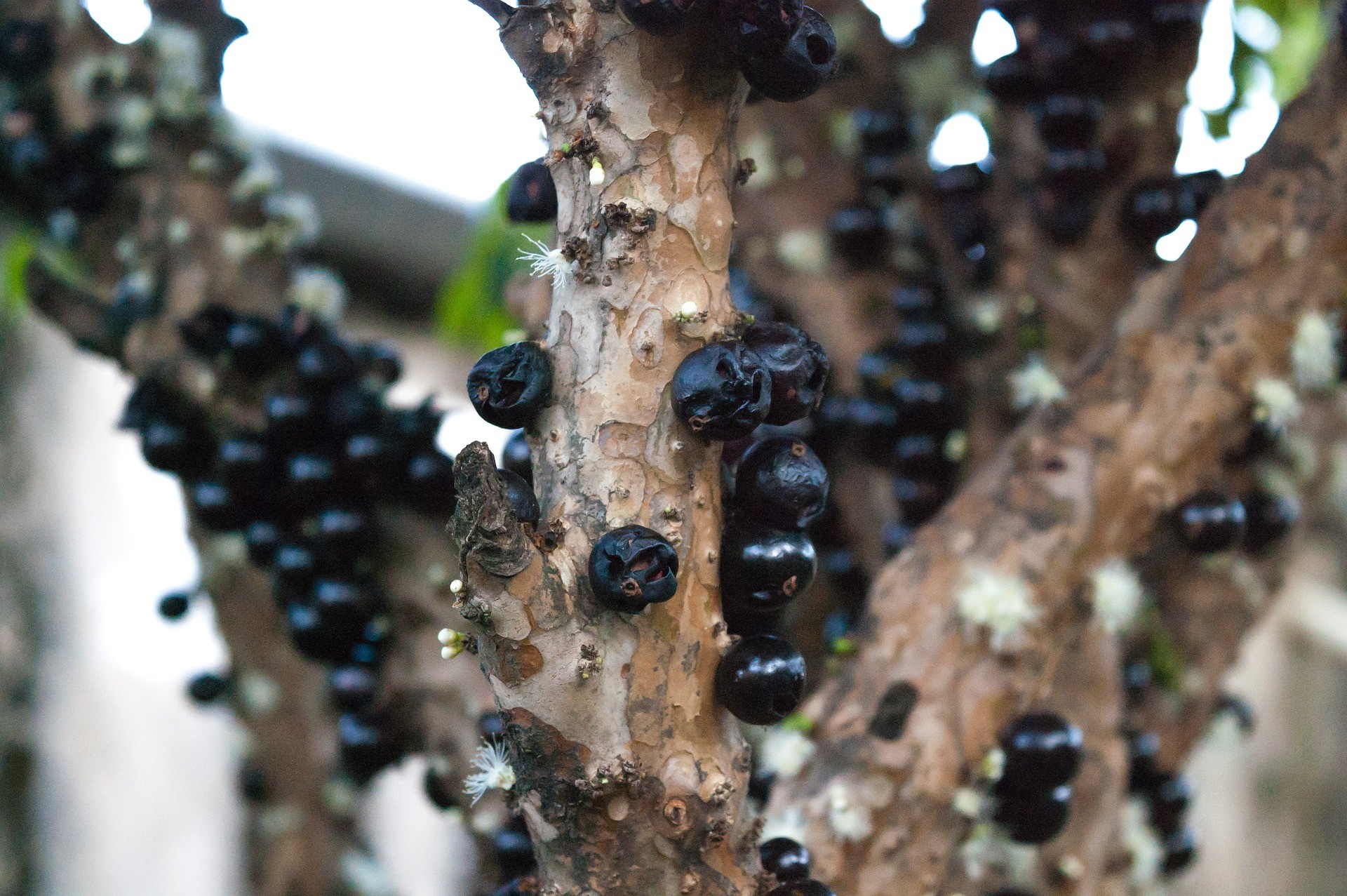
Jaboticaba is a thick berry with a violet-colored skin that grows in subtropical climates directly on the trunks of plants. It has a light pink or white pulp, a sweet and fruity flavor, similar to that of grapes, although more floral and aromatic, with a subtle note of acidity that does not diminish its delicious sweetness. With this exotic fruit, you can make excellent liqueurs and syrups.The name jabuticaba derives from the Tupi words Jabuti (turtle) + Caba (place), meaning the place where turtles are found. The Guarani name is “Yvapuru,” where yva means fruit and the onomatopoeic word puru refers to the sound the fruit makes when bitten.
The fruit of theBrazilian grape tree is edible and consists of a gelatinous or creamy white pulp, with a flavor that has been described as very similar to muscat grapes. Inside the pulp there are seeds, ranging from one to four. The skin of the jabuticaba is also edible and has an herbal taste.
Since the skin has a high tannin content, it should be consumed in moderation. For this reason, although theskin extract has a much higher amount of antioxidants, frequent consumption is not recommended. High quantities of tannin are generally not beneficial for health.The fruit is like a grape, but a bit more tart. Ideal for making a jelly similar to “quince,” just like a guava jelly.
Aside from antioxidants, other health benefits have been suggested for jabuticaba. In fact, it is recommended for those suffering from asthma, to relieve diarrhea, and to help with hair loss.
Benefits of Jabuticaba
Jabuticaba is used for the treatment of hemoptysis, asthma, diarrhea, and dysentery, as well as a gargle for chronic tonsil inflammation from the caustic decoction of sun-dried peels, which is agreed upon in Brazil. Such fruit use may also lead to excessive tannin consumption. The jabuticaba fruit contains compounds similar to those known to have positive biological effects in cranberries, grapes, and other related species, including anti-aging, anti-inflammatory, and antioxidant qualities.
- Jabuticaba fruit may be stimulating, opens the bronchial airways, which is beneficial for asthma, and is slightly astringent, making it excellent for diarrhea and also for treating those with tonsillitis.
- Jabuticaba fruit is anti-inflammatory and rich in excellent antioxidants.
- Jabuticaba fruit is an anti-aging fruit with health benefits similar to cranberries.
- Jabuticaba fruit contains a lot of protein, is low in carbohydrates, and high in calcium, iron, phosphorus, very rich in vitamin C, and contains some B vitamins with very low calorie content.
- New studies are underway on the effectiveness of jabuticaba in fighting cancer because it contains many antitumor compounds.
- Jabuticaba fruit soothes the gastrointestinal tract, helps with arthritis, and also prevents many skin diseases and even hair loss.
- Jabuticaba fruit is also an excellent detoxifying agent.