



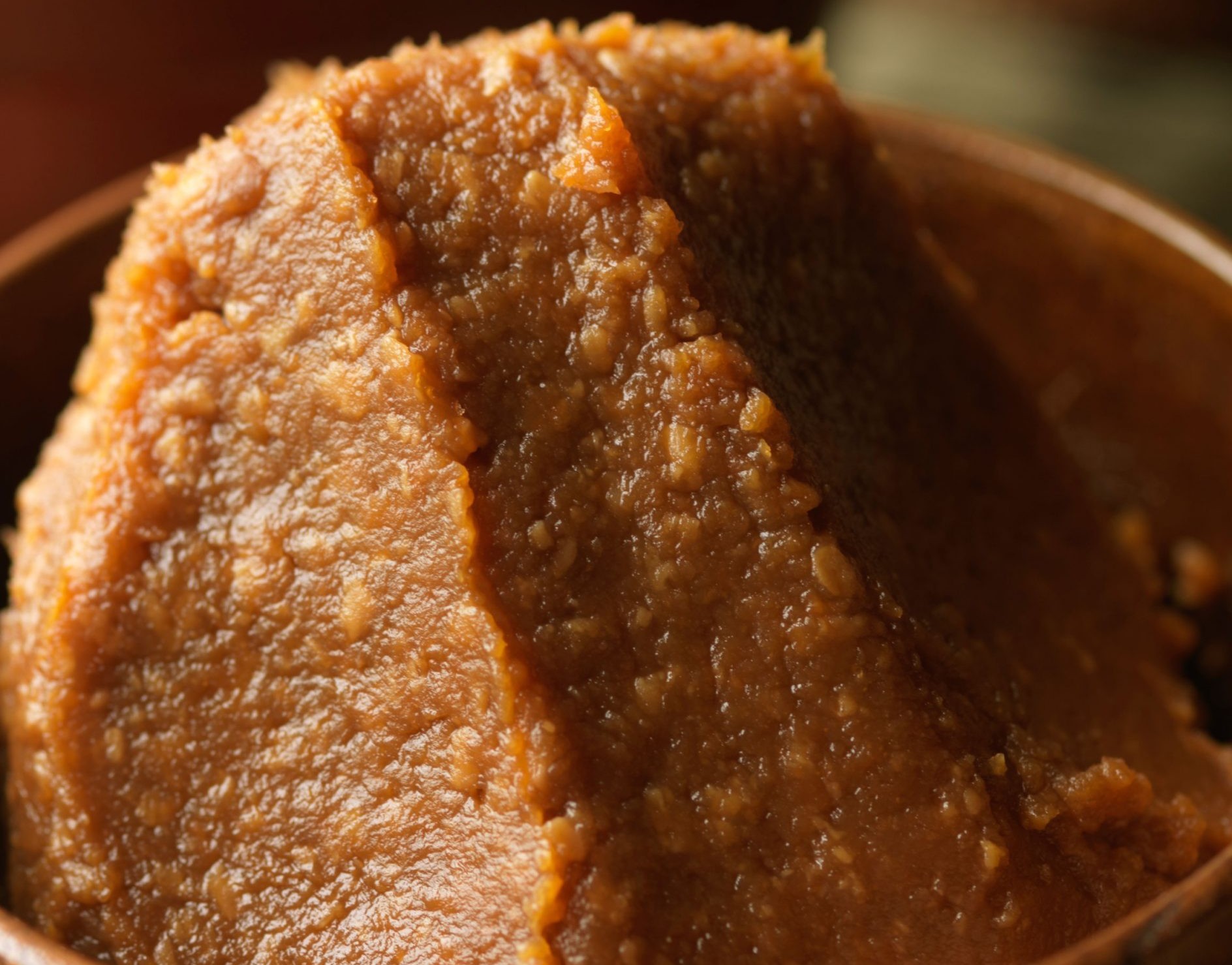
Miso is a fermented paste made from cultivated rice (called koji ), beans, and salt. The ingredients are simple, but the biochemical processes that transform beans and rice into miso are quite astonishing. Koji is a mold that grows on rice, which is then mixed with cooked beans, most often soybeans. The mixture is salted and then left to ferment, sometimes for a few months, sometimes for a few years.
Although miso is still unknown to many, those who know it have probably consumed it in the form of Japanese miso soup. It is incredibly nutritious and linked to a variety of health benefits, including improved digestion and a stronger immune system.
Lighter and sweeter misos (white, chickpea, and yellow miso) often last less than a year, while darker misos (red and Hacho) are often fermented much longer and have a richer flavor and denser texture. Generally, miso varieties are interchangeable, but as you start experimenting with different types, you’ll learn which you prefer for certain recipes. Additionally, in the Macrobiotic tradition, lighter miso is better for warmer months, while darker, richer miso is best for colder months. Miso tastes incredible, has many benefits for your body, and is very versatile in cooking.
Benefits of miso
Because miso is a fermented food (like sauerkraut, kombucha, sourdough bread, and beer), it contains a myriad of substances good for our body.
As miso ferments, the healthy microorganisms in koji produce enzymes that help break down proteins, carbohydrates, and oils in grain and soy. This process makes the nutrients they contain easier to digest and absorb for our body (the advantage of all fermented foods). After the fermentation process is complete, miso is ground into a smooth and spicy paste full of vitamins, proteins, and beneficial bacteria (the good guys found in our guts.)
Researchers have found that consuming a bowl of soup made with miso every day, as most residents of Japan do, can drastically reduce breast cancer risks. Miso provides protein, vitamin B12, vitamin B2, vitamin E, vitamin K, choline, linoleic acid, lecithin, and dietary fiber.
Miso is a fermented food, which means it contains cultures of live and active bacteria, like the good things also found in yogurt. Adding it to boiling water will kill the probiotics in miso, negating the health benefits it typically offers, such as improved digestive health.
Miso in cooking
The simplest “recipe” for miso is simply mixing a teaspoon of miso into a cup of very hot water, stirring to dissolve it, and drinking it like tea. I always do this when I feel unwell, whether it’s a cold or a stomach issue. For other recipes, you can try blending it into soups, dressings, sauces, and marinades!




, beans, and salt. The ingredients are simple, but the biochemical processes that transform beans and rice into miso are quite remarkable.)