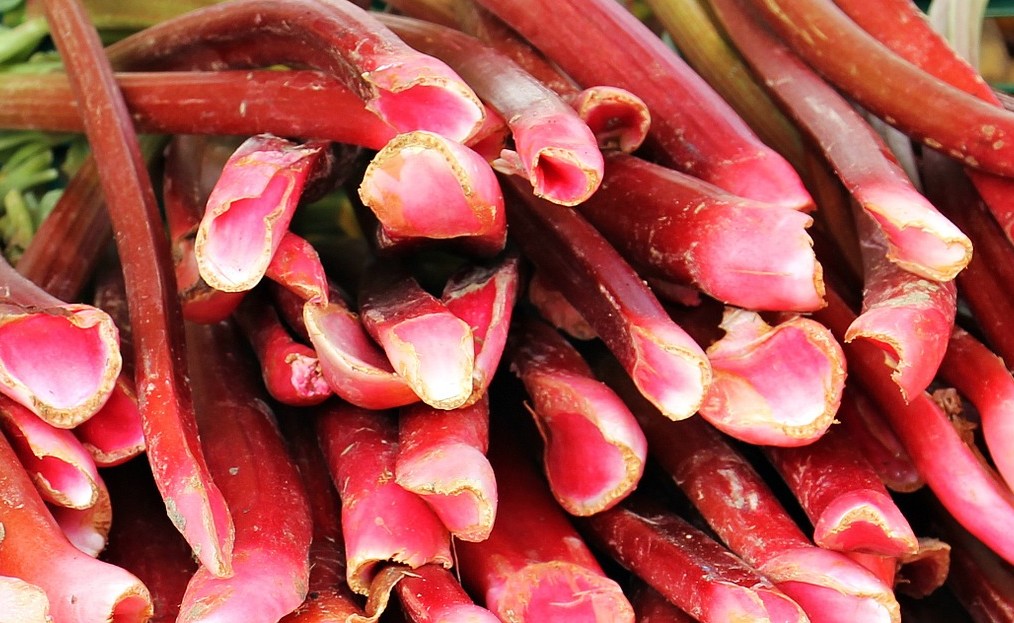
Although commonly used as an accompaniment to sweet dishes and desserts, rhubarb is actually a perennial vegetable. The rhubarb plant begins to grow in early spring and, when mature, has bundles of woody, reddish stalks (resembling the shape of celery) with sturdy leaves.
The leaves contain oxalic acid, poisonous not only to humans but also to animals. Later in its growing season, the oxalic acid in the leaves can seep into parts of the stalk. When in doubt, cut the stalk a few centimeters below the leaf. However, one would have to consume nearly 5 chili of rhubarb to be poisoned by the oxalic acid in rhubarb leaves.
There are several varieties, and the redder the stalk, the sweeter it is. All rhubarb is generally tart and bitter, but green stalks are especially so. Rhubarb is an excellent substitute for other tart fruits, such as cranberries, and pairs well with naturally sweet fruits like apples and berries.
Making rhubarb sauce is as easy as boiling water; just chop the amount of rhubarb you want (3 cups chopped is about 2 cups cooked) and add 2-3 tablespoons of water per cup of chopped rhubarb. Heat over medium heat for about 15 minutes, or until the desired consistency, similar to applesauce, is reached.
Benefits and properties of rhubarb
Rhubarb is native to Central Asia, where it was cultivated and mainly used for medicinal and cosmetic purposes. It is still commonly used for its medicinal values: traditionally, the root (which contains traces of oxalic acid) was used medicinally, particularly for its potential use in treating diseases such as dermatitis, pancreatic cancer, and diabetes.
- Rhubarb is one of the lowest-calorie vegetables and is very low in fat and cholesterol. Rich in dietary fiber, protein, vitamins C, K, and B-complex, as well as calcium, manganese, magnesium, and potassium, rhubarb relieves digestive difficulties and helps with weight loss. The high concentration of antioxidants in rhubarb may help prevent cancer as well as cardiovascular and heart diseases.
- I Polyphenolic compounds in rhubarb (beta-carotene, lutein, and zeaxanthin) protect the skin and eyes from free radicals that can cause chronic diseases such as cancer and macular degeneration.
- Traces of copper and iron in rhubarb help stimulate the generation of new red blood cells and the most important vitamin in rhubarb, vitamin K, plays a role in healthy bone growth and brain development. Essentially, you have nothing to lose and many benefits to gain from a slice of rhubarb pie.