



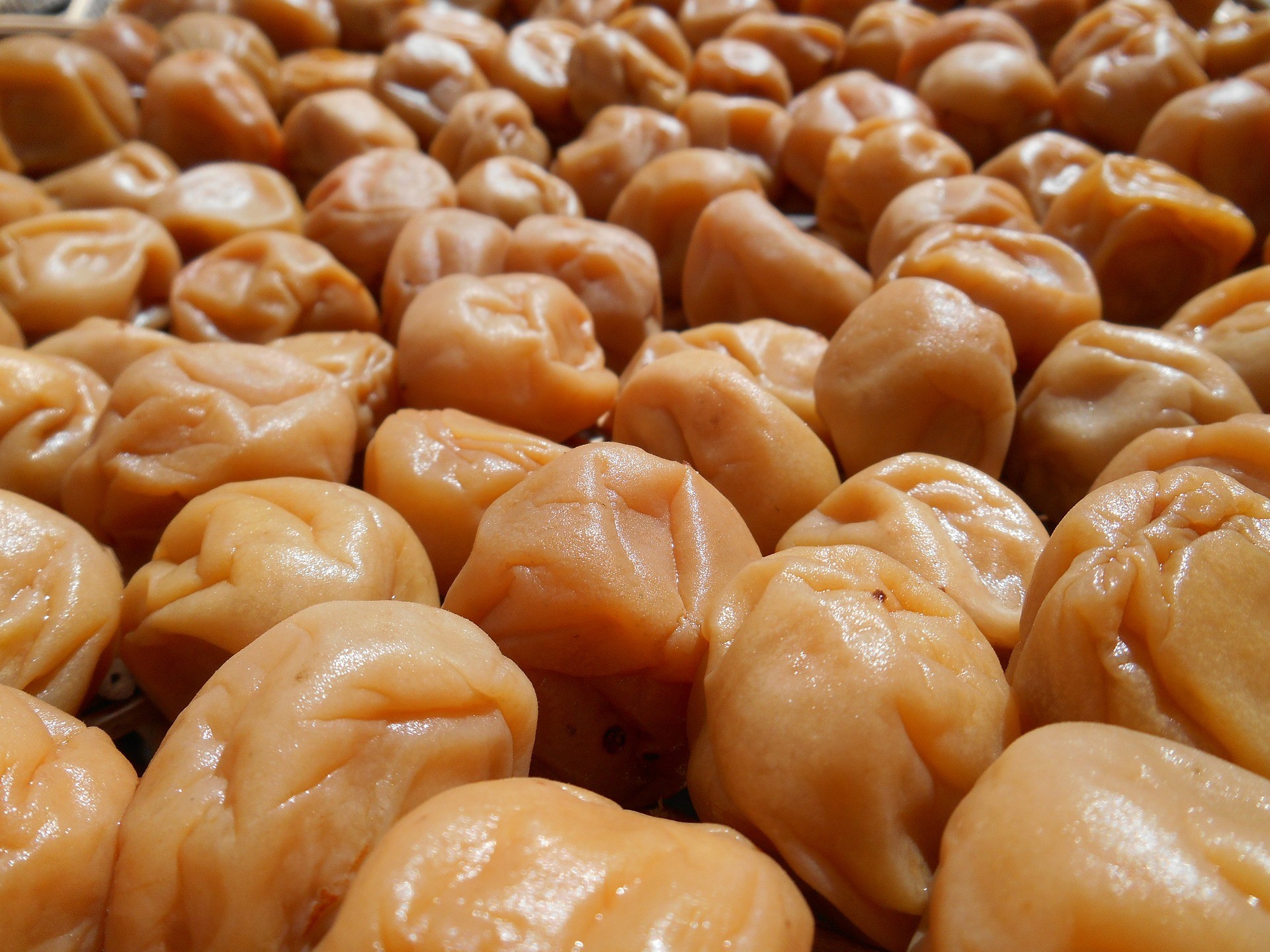
The Umeboshi, also called Japanese plum, are sour and salty pickled plums. Famous for their strong flavor, umeboshi are commonly eaten as a complement to many Japanese dishes.
“Umeboshi” (literally “dried plum”) are the pickled fruits of the Japanese apricot. It blooms in late winter with red, pink, and white flowers; both the apricot and the cherry are heralds of spring in the Japanese seasonal lexicon..
Pickled foods are quite popular in Japan. Classified under the general term “tsukemono“, which means “pickled thing”, they include everything from ginger to daikon to what Westerners would consider “pickles” or cucumber. However, unlike Western pickles, which are usually vinegar-based, Japanese pickles largely rely on a salt brine or fermentation to achieve their pickled state.
Among the huge number of pickled fruits and vegetables consumed by the Japanese, umeboshi stands out as unique both for its lasting popularity and its flavor. Dating back to the Heian era, over a thousand years ago, umeboshi play a nutritional and healing role in the Japanese diet.
Properties and benefits of umeboshi
Umeboshi do not provide many nutrients or calories, apart from a modest amount of potassium and dietary fiber. What you get with umeboshi is an abundance of sodium. Traditional umeboshi can contain up to nearly a quarter salt, while reduced-salt versions drop that percentage to 15% or 10%. This is a lot of salt.
The saltiness, combined with its sour taste, has made it an ideal solution for many common ailments. Supposed uses of umeboshi can range from:
- a digestive aid (it is apparently antibacterial!)
- curing a hangover, to relieve fatigue
- some even claim it protects against aging
- In Japanese vernacular, eating an umeboshi every day is the equivalent of “an apple a day keeps the doctor away” as a kind of folk wisdom.
Whether the above is true or not is subject to debate. What is true, however, is that umeboshi are an extremely efficient vehicle for delivering salt. For this reason, if you eat too many, it’s very easy to cross into excessive sodium consumption. One per day should be fine if you otherwise manage your sodium intake well, but more and you risk complications that come with excessive sodium consumption.
Even the sweeter variants, which might mask their saltiness, still contain a lot of salt. This won’t be a problem for most people as long as they watch their diet and don’t eat too many.


 are the pickled fruits of the Japanese plum tree.)