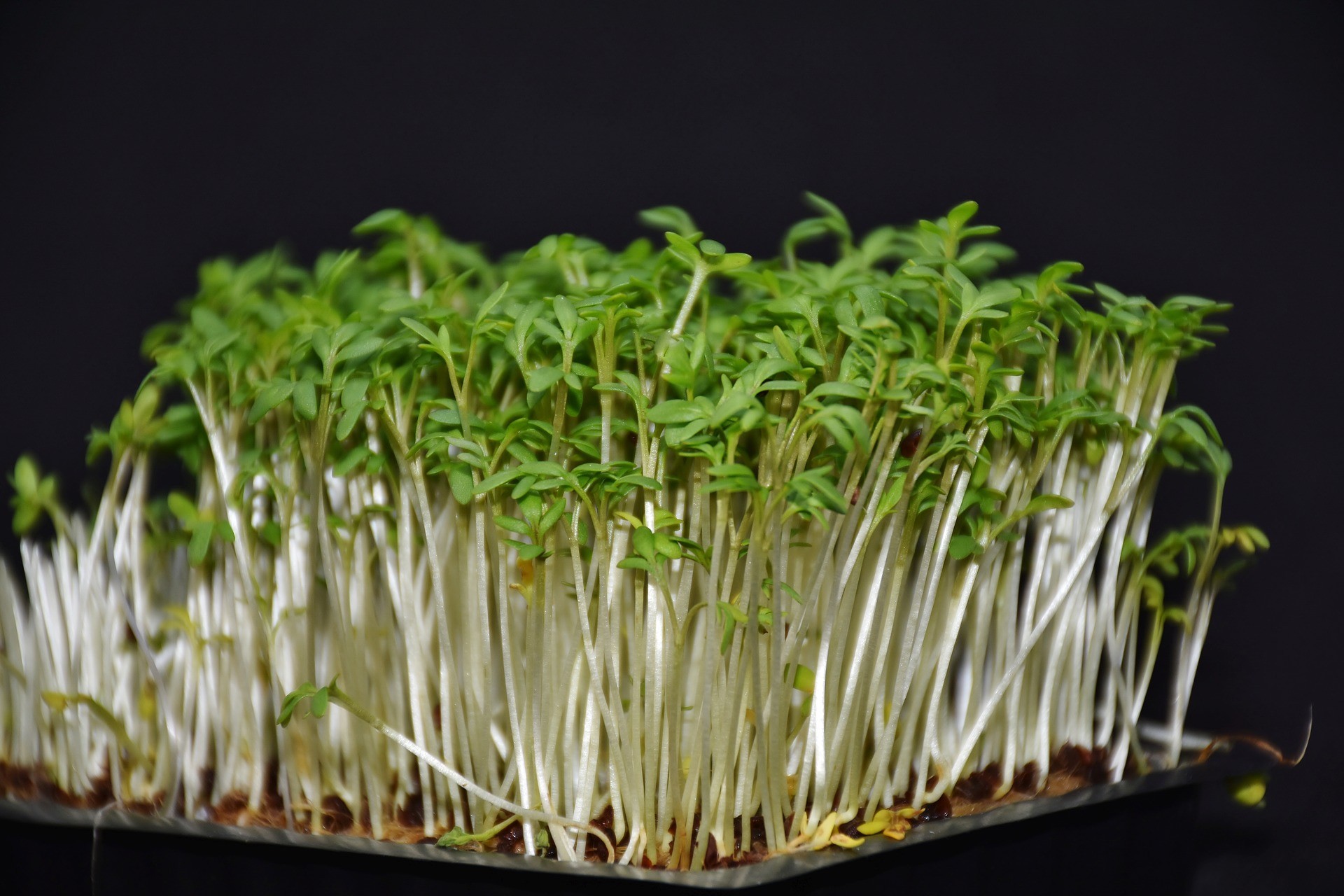
The watercress is native to Western Asia but is now found in most temperate climates, growing densely along the edges of fresh flowing water, especially if it is high in lime content. Commercially sold watercress is grown in specially prepared beds fed by clean running water. It is reliably perennial and can fill a gap in spring and autumn when mesclun and spicy salads are scarce.
Watercress was once a staple food in the diet of the poor but seems to have been excluded from menus in recent years. This is a shame because this member of the mustard family is a very versatile and extremely healthy green to add to your cooking repertoire. Even better, it is considered the most nutrient-dense vegetable you can eat.
Watercress is exceptionally rich in antioxidant vitamins A and C and vitamin K, and has long been valued as a treatment for scurvy. As a percentage of the daily allowance, two cups of watercress provide a whopping 212% of vitamin K, 48% of vitamin C, and 44% of vitamin A. It also supplies smaller but significant amounts of calcium, manganese, potassium, vitamin E, thiamine, riboflavin, vitamin B6, magnesium, and phosphorus.
The father of medicine, Hippocrates, used watercress to treat his patients and valued it so much that he built his first hospital near a stream where the herb grew to have a constant source. Watercress was also used as an appetite stimulant and as a tonic herb for anemia, weakening of the heart and eyesight, and to increase milk flow. Today, studies on watercress are showing promising results for its potential in cancer prevention and management.
The spicy, peppery taste of watercress enlivens any salad. Watercress is more tender than curly kale and cabbage and browns faster, adding a delicate, peppery flavor to any dish. Chinese cooks stir-fry it or simmer it in soup. Since ancient times, watercress has been highly regarded as a medicine. The Romans considered watercress a vigorous stimulant and advised lazy people to “eat some watercress!”