



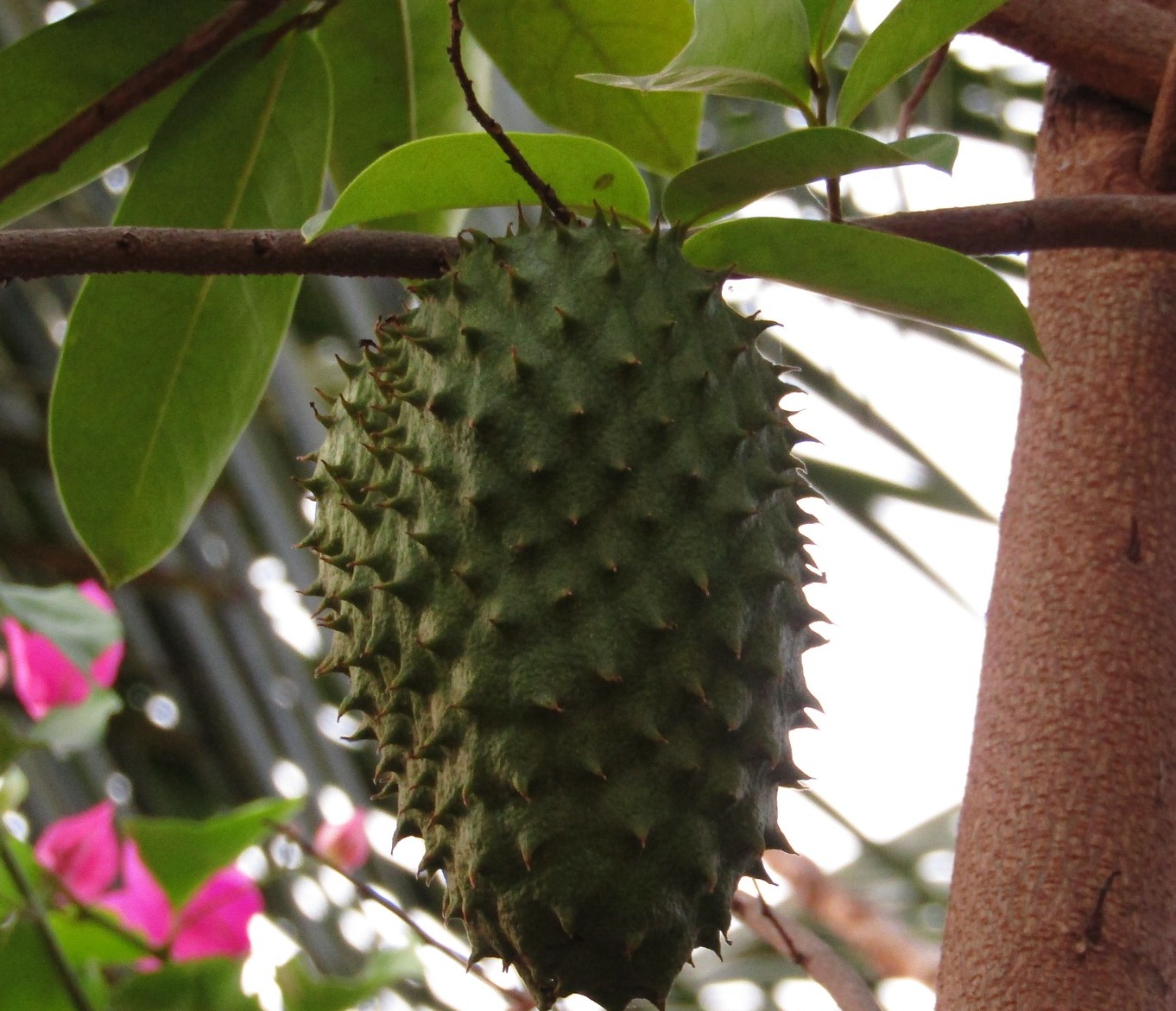
Soursop (also known as soursop, guanabana, sirsak, paw-paw) is a fruit known for its delicious flavor and extraordinary health benefits. Its scientific name is Annona muricata. It is also very nutritious and provides a good amount of fiber and vitamin C for very few calories. Native to Peru, it is grown throughout most of tropical America.
The fruits, which grow on trees, are large and oval-shaped. The green exterior, which has spines, covers a white and fibrous flesh. The taste of soursop is a cross between mango and pineapple. Soursop has many uses in traditional medicine and has been used to treat a wide range of health conditions and disorders. With its strong nutrient profile, it provides a variety of health benefits. It is a versatile food that can be used as an ingredient in many recipes; however, the seeds are toxic and must be removed. Soursop is rich in nutrients and has been used as a medicinal herb to cure many diseases.
Nutritional value of Soursop
Soursop is a source of vitamin C, an essential nutrient for strengthening the immune system. It also contains significant amounts of B vitamins (B1, B2, B3, B5, B6), iron, magnesium, and potassium.
| Components / Components | Per 100g / Per 100g |
|---|---|
| Energy / Energy | 31.8 kcal |
| Fat / Fat | 0.3 g |
| Carbohydrates / Carbohydrates | 16.8 g |
| Fiber / Fiber | 3.3 g |
| Potassium / Potassium | 278 mg |
| Sodium / Sodium | 14 mg |
| Phosphorus / Phosphorus | 27 mg |
| Magnesium / Magnesium | 21 mg |
| Iron / Iron | 0.6 mg |
| Provitamin A / Provitamin A | 3.5 mcg |
| Vitamin C / Vitamin C | 5.7 mg |
| Vitamin E / Vitamin E | 0.4 mg |
| Vitamin A / Vitamin A | 2 mg |
| Vitamin B1 / Vitamin B1 | 0.07 mg |
| Vitamin B2 / Vitamin B2 | 0.05 mg |
| Calcium / Calcium | 14 mg |
| Niacin / Niacin | 0.9 mg |
| Folic acid / folic acid | 14 mg |
Benefits of soursop
Soursop is a type of fruit used in medicine and cooking. It is low in calories but rich in fiber and vitamin C. Some research has shown it may also have health benefits.
- Test tube studies show that soursop is rich in antioxidants, which may help prevent cell damage and reduce the risk of chronic diseases.
- Healthy digestion. A whole soursop fruit contains about 83% of the recommended daily intake of fiber, which is a vital nutrient for digestive health. Fiber helps promote regularity and prevent digestive issues like constipation. It aids digestion, reduces the development of gastric ulcers, and lessens the effects of irritable bowel syndrome and Crohn’s disease.
- Soursop is rich in vitamin C and contains thiamine, folic acid, vitamin A, and niacin. The fruit also contains iron, potassium, and magnesium, along with fiber and protein. The antioxidants in vitamin C make soursop a healing herb.
- Soursop also contains copper, vitamin B6, and pantothenic acid. It has been effectively used in treating diabetes by balancing blood sugar levels.
- It is an excellent pain reliever and is helpful in easing pain caused by arthritis.
- Soursop promotes liver health by balancing bilirubin levels in the liver, thereby reversing jaundice.
- Some test tube studies show that soursop may help reduce tumor cell growth. More research is needed to evaluate the effect in humans. However, its antioxidants and beta-carotene content help to prevent eye diseases, reducing the risk of developing macular degeneration and inhibiting tumor growth.
- The leaves have anti-inflammatory properties, which make them useful in the treatment of root canal infections.
- In vitro studies show that graviola has antibacterial properties and may be effective against some strains of bacteria responsible for the disease, although further studies are needed.
- Graviola also contains copper, vitamin B6, and pantothenic acid. It has been effectively used in the treatment of diabetes by balancing blood sugar levels.
Graviola is used in many recipes and can be consumed fresh. It is made into beverages, used as an ingredient in fruit cups, and as a creamy juice. It is an ingredient in alcoholic beverages and is made into custard. It can be cooked and used as a side dish, just like vegetables and can be boiled, roasted, or fried. It is important to remove the seeds before eating the fruit because, as mentioned, they are toxic.




 is a fruit known for its delicious flavor and remarkable health benefits.)