
Typical productions of the Aosta Valley that have obtained the recognition “Protected Designation of Origin“, by Fontina to Valle d’Aosta Fromadzo, from Jambon de Bosses to Vallée d’Aoste Lard d’Arnad, to be enjoyed paired with the best DOC wines of the Aosta Valley.
Fontina PDO
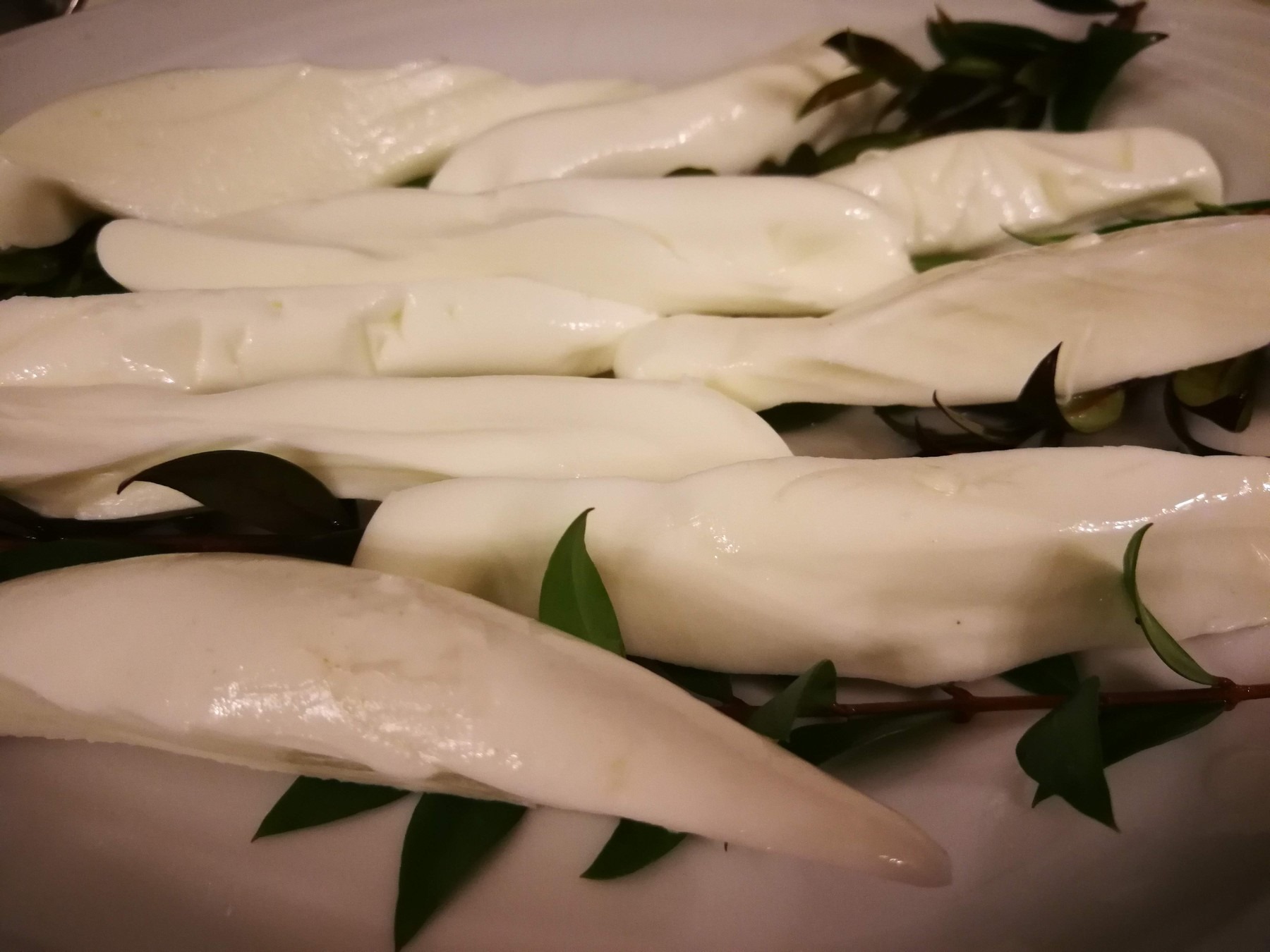
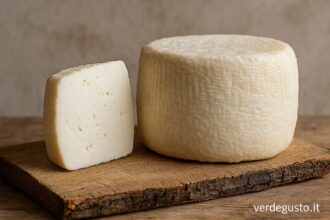
A journey to discover the flavors and aromas of the Aosta Valley can only begin with one of its most famous and appreciated products worldwide: the Fontina PDO. Its production is regulated by a strict specification that defines it as: “a full-fat semi-cooked cheese, made with whole milk from cows belonging to the Aosta breed (pezzata rossa, pezzata nera, castana), coming from a single milking.” In 1996, Fontina obtained from the European Union the Protected Designation of Origin (PDO), which unequivocally establishes that its exclusive production must take place in the Aosta Valley. After aging and a series of strict controls, the Consortium of Producers and Protection of the PDO Fontina proceeds to branding: the wheels marked with the brand are guaranteed for authenticity and quality.

Valle d’Aosta Fromadzo PDO
Another typical Aosta cheese is the Valle d’Aosta Fromadzo PDO. Made with cow’s milk from two milkings, to which small quantities of goat’s milk may be added, it is a semi-sweet cheese when fresh, while it becomes more intense, slightly salty, sometimes with a hint of spiciness, when more aged. Thanks to its etymological roots, which make it strongly representative of the production area, in October 1995 the Valle d’Aosta Fromadzo received, in the Official Gazette, the recognition of Designation of Origin (DO) and, on July 1st of the following year, it was registered in the European PDO register.

Toma di Gressoney
Other famous regional dairy products: the toma di Gressoney is a prized table cheese, crafted directly in the alpine pastures of the Lys valley and the central valley using traditional methods; the salignön is a ricotta with a creamy and fatty consistency and a spicy, piquant flavor, kneaded with salt, pepper, and chili pepper and further seasoned with mountain aromatic herbs; the brossa, a cream obtained from whey heated, to which vinegar (or other sour substances) is added, allowing fat and small amounts of protein to rise to the surface; the Seras is a fine ricotta, light in color and slightly tart and savory in flavor, with ancient origins.

Jambon de Bosses
Among the most typical cured meats, the Jambon de Bosses is a raw ham spiced with mountain herbs, produced at 1600 meters altitude in the homonymous location of Saint-Rhemy-en-Bosses, located in the Gran San Bernardo Valley on the border with Switzerland. The first documents testifying to its production, the “Contes de l’Hospice du Grand-Saint-Bernard”, date back to 1397, and further historical records follow over the centuries, confirming the reputation of this prized mountain ham.

Lardo di Arnad
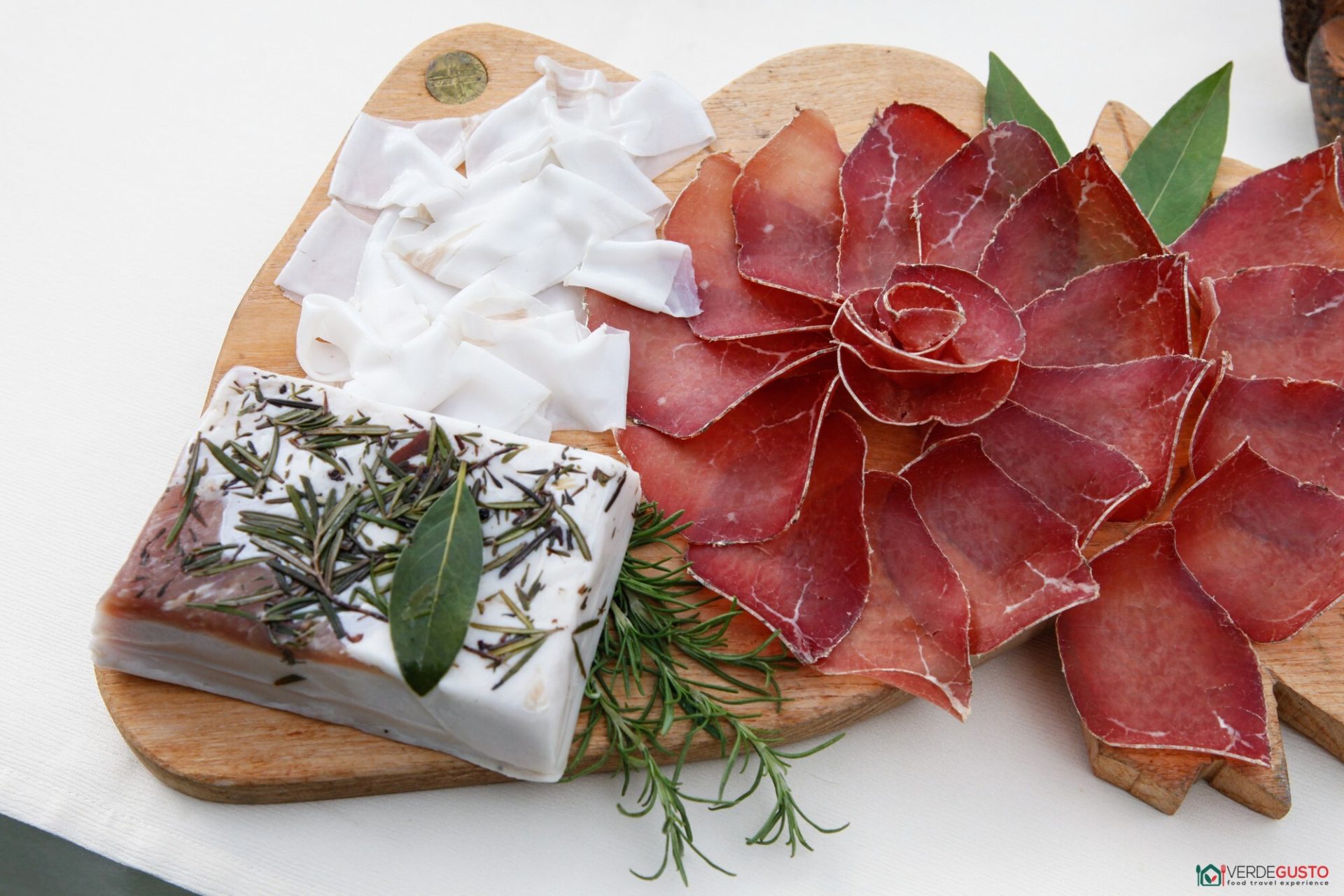
The Lardo di Arnad is another Aosta Valley PDO product conserved in particular chestnut or oak wooden containers called “doils” where layers of lardo alternate with a mixture composed of salt, water, spices, natural aromas, and mountain aromatic herbs: this is a very ancient conservation method, so much so that in the first inventory of Arnad castle, dated 1763, the presence of four doils in the kitchen was already noted. And it is still cured meat when we talk about motzetta, dried meat of beef, chamois, deer, or wild boar macerated in a brine of mountain aromatic herbs, combined with salt, spices, and other natural aromas. The motzetta should be served as an appetizer, sliced thinly and accompanied by the typical local rye bread.

Aosta Valley DOC
All products are strictly accompanied by a glass of exclusively DOC Aosta Valley. There are six Cooperative Wineries spread across the territory that produce wines along with over 30 private companies that are members of the Viticulteurs Encaveurs Vallée d’Aoste – the association that brings together local small producers. The range is broad and of high quality, divided into 7 area sub-denominations and 15 grape varieties. From dry and delicate whites like Blanc de Morgex et de La Salle of high altitude and Nus Malvoisie, through to dry and fruity reds such as Nus Rouge, to the more intense and full-bodied Enfer Arvier and Chambave Muscat.