 Portata:
 Ingredienti:
 Cotture:
 Cucina:
 Difficoltà:
 Menu:
Menu:





Embark on a culinary journey to the enchanting land of Morocco, where vibrant flavors, aromatic spices, and rich cultural heritage come together in the form of delicious Moroccan couscous. This exquisite dish, often considered the pièce de résistance of North African cuisine, is an international gastronomic delight that you can effortlessly recreate within the cozy confines of your own home.
With its exquisite blend of fluffy steamed grains, tender meats or vegetables, and a exuberant medley of spices, Moroccan couscous is the ultimate comfort food promising to tantalize your taste buds and transport you to the lively souks of Marrakech. By immersing yourself in the art of preparing traditional Moroccan couscous, you will not only savor its appetizing flavors but also embrace the ancient rituals that have made it a staple food in Moroccan homes for centuries. So, roll up your sleeves and embark on this gastronomic adventure, bringing the soul of Morocco to your table.
Introduction to Moroccan Cuisine
Moroccan cuisine is a unique culinary experience, characterized by intense flavors, aromatic spices, and a rich cultural heritage reflected in every dish. This cuisine has its roots in a variety of influences, including Berber, Arab, Andalusian, and Mediterranean, making it extremely diverse and satisfying.
One of the most fascinating aspects of Moroccan cuisine is the generous use of spices and seasonings, which give the dishes a complex and enchanting taste. Some of the most common spices used in Moroccan cooking include cumin, coriander, paprika, saffron, cinnamon, and black pepper. These spices provide an explosion of flavor that is hard to forget.
Additionally, Moroccan cuisine is known for its variety of tajines, a traditional dish named after the distinctive earthenware pot in which it is cooked. These stews of meat, fish, or vegetables stand out for their intense and deep flavors, which pair perfectly with couscous, the star of our culinary adventure today.
The Importance of Couscous in Moroccan Culture
Couscous is a fundamental dish in Moroccan culture and throughout the North African region. Originating from the Berbers, couscous is a food made from durum wheat semolina, which is steamed and then mixed with meat, vegetables, and spices to create a hearty and delicious dish.
In Moroccan culture, couscous is considered a convivial dish, often served during special occasions and family gatherings. It is also a symbol of hospitality and generosity, as it is shared among all diners from a single large platter, accompanied by traditional sauces and condiments such as harissa, a spicy red chili paste.
Couscous is also a versatile dish that can be customized according to individual tastes and preferences. It can be prepared with a variety of meats such as lamb, beef, or chicken, or with a selection of seasonal vegetables like zucchini, carrots, and peppers. Additionally, couscous can be enriched with legumes like chickpeas and lentils for an even more nutritious and flavorful meal.
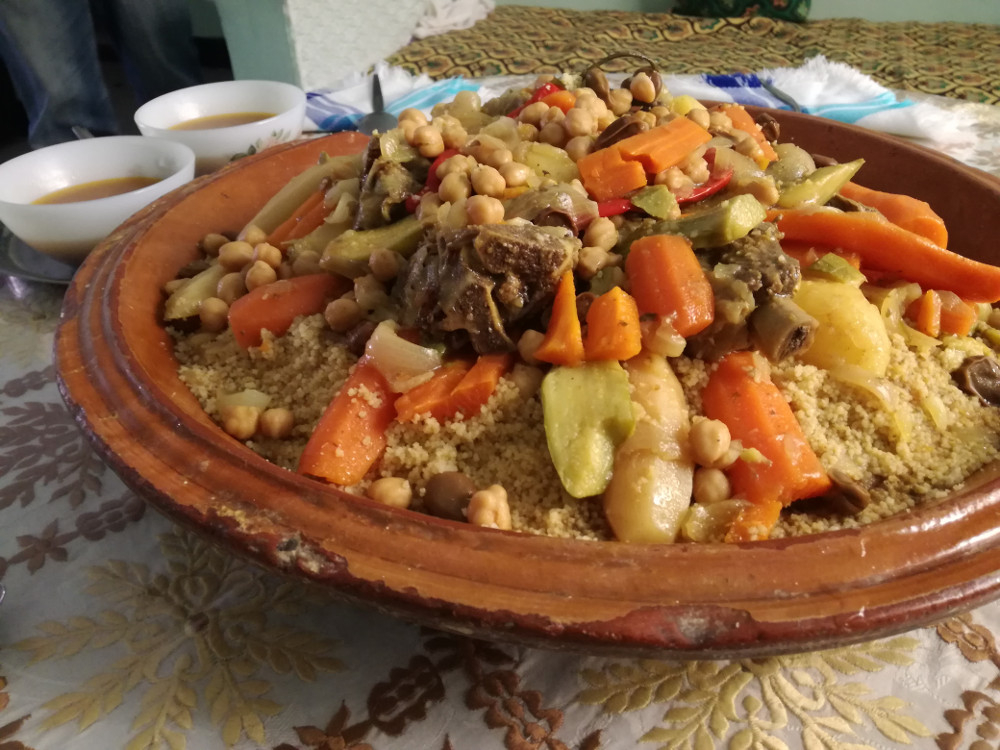
Traditional Moroccan Couscous
Ingredients
Equipment
Method
- Start by preparing the ingredients: wash and cut the vegetables into pieces of similar size, clean and dice the meat, and rinse the legumes if needed.
- In a large, deep skillet, heat a bit of olive oil and brown the meat until golden. Add the chopped onions and cook until soft.
- Add the spices and mix well to distribute evenly among the ingredients.
- Add the vegetables to the skillet, mixing thoroughly with the meat and spices.
- Cook for a few minutes, then add the legumes and broth.
- Bring to a boil, reduce heat, and simmer for about 30 minutes, or until the meat and vegetables are tender.
- Meanwhile, prepare the couscous according to package instructions.
- Usually, this involves pouring the couscous into a bowl, adding warm water, and letting it sit for a few minutes until grains absorb the water and become soft.
- Then, steam the couscous using a couscoussier or steamer for about 20 minutes, until the grains are fluffy and light.
- Once cooked, transfer the couscous to a serving dish and toss with a little olive oil to prevent sticking.
- Create a "nest" of couscous in the center of the plate, and pour the meat, vegetable, and legume mixture into the center, spreading ingredients evenly.
- Serve the warm Moroccan couscous with traditional sauces and condiments such as harissa, for an even more authentic flavor experience.


Notes
Customizing Moroccan couscous with different proteins and vegetables
Moroccan couscous is an extremely versatile dish that can be adapted to everyone’s preferences by adding different proteins and vegetables. For a vegetarian option, you can replace meat with a greater variety of vegetables such as eggplant, zucchini, peppers, tomatoes, and onions. Additionally, you can add tofu or seitan instead of meat for an alternative protein source.
For those who prefer fish, it is possible to prepare a Moroccan seafood couscous using fresh fish like cod, sea bass, or gilthead bream, and seafood such as shrimp, mussels, and calamari. In this case, it is advisable to use fish broth instead of meat broth to enhance the fish flavor.
Alternatively, you can use beef or chicken instead of lamb, or combine different proteins for an even more substantial and flavorful dish. The important thing is to choose fresh and quality ingredients to ensure an excellent result.
Moreover, you can customize Moroccan couscous with various seasonal vegetables based on your tastes and preferences. For example, you can add potatoes, carrots, peas, or green beans to enrich the dish with a variety of flavors and textures.
Common Moroccan spices and their health benefits
As mentioned earlier, spices are a fundamental element of Moroccan cuisine, and Moroccan couscous is no exception. Here is a brief overview of the most common spices used in Moroccan cuisine and their health benefits:
- Cumin: cumin is a spice with an intense and aromatic flavor, often used in Moroccan cuisine to give dishes an earthy and slightly bitter taste. Cumin is also known for its antioxidant and anti-inflammatory properties, which can help reduce the risk of chronic diseases such as diabetes and heart disease.
- Coriander: coriander is a delicate and fragrant spice, often used in Moroccan cuisine to give dishes a fresh and slightly citrusy flavor. Coriander is also known for its antioxidant and anti-inflammatory properties, which can help reduce inflammation and the risk of chronic diseases such as diabetes and heart disease.
- Paprika: paprika is a spice with a sweet and slightly spicy flavor, often used in Moroccan cuisine to give dishes a deep red color and a slightly smoky taste. Paprika also contains a range of important nutrients, including vitamin C, vitamin E, and beta-carotene, which can help protect the body from free radical damage and improve overall health.
- Saffron: saffron is an expensive but prized spice, with a delicate and floral flavor, often used in Moroccan cuisine to impart a sophisticated and refined taste to dishes. Saffron is also known for its potential health benefits