

When you crack an egg into a bowl or pan, one of the first details that catches your attention is the color of the yolk. In some cases, it appears very pale yellow, almost pale; in others, it takes on particularly intense golden, amber, or orange shades. Faced with these differences, it’s easy to think that a darker yolk automatically belongs to a healthier, fresher egg or one produced by a free-range hen. In reality, the color of the egg mainly tells something about the animal’s diet but cannot be considered alone as an absolute indicator of quality.
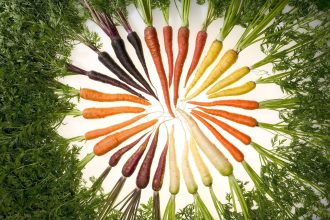
The yolk color depends primarily on the pigments present in the hen’s food. These pigments mainly belong to the carotenoid family, natural substances found in many vegetables, grains, and plants. When ingested, some of these compounds accumulate in the yolk and determine its final shade.
What determines the color of the yolk?
The yolk naturally contains fats, proteins, vitamins, minerals, and pigments. Among the pigments most important for its coloration are xanthophylls, belonging to the broader family of carotenoids. These substances are present, for example, in corn, alfalfa, leafy green vegetables, and various plant-based ingredients used in animal feed.
A hen that consumes foods rich in yellow and orange pigments tends to produce eggs with a more intense yolk. Yellow corn can promote golden tones, while a diet including grass, vegetables, alfalfa, or other carotenoid-rich ingredients can help make the yolk darker.
Conversely, a diet mainly composed of grains and ingredients with a lower pigment content can produce paler yolks. This does not necessarily mean the hen was poorly fed or that the egg has insufficient nutritional value. The color mainly indicates the presence and type of pigments introduced through the diet.
Is an orange yolk always better?
An orange or very dark yolk is often perceived as more natural, flavorful, and nutritious. This association also arises from the traditional image of free-range hens raised in the countryside, free to forage and feed on grass, seeds, plants, and small organisms present in the soil. A varied diet can indeed modify the egg’s composition and increase certain substances. However, it is not correct to conclude that any orange yolk is automatically more nutritious or of higher quality than a light yellow one.
The intense color mainly signals a higher presence of pigments. It does not allow one to establish with certainty the overall content of proteins, fats, vitamins, and minerals. Two eggs with differently colored yolks can have very similar nutritional characteristics.
Moreover, yolk color can be influenced through precise feed formulation. In farms, the feed ration can include ingredients naturally rich in pigments or authorized substances capable of modifying the yolk’s shade. A very bright orange color alone does not demonstrate that the hen lived outdoors or followed a spontaneous diet.
Does the yolk color indicate freshness?
Another common mistake is associating a more intense color with egg freshness. In reality, freshness cannot be recognized from the yolk’s shade. A fresh egg can have either a pale or dark yolk, depending on the hen’s diet. Other elements are more useful to evaluate freshness, such as the laying date, minimum shelf life, how the egg was stored, and the albumen’s consistency.
When an egg is fresh, the yolk tends to be more compact, tall, and well defined, while the albumen presents a denser part around the yolk. Over time, the albumen may become more liquid, and the yolk tends to flatten and break more easily. However, these are practical observations, not foolproof methods to ascertain product safety.
Do free-range hens produce darker yolks?
Hens living outdoors can have access to grass, plants, seeds, insects, and other food sources that can influence yolk color. For this reason, their eggs may show more intense hues. However, this is not an absolute rule. Even an indoor hen can receive feed rich in carotenoids and produce a very orange yolk. Similarly, a hen with outdoor access could lay eggs with paler yolks if its diet contains few pigments.
Color alone is not enough to identify the farming method. To obtain this information, you need to check the code printed on the shell and the indications on the packaging.
How to read the code printed on the egg
Commercially sold eggs feature a code that allows you to know the rearing method and the product’s origin. The first digit indicates the system used to raise the hens:
- 0: organic farming;
- 1: free-range farming;
- 2: barn farming;
- 3: cage farming with equipped cages.
After the first number, the country production code appears, followed by further numbers and letters useful for identifying the municipality, province, and farm of origin.
This code offers much more precise information than merely observing yolk color. An intense color can create a good impression, but only the label and code let you truly know the declared farming method.
Does eggshell color depend on the diet?
The color of the shell follows a different logic from that of the yolk. Eggs can have white, cream, beige, brown shells and, in some breeds, even bluish or greenish shades.
These differences mainly depend on the hen’s genetics and breed, not on the foods it consumes. Some breeds naturally lay white eggs, while others produce brown or colored shells.
From a nutritional point of view, a brown-shelled egg is not automatically better than a white-shelled one. Shell thickness can also vary depending on the hen’s age, health, calcium availability, environmental conditions, and other factors related to farm management.
Is a pale yolk a sign of poor quality?
A pale yolk is sometimes interpreted as a sign of an industrial egg, poorer or less genuine. This conclusion is also too simplistic. A pale color mainly indicates that the hen’s diet contained a lower amount of pigments capable of transferring to the yolk.
It does not necessarily mean the egg is less safe or fresh. Overall quality depends on many factors: the hen’s health status, nutritional balance, farm hygiene conditions, storage, traceability, and compliance with production standards.
Therefore, color can be considered a small piece of information, not a definitive judgment on the egg.
Does color also change the taste?
Yolk color does not necessarily determine a more intense flavor. Perception can also be influenced by visual appearance: an orange yolk is often associated with a richer taste even before tasting.
Hen diet can, within limits, affect the egg’s aromatic profile and fat composition. Freshness, cooking method, and pairing with other ingredients also significantly contribute to the final result.
An egg cooked too long, for example, can develop stronger odors and show a greenish color around the yolk. This phenomenon does not depend on the hen’s diet but on a reaction between the iron present in the yolk and sulfur compounds in the albumen during prolonged cooking or too slow cooling.
What color should a good yolk have?
There is no single ideal color. The shade can vary from light yellow to orange without this automatically classifying an egg as good or bad.
To choose consciously, it’s preferable to observe the set of available information: origin, farming code, expiration date, shell integrity, correct storage, and producer reliability.
Those looking for eggs from free-range or organic hens should refer to the initial code printed on the shell, without relying solely on the yolk or packaging color.
The egg color tells only part of the story
Yolk color can offer an interesting hint about the hen’s diet. Darker shades are generally associated with a carotenoid-rich diet, while paler yolks may come from less pigmented foods.
This difference alone, however, doesn’t allow establishing the quality, freshness, nutritional value, or animal welfare. An orange yolk is not necessarily organic, just as a pale yolk is not automatically inferior.
The egg’s true identity emerges by combining several elements: hen diet, farming method, origin, storage, and traceability. Color remains a fascinating gastronomic curiosity, capable of telling part of the story, but not the entire journey that takes the egg from the henhouse to the table.