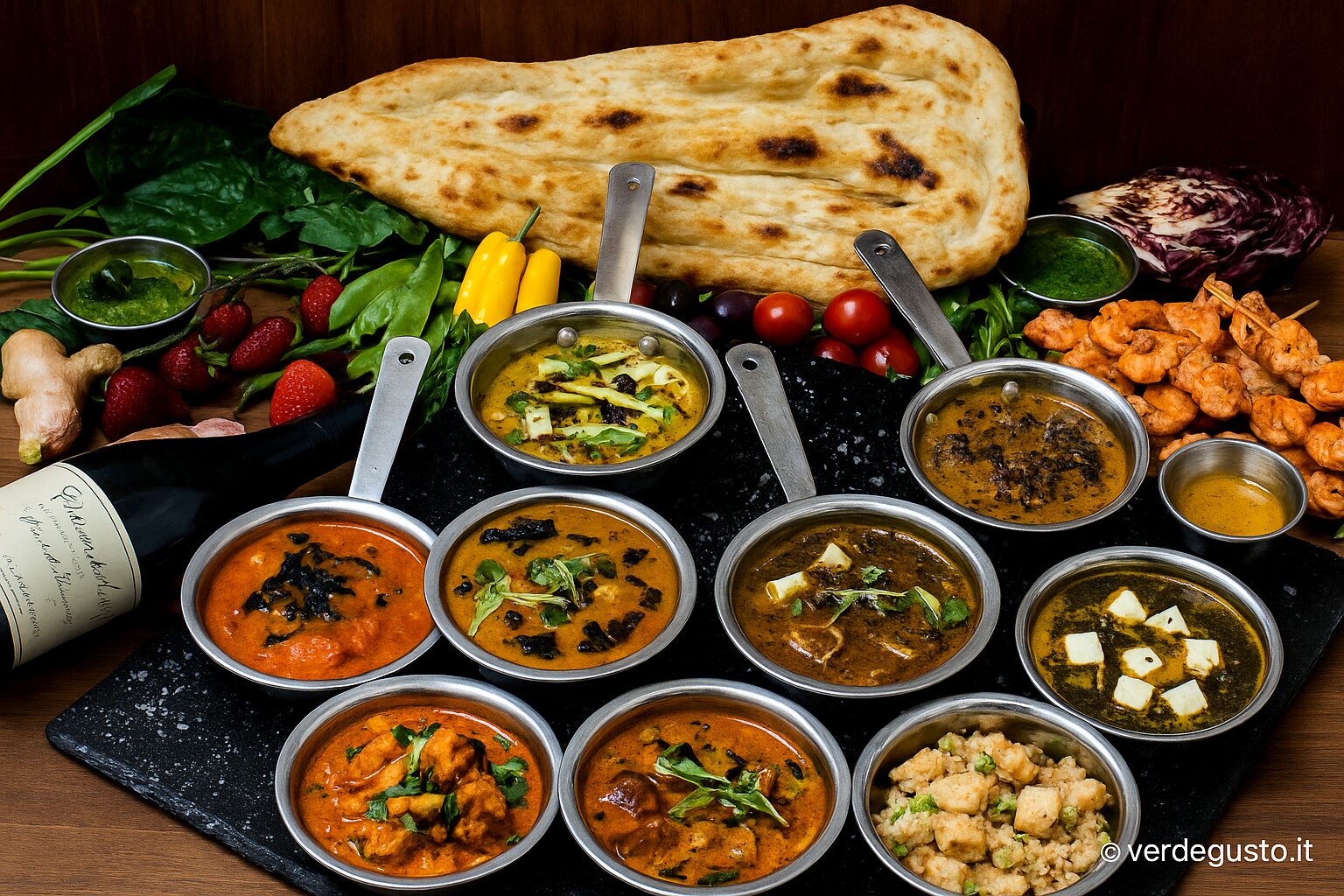

Street food in India is not just fast food: it is culture, sociality, tradition made into a daily gesture. From the crowded alleys of Delhi to the night markets of Mumbai, all the way to the artisanal carts of Jaipur, eating on the street is an act that engages all the senses. In this article, we delve into three of the most iconic and fascinating Indian street foods: the crunchy and spicy Pani Puri, the unmistakable Samosa, and the deep, aromatic Smoked Tandoori.
What street food really is in India
In India, street food is everywhere. It has no set hours or seasons: you find it at dawn, mid-morning, late afternoon, or late at night. It is prepared in front of passersby, often with a gesture repeated hundreds of times, like a ritual. And like every ritual, it has its unwritten rules: eating with your hands, waiting your turn in line, choosing the trusted vendor. Every city has its variants, every region its spices.
Pani Puri: India’s most explosive bite
Also known as Golgappa in northern India and Puchka in Bengal, Pani Puri is perhaps the most beloved street food among Indians. It appears as a small crunchy sphere, hollow inside, instantly filled with spiced potatoes, chickpeas, chopped onion, tamarind chutney, and finally filled with cold spiced water (pani) made from mint, cumin, coriander, and lime.
It is eaten in one bite, immediately. The vendor watches you as you bite it because they need to know when you’re ready for the next one. A sort of moist, tangy, spicy, and sweet oral ritual all at once.
Why is it so loved?
- Because it’s an experience.
- Because it’s a harmony of contrasts.
- And because the flavor changes with each vendor.
Where to try it in Italy?
At Indian festivals, in authentic restaurants (often found on tasting menus), or to prepare at home with pre-packaged kits.

Samosa: the triangle of wonders
The Samosa is more than a snack: it is an icon of Indian cuisine. Triangular or pyramidal in shape, it has a thin, crunchy dough shell, fried or baked, that encloses a spiced filling. The classic version includes potatoes, peas, cumin, fresh coriander, and turmeric, but there are also versions with meat, lentils, spinach, or even sweet ones (with coconut or dried fruit).
History and distribution
Born in Central Asia and spread to India thanks to Arab trade, the samosa is now ubiquitous: from street stalls to ceremonial tables. In East Africa and the Middle East there are similar versions, but the Indian variety remains the most famous.
How to eat it
Always hot, often accompanied by tamarind or mint chutney. In India, it is also served as “chaat”: broken samosa topped with yogurt, date sauce, and crunchy spices. A real blast!
Modern variant: Baked samosa with fusion filling
Nowadays, in modern restaurants you can find samosas filled with cheese, beetroot, tandoori chicken, even chocolate and banana. The shape remains, but the contents change.

Smoked Tandoori: between embers, rituals, and poetry
The word tandoori comes from tandoor, a cylindrical clay oven that reaches very high temperatures. Meats (chicken, lamb, fish) are marinated in yogurt and spices (masala, paprika, turmeric, garlic, ginger) and then skewered on long sticks and cooked vertically. The result is tender, fragrant meat with a smoky crust and juicy interior.
The art of marination
The key to the flavor is time and temperature. The longer they marinate, the more deeply they absorb the flavor. Tandoori chicken, for example, is scored to enhance absorption.
The dhungar technique (cold smoking)
Another spectacular touch is the dhungar technique: a piece of charcoal is heated, placed in a small container on the plate (on butter or spices), then everything is covered with a lid for a few minutes. The smoke penetrates and leaves an unforgettable aroma.
Vegetarian versions?
Yes: paneer tandoori (fresh cheese), mushrooms, cauliflower, or even tofu. The result is surprising, especially when accompanied by red onions, lemon, and spicy chutney.

Why do we love street food so much?
Because it is immediate, shared, genuine. Because every dish tells a story and every cart has a face. Indian street food in particular is a perfect mix of spirituality and practicality: even in the chaos of Delhi, every bite is a meaningful pause. While it becomes gourmet in the West, in India it thankfully remains popular. And this makes it even more authentic.
Where to find these dishes in Italy?
- In authentic Indian restaurants (recommend those with genuine tandoori kitchens)
- At ethnic festivals and street food fairs (e.g., Cibo da Strada, Festival dell’Oriente)
- On Instagram and TikTok, where many creators show and talk about them
- Online: more and more stores offer pani puri kits, tandoori masala, ready-to-cook samosas
VerdeGusto Advice
Want to try pani puri at home? Buy the ready spheres, prepare a filling with mashed potatoes, chickpeas and onion, and make the spiced water with mint, cumin, tamarind and a pinch of sugar. Serve immediately: crunchiness and surprise must be eaten without delay.
Want to experiment with tandoori? Use the oven grill and a small bowl with lit charcoal (dhungar style) to scent the dish. Follow VerdeGusto to discover new street foods, iconic ingredients, and cultures told through food.