Jicama is native to Mexico and Central America and was used by the Aztec people and other Mesoamericans. The Spanish spread the plant to the Philippines where it spread to China, Japan, India, and other areas of Southeast Asia and is now found in many countries around the world. It grows best in tropical lowland climates.
Jicama is a versatile vegetable that can be eaten raw as a snack or in salad and is used in the preparation of many recipes. Jicama is a highly nutritious food with many healing qualities.
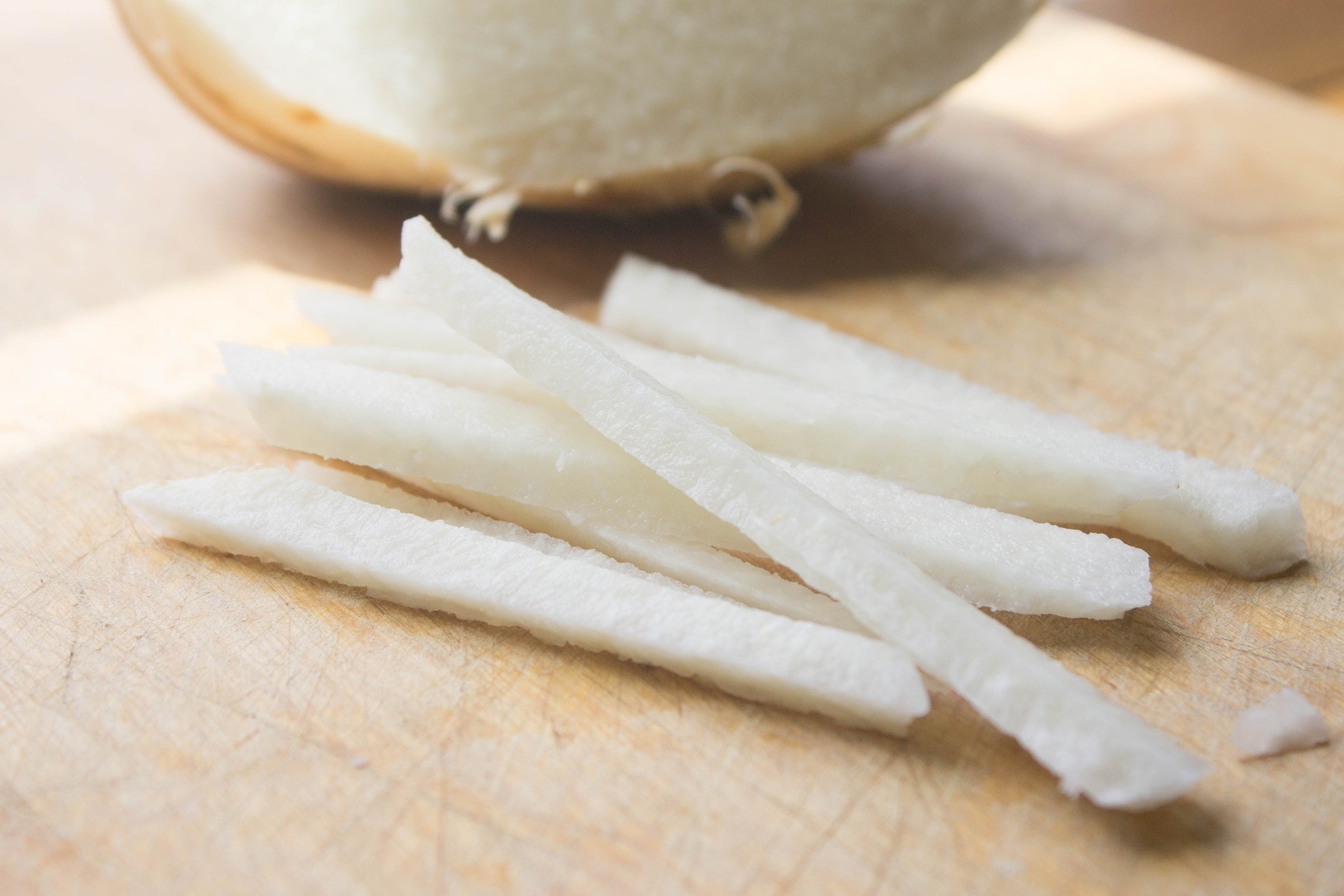
Jicama is a turnip-like vegetable with a delicate flavor very similar to an apple. The juicy texture mimics that of a water chestnut, with white flesh and a thin gray or brown skin that must be removed before use. When incorporated into cooked recipes, jicama takes on the flavor of the other ingredients. One of the many uses of jicama is as a thickener in recipes.
Benefits of Jicama
Fiber for digestive health
Jicama is beneficial for the digestive system due to its high fiber content. Fiber increases stool bulk which helps move it through the digestive tract, reducing the incidence of constipation. Jicama is also rich in soluble fiber known as oligofructose inulin, which is an inert carbohydrate that does not become a simple sugar, thus stabilizing blood sugar fluctuations which is advantageous for people with diabetes.
Vitamin C for immune system support
Because it is rich in vitamin C, jicama boosts immune system efficiency by stimulating white blood cells that fight against bacterial, fungal, viral, and pathogenic diseases. Vitamin C is an important antioxidant that neutralizes the effects of free radicals, a byproduct of cellular metabolism, thereby reducing the risk of cancer and heart disease.
Copper and iron for circulatory health
Jicama enhances the circulatory system because it is rich in copper and iron. These elements are a factor in the production of red blood cells, which supply oxygen to the body. Healthy and abundant red blood cells reduce the risk of developing anemia.
Vitamin B6 for brain function
To maintain healthy brain function, jicama contains a significant amount of vitamin B6, which helps improve cognitive abilities. It is also essential for breaking down proteins into a form that can be absorbed by the body (known as amino acids). This helps maintain a healthy metabolism and a balanced organ system.
Minerals for bones and teeth
Jicama is helpful to a healthy skeletal system because it is rich in manganese, magnesium, iron, and copper. These elements are essential for strong bones and teeth, as well as for the growth of new bone tissue and the repair and healing of existing bone damage. Adding jicama to the diet will reduce the risk of developing osteoporosis and other bone diseases.