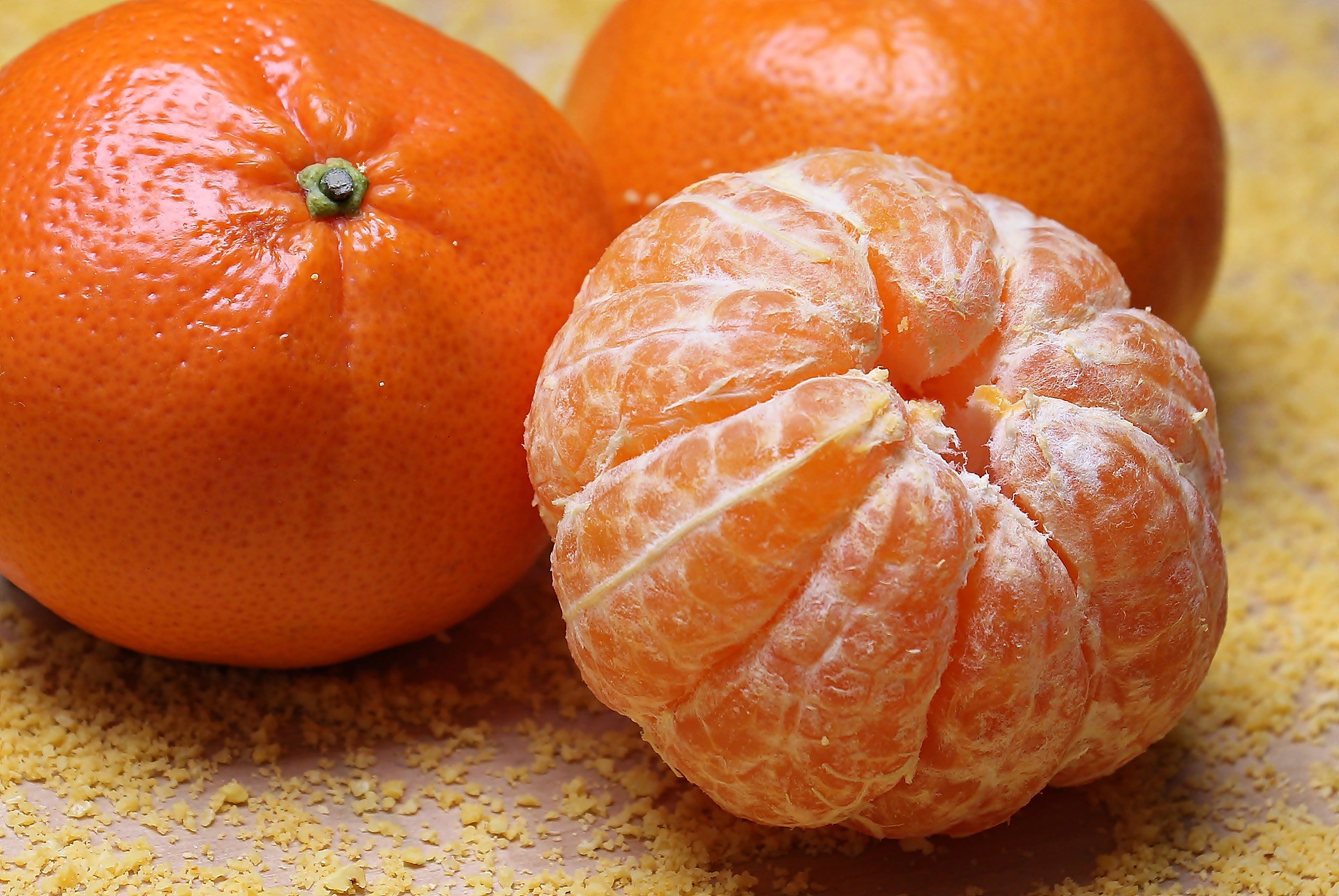
Clementines were accidentally created by father Clement Rodier who was planting seedlings of Mediterranean mandarins pollinated with a decorative willow-leaf variety of C. aurantium, commonly known as Granito, in the garden of an orphanage near Oran, Algeria.
The plant was brought to Florida in 1909 and then to California in 1914 by HS Fawcett of the Citrus Research Center, Riverside. It is here that the commercial development and marketing of the fruit took place. Clementines are in season from mid-November to January. Their sweet flavor makes them ideal for jellies, preserves, marmalades, and dessert recipes. They can be used in salads and as an ingredient in sauces and salad dressings. Clementines have rich nutritional value and contain many vitamins and minerals; they are also an excellent source of fiber.
Difference between mandarin, clementine, and tangor
The mandarin is a smaller and sweeter Asian citrus fruit compared to the orange. It is bright orange (leaning to yellow) in color with a tough peel. The taste is more tart than the other two. The clementine is smaller with a smooth, shiny red-orange peel. The pulp is seedless with a very sweet taste (halfway between mandarin and orange). The tangor is obtained by grafting mandarin and orange. The taste leans towards orange and the size is between mandarin and clementine. The tangerine mandarin
is well known.
- Clementines have many nutritional and practical benefits.Clementines contain minerals such as potassium, phosphorus, calcium, and magnesium. They are rich in vitamin C and contain a significant amount of folate and fiber. Other nutrients include protein, zinc, vitamins A, D, K, E, B6, and B12.
- Clementines are effective in reducing the risk of stroke due to their significant amount of calcium, zinc, and magnesium. Their potassium content relaxes blood vessels, thereby reducing the incidence of high blood pressure (a risk factor for stroke) and lowers the incidence of heart diseases.
- Clementines boost the immune system of the body thanks to being rich in vitamin C, which protects the body from heart diseases by lowering cholesterol levels in the circulatory system. It is also a factor in improving brain activity, such as increased analytical thinking. This vitamin is also an important contributor to skin health, due to its antioxidant properties.
- High in folate, clementines are beneficial for the circulatory system by strengthening red blood cells and supporting the production of DNA and RNA, the building blocks of cells. Folate also prevents the development of anemia.
- Those suffering from circulatory diseases such as hypertension, high cholesterol levels, and heart disease find clementines helpful in controlling symptoms. Their antioxidant qualities make clementines useful in reducing cancer risk and in strengthening the immune system. A great way to consume clementines is by juicing. Clementines are a versatile and healing food and are listed among superfoods.
- Clementines were developed by accident and are closely related to oranges and mandarins. They are seedless, have thin skins, and are sweet, making them ideal snacks for young children. Their nutritional value makes them an excellent food for expectant mothers, reducing the incidence of congenital malformations.
- Not only are clementines good for the body, but they are also useful around the house. To clean countertops, cut a clementine in half and sprinkle with salt. Use the clementine as a cleaner to keep insects and pests out of the house. Place the peel on houseplants to prevent kittens from chewing the leaves.