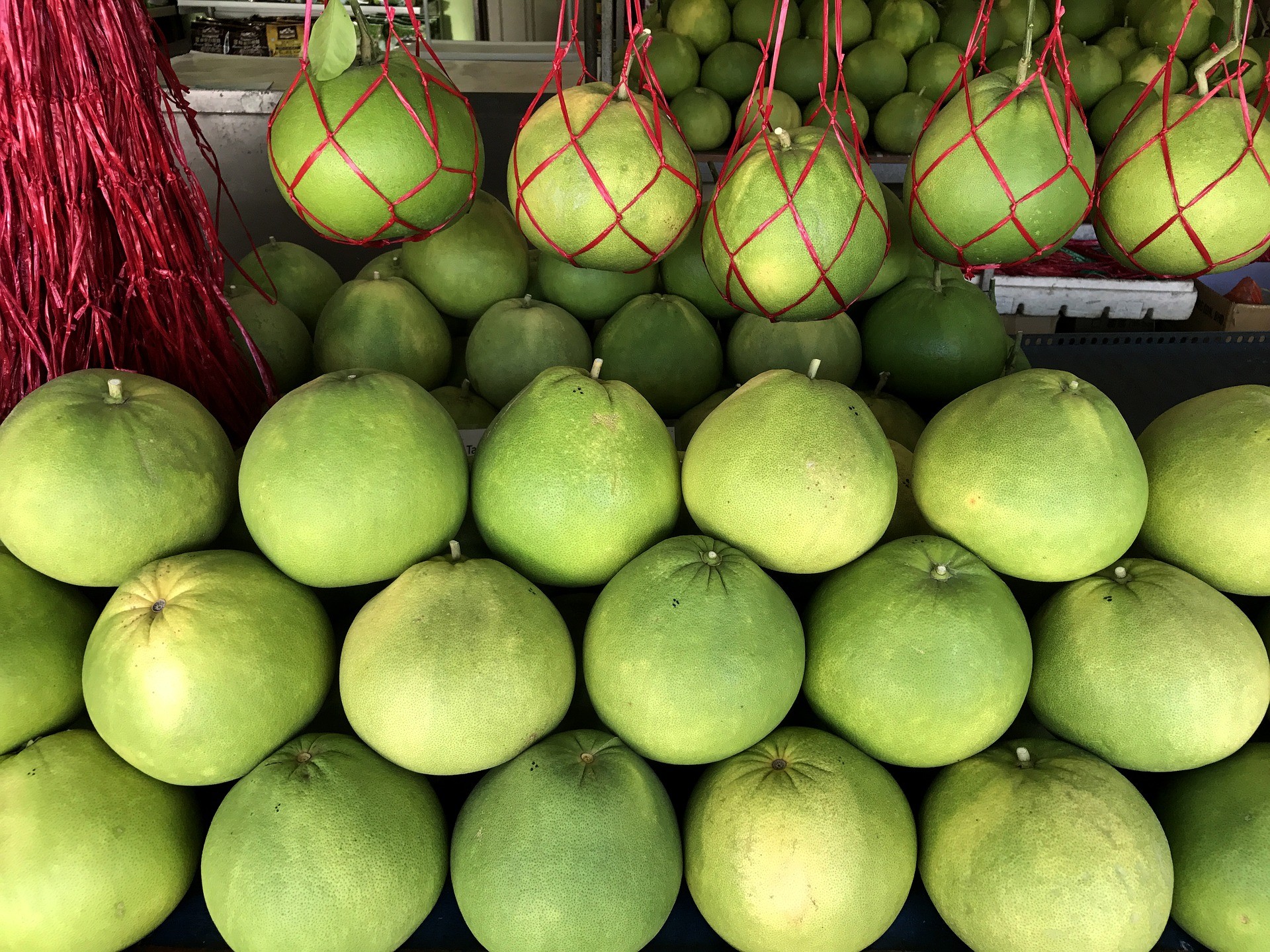
The pomelo is the largest of the citrus fruits. It grows on evergreen trees that vary in height. The tree produces flowers with a creamy color that can grow in clusters or as a single flower and have a diameter ranging from one to two and a quarter inches. The leaves are the largest among citrus trees and the fruit is also the largest in the citrus family. It has a sweet taste with large juicy cells that can be pink or white.
The peel ranges from green to yellow. The flesh color varies from pink to pink. Like grapefruits, they can be faded or nearly seedless, but they can have a sweet, almost sweet taste alongside the sour ones, depending on the species. They can be used like grapefruits and will also please those who cannot eat grapefruit because of its sour and acidic taste.
The pomelo tree is a tropical plant that produces a fruit similar to grapefruit and is rich in nutrients, making it a healing herb for treating fevers, coughs, and gastrointestinal diseases. The aromatic flowers are used in Vietnam to make perfumes and the wood of the tree is used to make tool handles. Pomelo is nutrient-rich and has been used as an ingredient in salads, in candy production, and as a medicinal herb.
Properties and benefits of pomelo
- contains a substance similar to insulin and functions like antioxidants
- rich in vitamin C, folic acid and potassium which help regulate blood pressure levels
- high in calories and fat, rich in dietary fiber
- its juice has an alkaline reaction after digestion, it has a good effect on the digestive system
- contains pectin which is effective in reducing arterial plaque buildup
- the high vitamin C content helps to strengthen and maintain artery elasticity
- can help in the weight loss process, because the fat-burning enzyme in pomelo can help absorb and reduce starch and sugar in the body
- slows down even the aging process by keeping the skin moist and elastic and reducing the occurrence of age spots.
- can also help in cases of fatigue, diabetes, fever, insomnia, sore throat, stomach and pancreatic cancer
- The potassium in pomelo regulates blood pressure relieving tension in blood vessels, resulting in normal circulation, organ oxygenation, and easing strain on the heart, preventing heart attacks and strokes.
How to store and eat pomelo
When purchasing Pomelo choose a fruit that is heavy for its size, free of imperfections and with a fragrant and sweet aroma. If possible, choose the pink and red variety which is slightly sweeter and more nutritious (thanks to the darker pigment). Pomelos can be stored for a week in the refrigerator or for a few days left at room temperature. Freeze their juice in ice cube trays to preserve it longer and to add a citrus zest to recipes.
Pomelo is a versatile food that can be prepared in many ways and can be eaten raw. It can be juiced, used in jam recipes, and added to beverages. Pomelos add a pleasant flavor to salads, desserts and preserves. Their leaves are used to season meats and fish dishes and dried leaves make a tasty tea. Pomelo essential oil is used as a flavoring in baked goods, candies, ice creams, and beverages. The juice is added to desserts and soups and the pulp is used in the preparation of jams, jellies, and syrups.