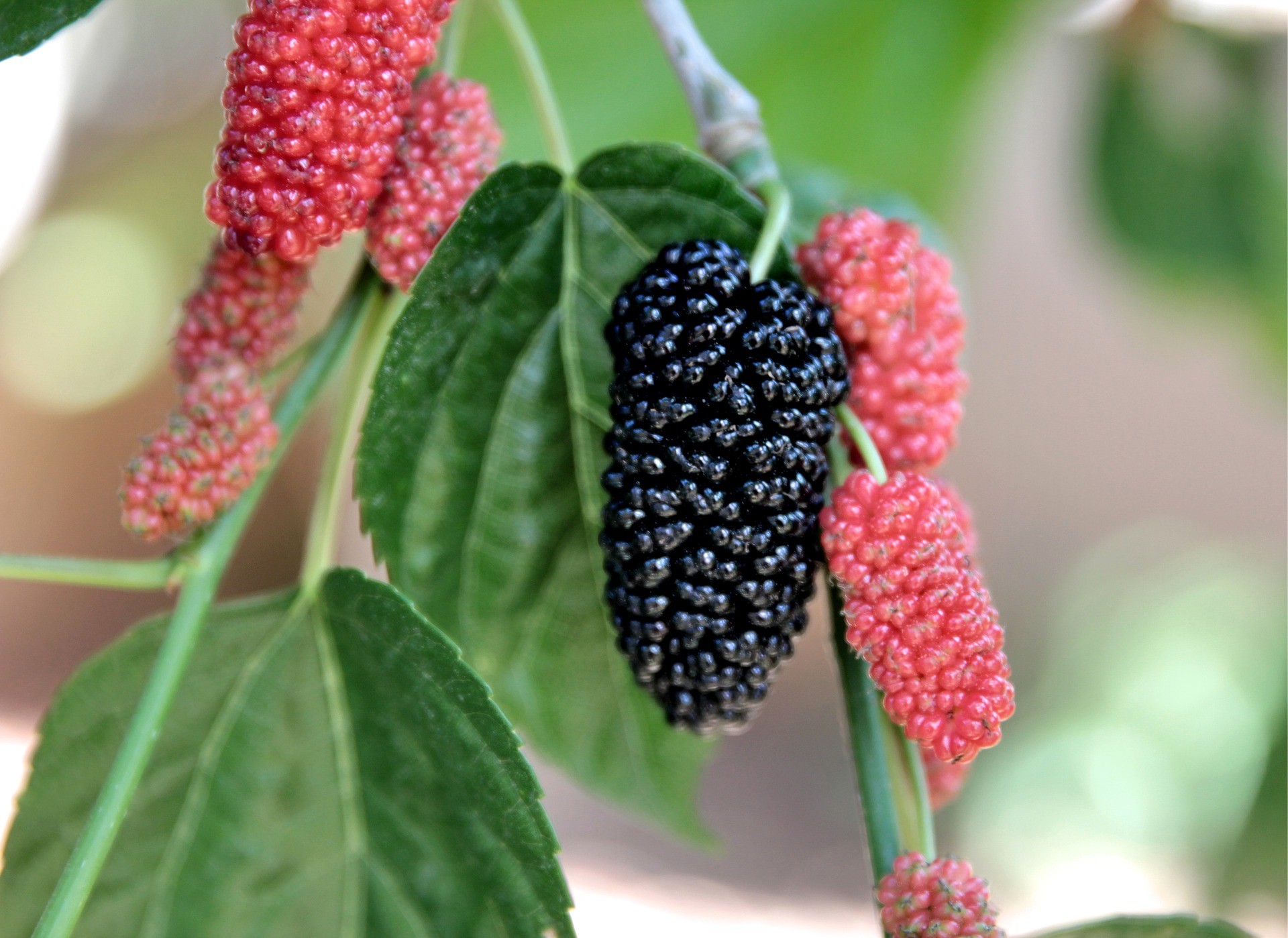
Mulberries are the fruits of mulberry trees and are related to figs and the breadfruit tree. The trees are traditionally grown for their leaves as they are the only food eaten by silkworms . They bear colorful berries, usually black, white, or red, which are often made into wine, fruit juices, tea, jam, or canned foods, but can also be dried and eaten as a snack. Mulberries contain high amounts of iron and vitamin C, as well as decent amounts of potassium and vitamins E and K.
Nutritional properties of mulberries
Fresh mulberries consist of 88% water and have only 60 calories per cup (140 grams). By fresh weight, they provide 9.8% carbohydrates, 1.7% fiber, 1.4% protein, and 0.4% fat. Mulberries are often consumed dried, similar to raisins. In this form, they contain 70% carbohydrates, 14% fiber, 12% protein, and 3% fat, making them quite protein-rich compared to most berries.
Fresh mulberries consist of 9.8% carbohydrates or 14 grams per cup (140 grams). These carbohydrates are mostly simple sugars, such as glucose and fructose, but also contain some starch and fiber.
Mulberries have a decent amount of fiber , corresponding to 1.7% of their fresh weight. The fibers are both soluble (25%) in the form of pectin and insoluble (75%) in the form of lignin. Fiber helps maintain a healthy digestive system, reduce cholesterol levels, and lower the risk of many diseases.
Mulberries contain high amounts of iron and vitamin C, as well as decent amounts of potassium and vitamins E and K.
Mulberries contain various phytochemicals, such as anthocyanins, chlorogenic acid, rutin, and myricetin. The colorful, ripe berries are richer in these compounds compared to the colorless berries.
Benefits of mulberries
Mulberries may lower cholesterol levels, help prevent fatty liver disease, and improve blood sugar control. They also reduce oxidative stress, which may lower cancer risk.
Mulberries or mulberry extracts may be helpful for several chronic conditions, such as heart disease, diabetes, and cancer .
Cholesterol is an important fat molecule found in every cell of your body. However, high blood cholesterol levels are linked to an increased risk of heart disease. Animal studies show that mulberries and mulberry extracts may reduce excess fat and lower cholesterol levels. Additionally, some test tube experiments suggest they reduce fat buildup in the liver, potentially helping to prevent fatty liver disease.
People with type 2 diabetes are at risk of rapid blood sugar spikes and need to be careful when eating carbohydrates. Mulberries contain the compound 1-deoxynojirimycin (DNJ), which inhibits an enzyme in the intestine that breaks down carbohydrates. Therefore, mulberries may be helpful against diabetes by slowing the rise in blood sugar after meals.