
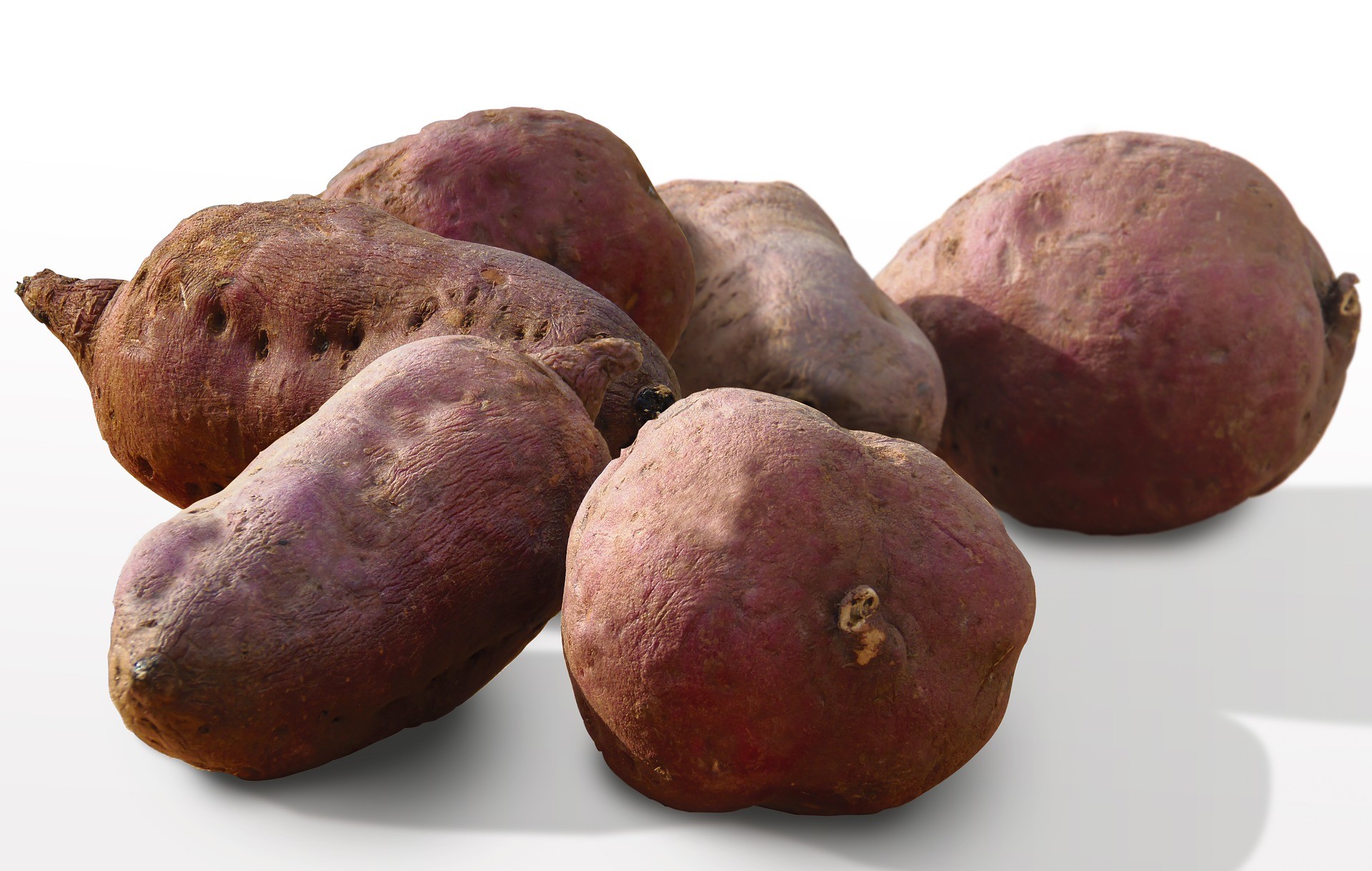
The sweet potato (also called American potato) is native to Central and South America. The plant was cultivated by ancient peoples of the area since the Stone Age. It was brought to Europe by Christopher Columbus during his first voyage in 1492. The sweet potato is available in many varieties. The most familiar is the orange-fleshed type with orange-tinted skin and a long, tubular shape with tapered ends. Sweet potatoes can also be more round like a regular potato and come in shades of white, purple, cream, pink, and yellow. Those marketed as “gold” or “red” are the orange variety.
Benefits and properties of sweet potatoes
- Sweet potatoes are rich in nutrients that have many healing qualities and reduce the risk of the body developing many diseases and illnesses. Steamed or boiled sweet potatoes retain these nutrients more than other cooking methods. Sweet potatoes can be a delicious and nutritious addition to any meal.
- The sweet potatoes are rich in vitamins A, B5, and B6, as well as thiamine, niacin, and riboflavin. Their orange hue comes from large amounts of carotenoids. They also contain potassium, calcium, and iron and are a source of plant protein.
- Sweet potatoes are great for cardiovascular health because they have a high concentration of vitamin B6. These vitamins break down homocysteine, the substance that contributes to hardening of blood vessels and arteries. Sweet potatoes are also rich in potassium, which maintains fluid balance, thus helping to lower blood pressure and regulate heartbeats.
- Sweet potatoes come in different colors: the two most common are orange-fleshed and purple-fleshed. The orange flesh is especially beneficial for children because it is rich in beta-carotene, which enables the body to maintain a healthy level of vitamin A. The purple-fleshed sweet potato contains anti-inflammatory and antioxidant substances that are more effective in the digestive system and may reduce the risk of heavy metals and free radicals in the body.
- The way sweet potatoes are cooked affects the beneficial nutrients they contain. It has been found that boiling or steaming preserves these nutrients better than roasting and thus more effectively maintains blood sugar levels. Steaming is faster (taking only seven minutes when sliced half an inch thick) and keeps the nutrients intact.
- Sweet potatoes help reduce the risk of type 2 diabetes balancing blood sugar levels. Although they are a starchy food, they have a low glycemic index, allowing sugar to be released slowly into the bloodstream. Because of this, incidents of blood sugar spikes are significantly reduced.
- It has been discovered that sweet potatoes reduce the risk of developing breast cancer in premenopausal women and ovarian cancer in postmenopausal women. Purple varieties are even more effective, also reducing incidents of other tumors.