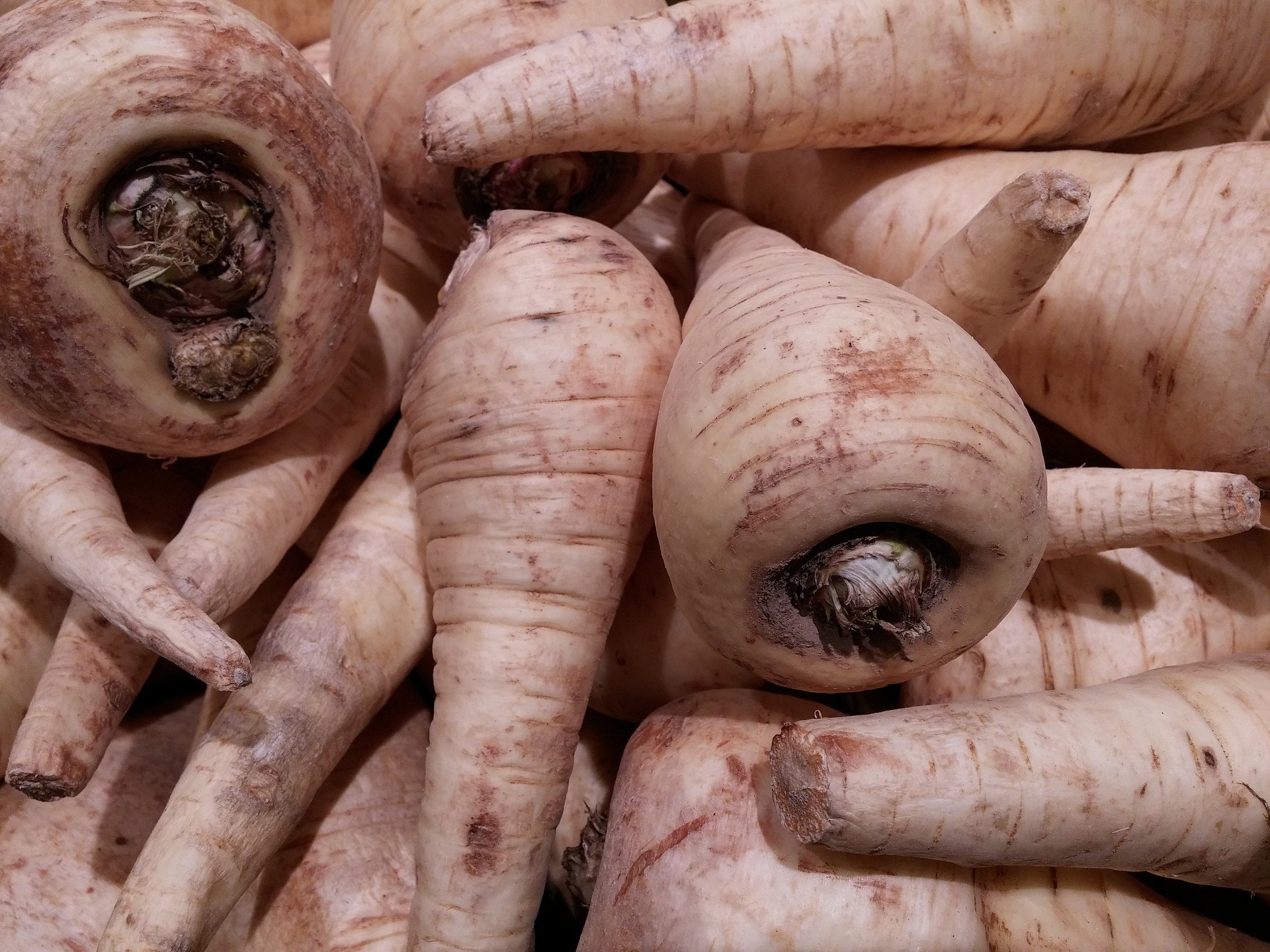
Parsnips belong to the carrot family, which contains ninety-one genera. The Romans called the plant “pastinaca,” referring to both carrots and parsnips. It is important to note that parsnips still grow in the wild and can be found along road edges, but they are very similar to hemlock, a highly poisonous plant.
Not only do parsnips survive the cold, but they also need frost to develop their flavor. The edible root is long and carrot-shaped, white in color, and grows to about twice the size of a carrot. After the first frost, the starch in the root converts to sugar, giving the vegetable its unique sweet flavor.
Properties and benefits of parsnip
- Rich in nutrients, parsnips contain many important elements for maintaining a healthy body. The minerals present in the vegetable are potassium, magnesium, manganese, phosphorus, zinc, and iron. They also have a high vitamin content, including vitamins B, C, E, and K. Parsnip is also rich in proteins.
- The high fiber content of parsnips makes them a valuable food for a healthy digestive system. Fiber is essential for the healthy movement of food through the digestive tract and reduces the risk of constipation and other gastrointestinal disorders. Soluble fiber lowers cholesterol levels, which not only contributes to heart health but also reduces the risk of developing diabetes.
- Parsnip contains high amounts of vitamin C, one of many antioxidants that strengthen the immune system. It protects the body from disease and toxic waste products from the foods consumed. It plays a role in reducing free radicals that cause cancer and other diseases. Vitamin C stimulates the production of white blood cells, the body’s defensive blood cells that eliminate foreign microbes in the body. This vitamin is also a factor in the production of collagen, a fundamental catalyst in rebuilding new cells.
- Another valuable substance is folate, part of the B-vitamin group. It promotes a healthy nervous system and the synthesis of red blood cells, DNA, and RNA. It reduces the risk of developing depression, heart disease, and cancer, and slows the aging process as regards hearing and sight. Folate also reduces the risk of birth defects in developing fetuses.
- Parsnip also helps maintain a healthy eye system. It reduces the incidence of macular degeneration and other degenerative eye diseases in the elderly thanks to the presence of vitamins C, E, and D, omega-3 fatty acids, beta-carotene, and zinc.
How to store parsnips
To store parsnips, wrap them (unwashed) in a paper towel and place them in a plastic bag. Keep in fresh vegetable storage; they will stay fresh for about two weeks. When ready to use, wash the parsnips thoroughly and remove the skin, or steam the parsnips with the skins on and once out of the water the skins will slip off. The skins are edible, so peeling is optional.
Parsnip is a root vegetable that adapts well to colder climates and is available year-round. Parsnips can be stewed, boiled, roasted, made into chips, or used in soups and are a highly nutritious food.