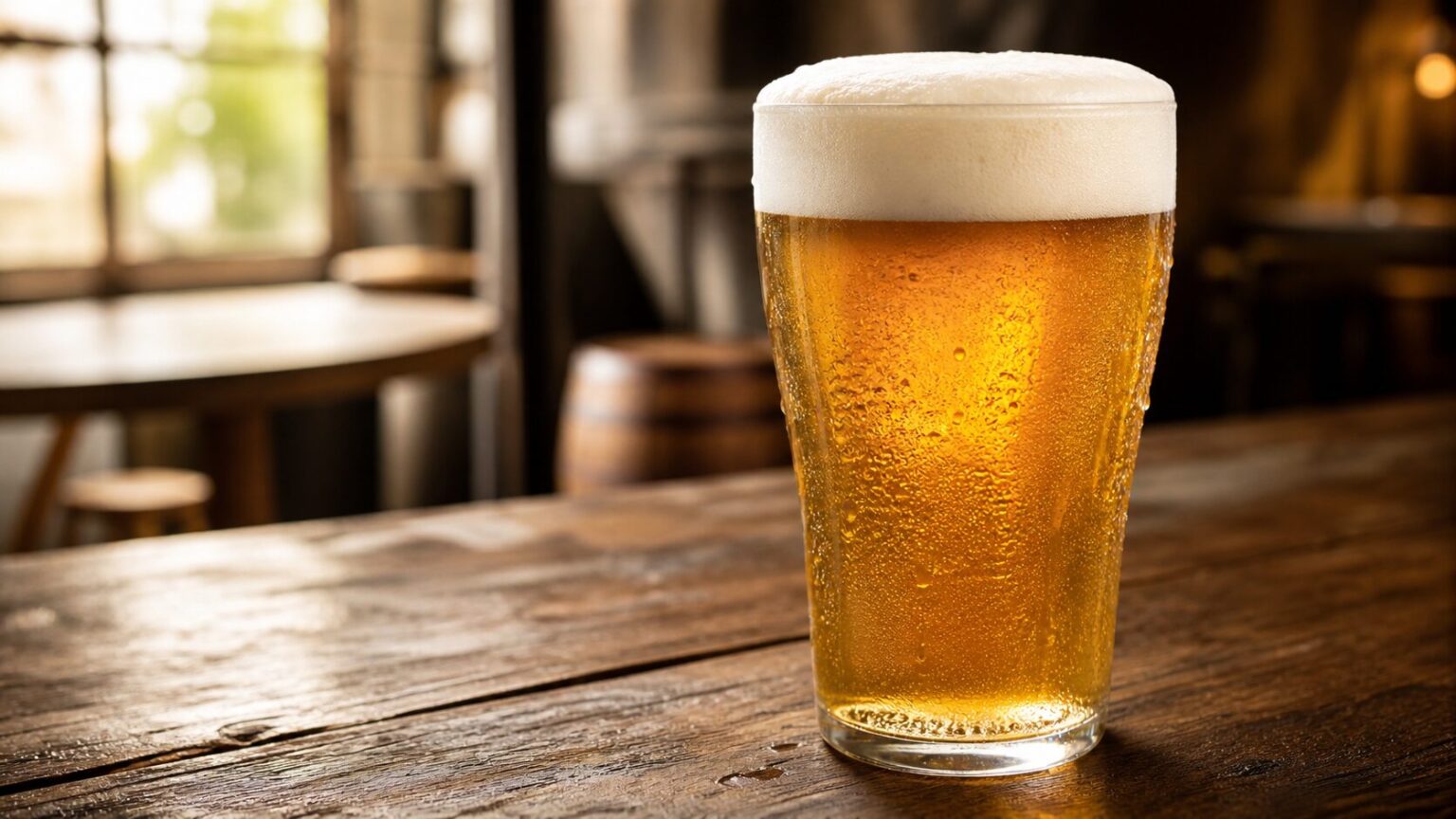

Beer foam, proper service, aromas, freshness, tasting: when talking about beer, the foam is one of the most visible elements, but also one of the most misunderstood. Many judge it only by the quantity: too much, too little, annoying, nice to see. In reality, foam is not just a simple white hat on the glass. It is a living part of the tasting, capable of protecting the aromas, influencing the perception of taste, and telling something about the beer we are drinking.
In the column “Knowledge and Flavors we like to start precisely from these seemingly small details, because they are often the ones that help to better understand what we bring to the table. Beer, after all, is not just a thirst-quenching beverage: it is the result of ingredients, fermentations, styles, containers, service, and culture. Foam fully belongs to this story.
Is foam really necessary in beer?
Yes, foam in beer is useful. It is not a decorative element added to make the glass more beautiful, but a natural consequence of the presence of carbon dioxide, proteins, hops, and other compounds that interact during service. When beer is poured, carbon dioxide is released and forms bubbles. These bubbles rise to the surface and, thanks to some substances present in the beer, manage to stabilize forming foam. Its consistency, duration, and how it adheres to the glass depend on several factors: the beer style, the ingredients used, the cleanliness of the glass, the temperature, and the pouring or serving technique.
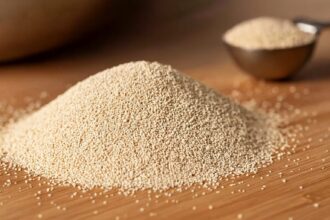
To better understand the role of ingredients in beer formation, it can be useful to deepen also which yeasts are used for beers, because fermentation significantly affects the final character of the beverage.
Why good foam protects the beer
A well-formed foam performs a protective function. It creates a sort of barrier between the beer and the air, slowing oxidation and helping the aromas to last longer in the glass. This does not mean that a beer without foam is automatically bad, but a stable and proper foam can improve the tasting experience.
The foam retains and accompanies the scents. When we bring the glass to the nose, the beer’s aromas also pass through that creamy or light hat, depending on the style. This is one of the reasons why a properly poured beer can be more fragrant, balanced, and pleasant than the same beer served poorly.
Protection of the beer does not depend only on the foam, but also on storage. Not surprisingly, the bottle color has its importance: the topic is discussed in the article dedicated to the color of beer glass, a detail that affects light protection and product quality.
Is too much foam a defect?
It depends. Abundant foam is not necessarily a defect, especially in certain beer styles where it is part of the beer’s identity. Think, for example, of many wheat beers, Belgian beers, or some high fermentation beers: in these cases, generous, compact, and persistent foam is often a positive signal.
The problem arises when the foam is excessive due to service error, wrong temperature, or beer being shaken before opening. In that case, the glass fills with foam but not for the right reasons. The beer loses balance, service becomes unpleasant, and tasting suffers.
Proper foam should not prevent drinking the beer but accompany it. It must be proportional to the style, not overwhelming, and ideally persistent. If it disappears within a few seconds, there may be a problem with the beer, the glass, or how it was served.
Does little foam mean poor quality beer?
Again, the answer cannot be automatic. Some beers naturally produce less foam than others. A light lager, a very alcoholic beer, or some beers with particular characteristics may have less compact or less lasting foam. However, if a beer that should have stable foam appears completely flat, something might be wrong. The glass may not be perfectly clean, the beer may have been served poorly, or it might have lost part of its carbonation.
Glass cleanliness is fundamental. Residues of grease, detergent, or rinse aid can compromise foam formation. Even a seemingly clean glass may not be suitable for beer if it retains substances that interfere with bubbles.
The right glass makes a difference
Foam also depends on the container. Not all glasses enhance beer in the same way. Some shapes help concentrate aromas, others favor foam development, others are designed for lighter and more drinkable beers. For this reason, the choice of glass should not be random. A complex craft beer, a stout, a blanche, a pils, or a strong ale can offer very different sensations if served in the right container. Foam, in this balance, becomes part of the beer’s language.
Those who want to explore this aspect can read the guide to beer containers, useful to understand how glasses, mugs, and other vessels can influence the tasting.
Foam and craft beer
In craft beer, foam can tell a lot, but it should not be interpreted superficially. Good foam can indicate care in production, well-processed ingredients, and proper carbonation. However, just looking at the foam head is not enough to determine if a beer is truly craft or of quality. The beer must be observed, smelled, and tasted. Color, clarity or turbidity, aromatic persistence, balance between sweetness, bitterness, and body are all elements to be evaluated together. Foam is a clue, not a verdict.
To better orient yourself, it may be useful to also read the guide on how to recognize a craft beer, where some practical signs to distinguish a careful product from a beer chosen only for fashion or label are explained.
How to pour beer to get the right foam
The way beer is poured greatly affects the foam. A common mistake is tilting the glass too much and pouring slowly along the wall to avoid any foam formation. In this way, however, you risk retaining too much carbon dioxide in the beer, making it heavier to drink and less balanced.
A simple technique consists of tilting the glass about 45 degrees in the first phase of pouring, then gradually straightening it while continuing to pour. This way, the beer develops more natural foam, without excess and without being flat.
Of course, each style may require different small attentions. Some beers should be served with more decisiveness, others with more delicacy. The goal is not to eliminate foam, but to obtain the right one for the type of beer being drunk.
Foam varies from beer to beer
Not all beers should have the same foam. A pils properly served can present a white, fine and compact foam. A stout can have a denser and persistent cream, often hazelnut-colored. A wheat beer can produce abundant and airy foam. A Belgian beer can have significant, fragrant, and spectacular foam. This means there is no single rule valid for all beers. You must always consider the style. Judging a beer just because it has little or much foam can lead to wrong conclusions.
For those who wish to approach the topic more broadly, the guide for getting to know beers offers a useful overview of styles, characteristics, and main differences.
When the foam leaves a mark on the glass
An interesting detail is the so-called “lace” or “fringe” of the beer: those marks left by the foam on the inner walls of the glass as you drink. In many cases they are considered a good sign, as they indicate stable foam and a good interaction between beer and glass. Here too, however, the detail should not be turned into an absolute rule. The lace can be more or less evident depending on the style, the composition of the beer, and the cleanliness of the glass. It is a pleasant element to observe, but it should be considered as part of a broader evaluation.
The foam also tells a story
Beer has accompanied mankind for millennia and, like every ancient food, carries habits, gestures, and rituals. Even the way it is served tells a culture. In some countries foam is considered essential, in others it is less tolerated. In some contexts, a beer without foam seems badly served, in others a glass almost full to the brim is preferred.
These cultural differences show how much beer is linked to traditions and places. To delve deeper into its historical journey, you can read the article on who invented beer, dedicated to the origins, history, and curiosities of one of the oldest beverages in the world.
So: foam or no foam?
The best answer is: foam yes, but in the right measure. A good beer should not be submerged by an uncontrollable mass of foam, but it should not be served completely flat either, except for specific style characteristics. Foam protects, enhances, accompanies, and makes the tasting more complete. It helps to release aromas, signals proper carbonation, and contributes to the visual and sensory pleasure of the beer. It is not the only criterion for judging a beer, but it is one of the details that deserve attention.
Next time someone says “there’s too much foam” or “there’s no foam” in front of a beer, it’s worth pausing a moment. Maybe that glass is already telling something: about the style, the service, the storage, and the care with which that beer has arrived to us.
Frequently asked questions about beer foam
Can you drink beer foam?
Yes, you can drink beer foam. It is part of the beer itself and contributes to the perception of aromas and texture. If well formed, it can make the tasting more enjoyable.
Why do some beers produce more foam than others?
The amount of foam depends on the beer style, ingredients, carbonation, temperature, glass, and pouring method. Some beers are naturally more foamy, others less so.
Is a beer without foam always defective?
No, not always. Some styles produce little foam. However, if a beer that normally should have foam appears flat, the issue could depend on the service, the glass, or loss of carbonation.
Why does a dirty glass ruin the foam?
Residues of grease, detergent, or rinse aid can prevent bubbles from stabilizing. For this reason, a not perfectly clean glass can cause the foam to disappear quickly.
What is the right amount of foam in beer?
There is no one-size-fits-all measure for all beers. In general, foam of two or three centimeters is considered balanced for many styles, but some beers require more abundant foam and others a more contained presence.