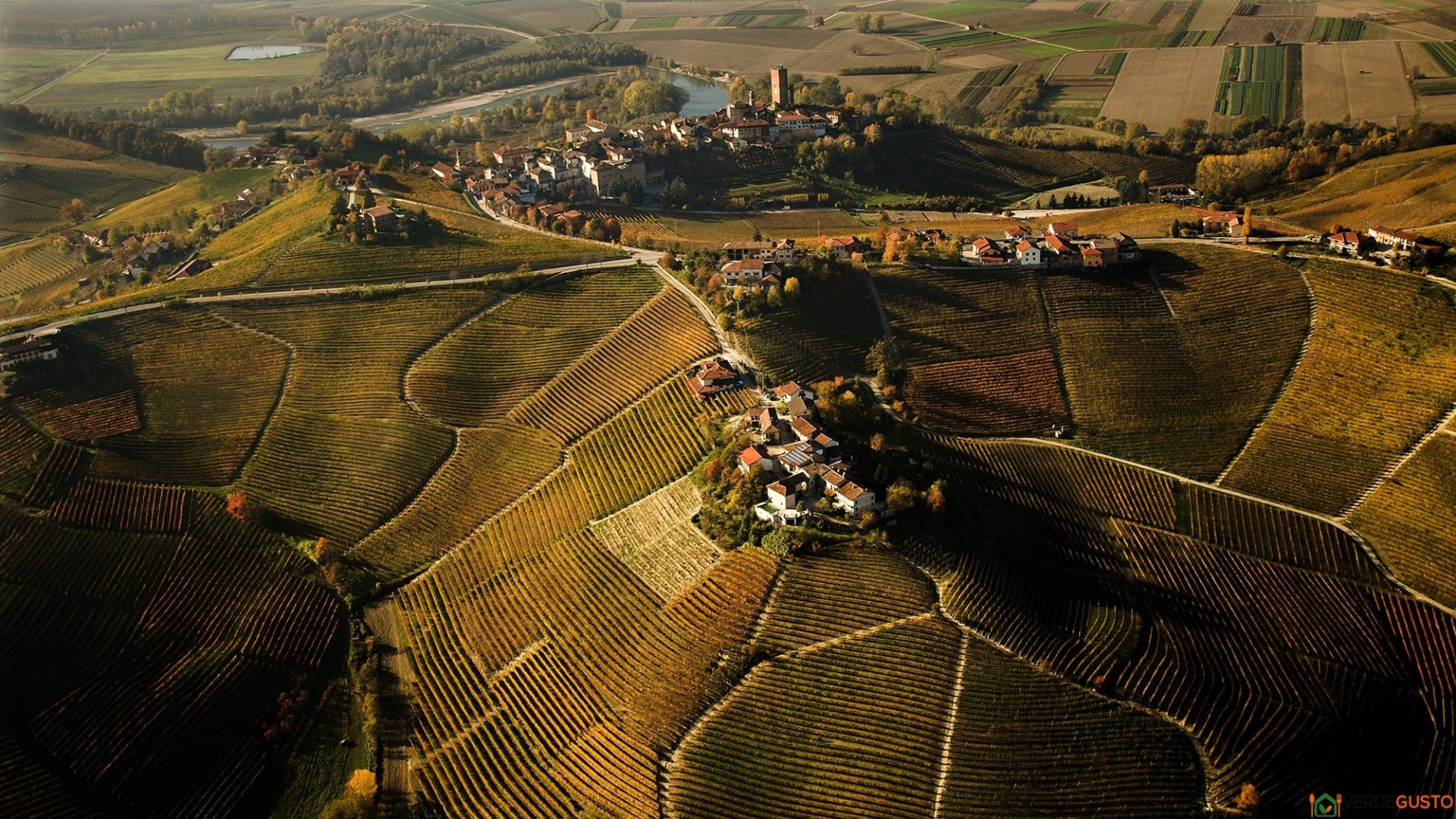

On June 22, 2014, UNESCO inscribed in the List of Properties recognized as World Heritage of Humanity the 50th Italian site: “The Wine Landscapes of Piedmont: Langhe-Roero and Monferrato“.
This inclusion contributed to the increase in tourist flows in recent years in the hilly areas of the provinces of Alessandria, Asti e Cuneo with a 20% rise in visits and an economic impact on the entire area estimated at around 425 million euros over 5 years.
In the week of June 22, 2019, celebrations begin with a series of events that will continue throughout the year. A birthday that invites especially to visit and explore a territory suited to hospitality and welcoming, and not only to celebrate a world recognition.
The calendar of upcoming events starts with a training moment on the tourist attractiveness of food and wine destinations and on food and wine tourism at the Castle of Grinzane Cavour, the Food&Wine Tourism Forum, on June 20 and 21 to continue on June 22 with: the first edition of the Italian Wine Hall of Fame “The Timeless Ones”, at the Castle of Barolo; the UNESCO Party with music, shows and entertainment at the Castle of Grinzane Cavour from 10 pm; the toast with a glass of Barbaresco offered bythe Regional Enoteca of Barbaresco between 5:30 pm and 7 pm; The toast in Nizza Monferrato on the Bell Tower, open to the public for the occasion from 6:30 PM to 8 PM (0141720507).
Furthermore, in Cella Monte on June 21, the national conference “5 years since the UNESCO recognition of the wine landscapes of Piedmont’s Langhe-Roero and Monferrato” and the June 23 “Singing among cellars and cantons”: concert by the Casale Choir musical toast with arias by G. Verdi, G. Donizetti and L. Sinigaglia (Palazzo Volta, Piazza Vallino at 5:00 PM). And, unmissable for its suggestiveness: also on the 23rd organized by the Ecomuseum of the quarried stone, the joint opening of all the cellar cellars in the territory, the underground wine cellars, a unique characteristic of Monferrato Casalese. On June 22 in Ozzano Monferrato (Former Giovanni Rossi Cement Factory), in the afternoon guided tour and exhibition “TTraces of Cement: the gaze of the traveling artist on the industrial archaeology of lime and cement in Monferrato Casalese”, followed at 6:30 PM by the concert for guitar and double bass – Aleph Duo and a final dinner. (tel. 0142 487153). The
2June 1 in Sala Monferrato, via Roma, 9 hosts #Colazionemonferrina, dedicated to traditional dishes and wines typical of the Monferrato cuisine (lunch and candlelight dinner), visits to the cellar cellars and the big bench and in the evening a blues concert PianoC.
Accompanying the events organized ad hoc for the birthday, a series of musical, cultural and entertainment initiatives, now unmissable, will animate the territory, allowing visitors to experience authentic moments. In the Langhe Monferrato Roero we will have: June 17, July 4-5-6-7-10-13-16, in Barolo we will have Collisioni, the agrirock festival of literature and music that brings together national and international artists with writers, TV personalities, actors, Nobel laureates, and journalists; on July 9-12-26-28 and August 3, Italian and international music is featured in the open-air Auditorium Horszowski of Monforte d’Alba with Monforteinjazz ; from July 3 to 17, the ASTIMUSICAwill enliven the historic Cathedral square of Asti; on June 30, July 3-5-6-12-13-20–26–28, August 2-4-10-14-24-25 and September 6, the widespread music festival in the Asti Monferrato, Monferrato On Stage (www.monferratonstage.it).
In the province of Alessandria, landscape, music and culture are at the heart of the events that will accompany tourists to discover charming corners, From June 21 to July 20, contemporary dance performances within the framework of the Vignale Monferrato Festival of Vignale Monferrato, an open-air stage dedicated to dance in many of its possible forms – from contemporary to neoclassical, from folk dance, traditional, international, to circus ; on June 20 and 23 in Cella Monte, which is also one of the “Most Beautiful Villages of Italy,” will take place the JAZZ:RE:FOUND FESTIVAL – Black And Forth, a four-day event to celebrate the universe of black music in all its varied forms (www.jazzrefound.it). Also, on June 22 (coinciding with the Most Beautiful Villages of Italy format) is scheduled “The Romantic Night in the Village”, dinner under the stars, shows, romantic readings and midnight toasts. On June 20 and 23 a Casale Monferrato will host the Monfrà jazz festival with outstanding concerts from the international scene including, unforgettable for their evocative power, on the 23rd the dawn concert on the Po (dock) with the Spigoli Trio and the sunset concert, the final moment of the Festival (8:30 PM along the Po river on viale Gramsci) with the Forte Trio, and the final toast at the Castle Wine Shop, during the closing jam session.
On June 23 a Rosignano Monferrato, in addition to the opening of the infernot, guided tours at the Colma’s house studio, of the divisionist painting master Angelo Morbelli (Tel. 333. 1351223 www.amisdlacurma.it). Finally, from June 28 to 30 to mark down, as a collateral appointment, in the ancient charm of the city of Acqui, “I Ludi Aquaenses”, to immerse oneself in ancient Rome, from which the spa city originates, with costumed events and the spectacular chariot race under the Roman Arches, parades, guided tours of archaeological sites, theatrical performances.
Before giving a taste of the territories hosting the events in this special anniversary, below is the breakdown of the sites of the areas composing “The Vineyard Landscapes of Langhe-Roero and Monferrato.
The site is divided into six different components: “The Barolo Langa”: Barolo (CN); Serralunga d’Alba (CN); Castiglione Falletto (CN); La Morra (CN); Monforte d’Alba (CN); Novello (CN); Diano d’Alba (CN). – “The Grinzane Cavour Castle”: Grinzane Cavour (CN). – “The Barbaresco Hills”: Barbaresco (CN); Neive (CN). – “Nizza Monferrato and the Barbera”: Montegrosso (AT); Mombercelli (AT); Agliano (AT); Castelnuovo Calcea (AT); Vinchio (AT); Vaglio – “Canelli and Asti sparkling wine”: Santo Stefano Belbo (CN); Calosso (AT); Canelli (AT). – “The Monferrato of the Infernot”: Cella Monte (AL); Ozzano Monferrato (AL); Sala Monferrato (AL); Rosignano Monferrato (AL); Ottiglio (AL); Olivola (AL); Frassinello Monferrato (AL); Camagna Monferrato (AL); Vignale Monferrato (AL).

“THE BAROLO LANGA”, “THE GRINZANE CAVOUR CASTLE”, “NIZZA MONFERRATO AND THE BARBERA”
The past and present of the hills of Langhe Monferrato Roero have been shaped by the very strong bond these lands have with viticulture and enology. Starting from the mid-1800s, it was understood here that the soil tread on every day was capable of producing some of the best wines in the world and so, slowly, with passion, dedication and consistency, they sought to work better every day, focusing on the quality of the wines produced rather than quantity. A perfect mix of climatic conditions, slope exposure and especially terroir composition makes the hill names now always recall the production of excellent wines.
Wine is not only a product of the land but also of culture and tradition: elements that allowed this territory to be included in the UNESCO World Heritage List. Those arriving in the territory can delight in a treasure hunt discovering wineries, castles (for example the Grinzane Castle), towers, charming villages, museums (WiMu, the International Wine Museum of Barolo) and gourmet locations. Wine and its culture are also protagonists in a series of events that throughout the year convey to tourists and industry professionals the passion and love for a highly wine-producing area. Within the Nizza Monferrato district there are numerous testimonies linked to peasant and wine culture.
The Museum of Peasantry and the Ancient Prints Bersano is one of these places, founded by Arturo Bersano, starting from 1950, to collect the most heartfelt and at the same time joyful testimonies of the wine-peasant culture. The architectures of the Canelli area testify to the ability to adapt places to the transformations and needs of the wine production cycle. It was precisely within the Municipality that in the second half of the nineteenth century the Martinotti research began: inside spaces commonly called “Underground Cathedrals”, the first sparkling wine cellars in the area were opened. These are large underground spaces, characterized by vaulted environments with exposed brick, whose shape and spatial distribution owe to the sparkling wine production processes.
“THE MONFERRATO OF THE INFERNOT”
A must-see visit are these underground wine cellars excavated by subtraction in the cantone stone (commonly called tuff) – 59 officially listed – that also becomes an occasion to discover mostly enchanting villages, mainly in the Ghenza valley and in the Vignalese area. We are in the southeast of Piedmont, about an hour by car in the center of the triangle Turin, Milan and Genoa, all three easily reachable by highway, with Casale Monferrato its historical capital: a fil rouge, or better yet… white given its characteristic color, is the fascinating route, for history and breathtaking landscape, to discover these underground cellars, which in the 1800s were literally dug into the tuff under houses: in practice they are not born from an assembly of materials, but by subtraction, digging and creating solutions from the simplest and essential, like a single round or square room with just wall space for bottles, to real underground “suites” with rooms connected by narrow and winding corridors, with niches in the walls, each shaped like a bottle to hold them.
Sometimes the craftsmanship of the infernot makers was such as to extract from the stone mass even real tables (circular, oval, rectangular depending on the shape of the room plan) mostly placed in the center of the main room. Their construction took two to three years and normally happened in winter when the farmers were not busy in the fields. They are found partly in public buildings, but much more often in private homes that open their doors on specific occasions: the official seat referring to the infernot network is the Ecomuseum of the Cantone Stone of Cella Monte (recently entered among the “Most Beautiful Villages of Italy”.