
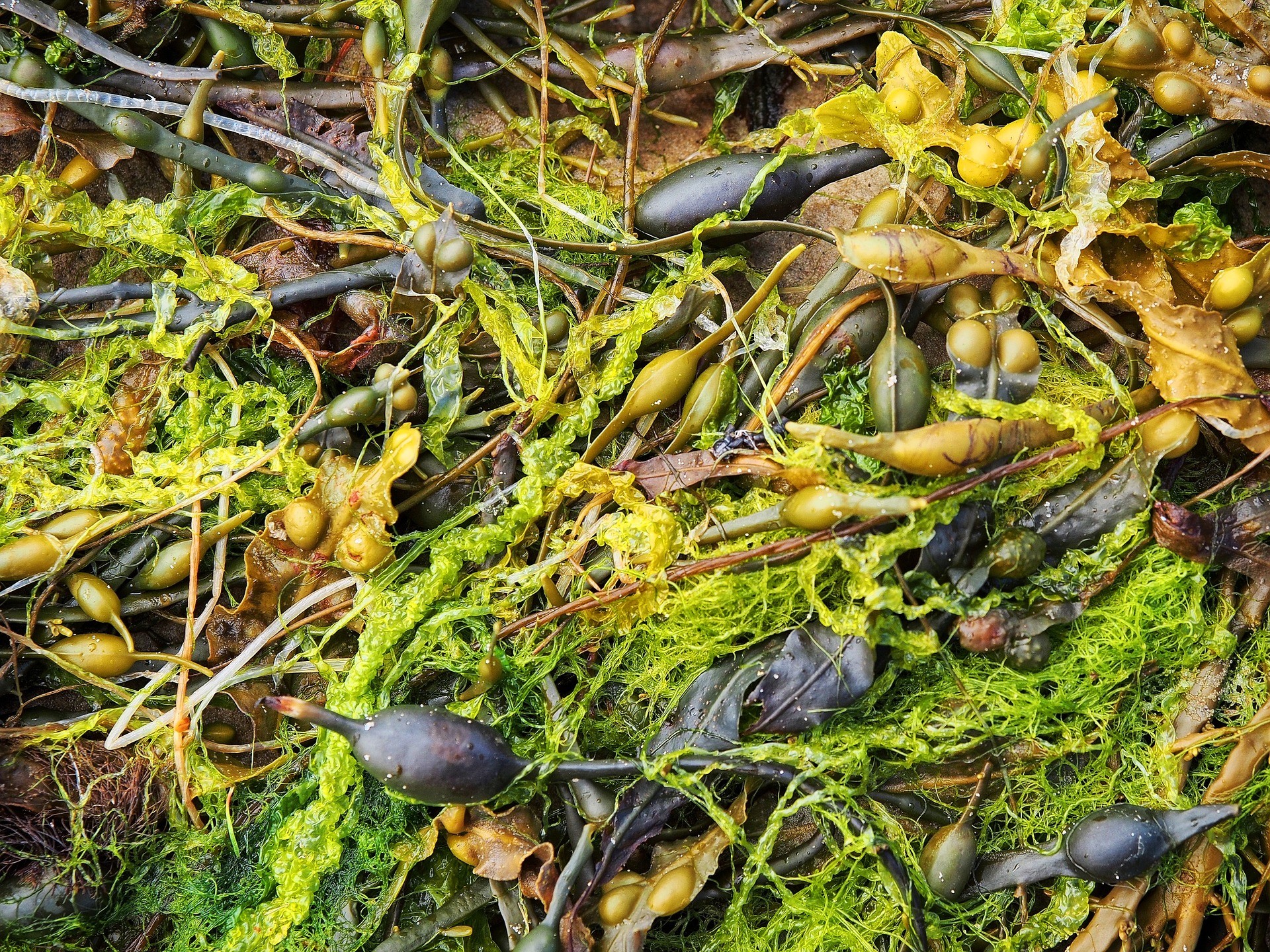
The seaweed are rich in nutrients. They are classified based on color: red, green, and brown. Spirulina is a type of seaweed (blue-green). The most important nutrient that seaweed contains and that might be lacking in the average diet is iodine.
Iodine is extremely important for the proper functioning of the thyroid gland. Fatigue, lack of mental functions, goiter, weight gain: these are all risks of low iodine levels. Iodine is commonly known as an additive to table salt. This can help those who are monitoring their sodium intake by reducing salt use at the risk of iodine deficiency. Seaweed offers a healthy alternative.
Seaweed is full of fiber. The mix of fiber and a low-calorie food are more reasons to snack on seaweed. Ideal for weight loss, seaweed is rich in Omega-3 fatty acids.
Besides the health benefits, seaweed farming is sustainable. Aquaculture in this form is more advantageous than sustainable agriculture. Lacking pesticides and fertilizers, it doesn’t require fresh water to grow. Moreover, seaweed cultivation combats water pollution and overfishing. And growing over 3 meters in just three months, seaweed provides abundant food.
Seaweed has been a staple in Asian cuisine for centuries and its popularity is growing in Western society. The expansion of seaweed farms could fight pollution, support our food source, and feed the expanding world population.
Advice: try making seaweed chips. A bit of olive oil, salt, pepper, and paprika with a few minutes in the oven.