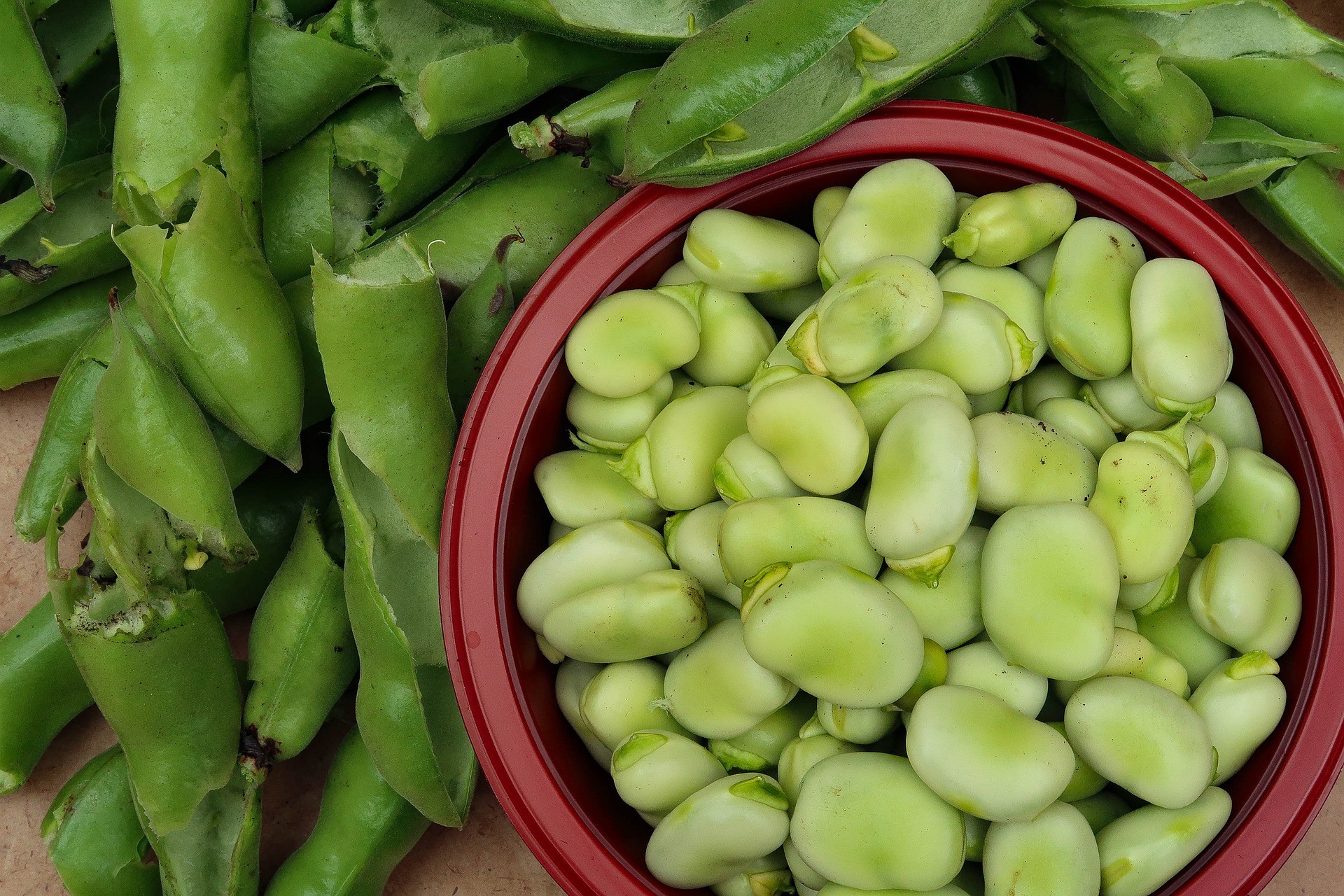
The fava bean plant originates from the Mediterranean basin with evidence dating back to the Iron Age. By the end of the Iron Age, they had spread worldwide. They have been a staple food for primitive humans and have been eaten for millennia. Fava beans are full of nutrients.
They are a versatile food: ground into flour in Ethiopia; in Sardinia, dried beans are used in stews and broths, and they are a popular ingredient in falafel in the Middle East (and especially in Egypt). They are available from June to September in cooler climates and in spring in warmer regions.
Fava beans have a thick skin with a texture that can range from starchy to creamy, depending on their age and how they are prepared.
Nutritional benefits of fava beans
Nutritionally rich, fava beans contain vitamins A, C, K, B1 or thiamine, B6 or pyridoxine, and B12 or cobalamin. They contain a variety of minerals including sodium, potassium, calcium, copper, iron, magnesium, manganese, phosphorus, zinc, and selenium. Other beneficial substances include beta-carotene, alpha-carotene, lutein-zeaxanthin, and fiber.
Interestingly, fava beans help to reduce the symptoms of Parkinson’s disease. Being high in potassium, fava beans regulate blood pressure, reducing the risk of heart attack, stroke, and other cardiovascular diseases. They reduce the risk of eye diseases e maintain healthy skin. They help support a healthy digestive system; thanks to their high fiber content, they reduce the risk of constipation.
How to store fava beans
When buying fava beans, look for pods that are crisp and not soft or wrinkled. They do not store well, so keep them in a cool area and use them quickly. They freeze well. While young pods are edible, older beans must be removed from the pod. Fava beans have a thick skin that hardens with age. To remove the skin, blanch the beans in boiling water for one minute and then rinse them in cold water.