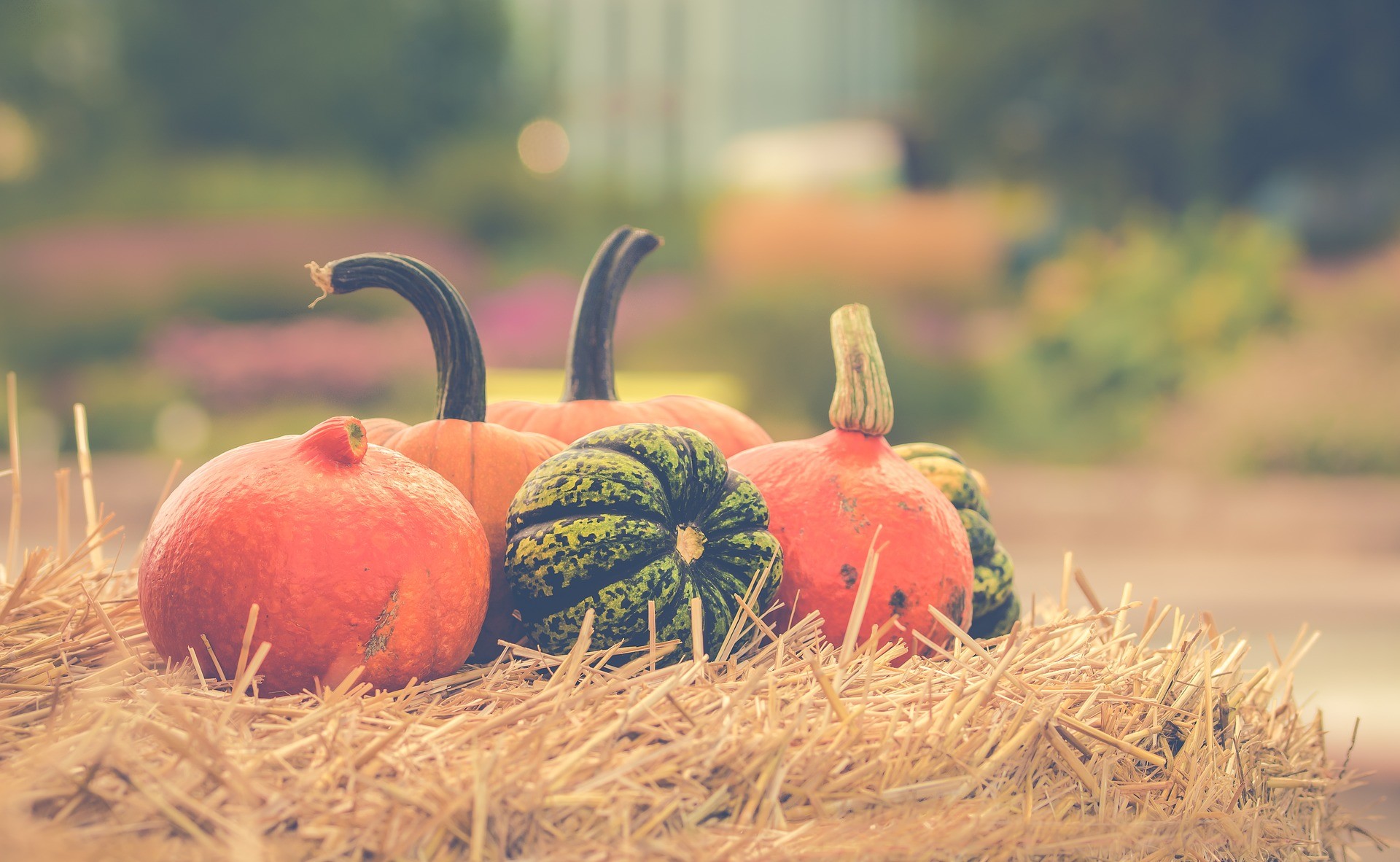
The pumpkin is present in nine species. The familiar orange pumpkin popular in the United States belongs to the species Cucurbita. The pumpkin is native to North America and was discovered in Mexico, with seeds dated between 7000 and 5500 BC. The original pumpkins were of the crooked-neck type and were grown alongside sunflowers and beans.
Once corn was discovered, native peoples planted pumpkin, corn, and beans using a method known as the Three Sisters. The corn stalk provides support for the beans, while the pumpkin plants protect the shallow roots of the corn, preventing weed growth and keeping the soil moist. Columbus brought pumpkin seeds to Europe where they were used as livestock feed. The pumpkin was a staple food for early American colonists; they fermented it into beer and used the shell as a mold for haircutting, and in their European tradition, they used them to make lanterns.
The name pumpkin derives from the Greek word “pepon” meaning melon; the English modified it to “pumpion“.
Properties and benefits of pumpkin
- Pumpkins are rich in nutrients. One cup of cooked pumpkin contains forty-nine calories with two grams of protein, twelve grams of carbohydrates, and three grams of fiber. There are also traces of calcium, iron, magnesium, copper, potassium, zinc, selenium, folic acid, niacin, and vitamins C, A, and E. The beta carotene contained in pumpkins can reduce aging, the risk of developing certain cancers, and the incidence of heart disease.
- Pumpkins are considered fruit and are relatives of melons and cucumbers. The plant produces both male and female flowers, facilitating pollination. Its seeds are edible and are used in salads or seasoned and cooked as snacks, and they are a valuable healing tool.
- Pumpkin seeds have many health benefits, both in flour form and pressed for oil. They are an excellent source for promoting prostate health by controlling testosterone production, thus inhibiting prostate growth. The oil reduces the effects of postmenopausal symptoms such as hot flashes and hypertension. The seeds can reduce the incidence of heart, liver diseases, kidney stones, and arthritis.
- Pumpkin juice can be used to treat ulcers and is effective in reducing episodes of insomnia. Pumpkin flesh helps control adolescent behavior and sexual hyperactivity. It can be made into a cream for treating burns, abscesses, and skin inflammations; it is also an excellent tool for moisturizing the skin, softening wrinkles.
- Pumpkin seeds are not only useful for humans but also for pets. Studies have revealed a reduction in parasite incidents in dogs when pumpkin seeds were added to their diet. Cooked pumpkin helps in controlling dog weight and digestive disorders.
Pumpkin reaches maturity at the end of summer and the beginning of autumn, making it a festive addition to menus. It has been part of human existence for millennia as food and healing aid and for making dishes, bowls, and containers. It is rich in nutrients, helps prevent many diseases and health disorders such as cancer, diabetes, hormonal disorders, heart diseases, liver diseases, and skin disorders, and slows the aging process.