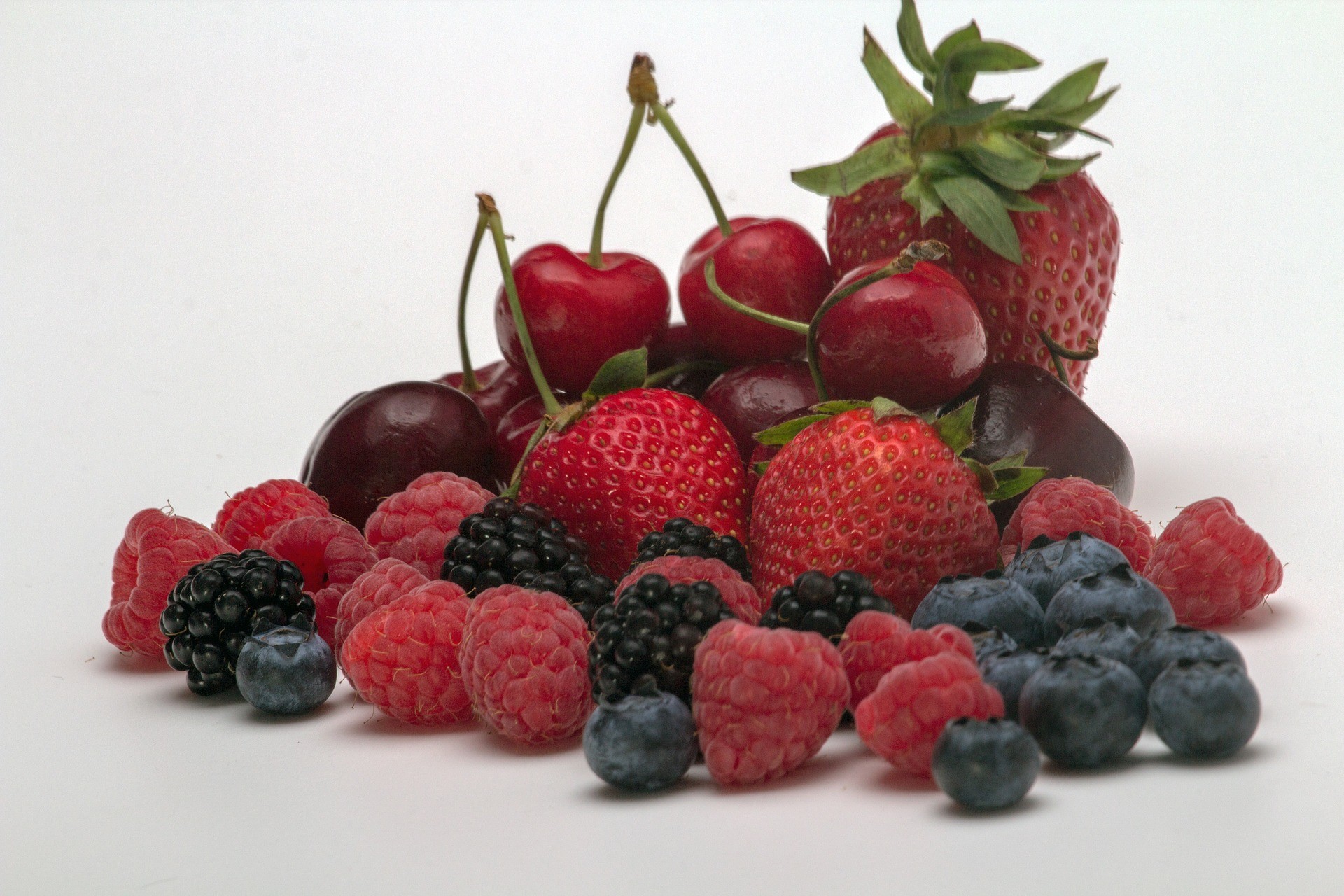
Cherries, blueberries, blackberries, currants, and strawberries: great allies for health, wellness, and beauty. Besides containing various minerals and vitamins, they are a concentrate of polyphenols, natural substances capable of protecting against free radical damage.
It should be remembered that our body is naturally able to fight free radicals, but excessive sun exposure, drug abuse, a diet poor in fruits and vegetables, and stress can promote their accumulation with all the resulting degeneration affecting many structures and substances.
Furthermore, they contain a high amount of fiber called insoluble which promotes intestinal transit against constipation. Recent research shows that they contain ellagic acid, a phenolic compound with strong antitumor and antioxidant activity. The anthocyanins present have anti-inflammatory effects and help block the accumulation of fat deposits in the arteries.
Cherries are available in many varieties. The most common is the dark and sweet cherry but there are also varieties in golden or light red colors. When buying fresh, dark cherries, choose the firmer ones with a darker color as they tend to be sweeter than the lighter or brighter red ones. Cherries are not only a favorite summer treat. These small superfood fruits boast an impressive range of health benefits well beyond just being sweet and delicious.
Nutritional tips
1 cup of sour cherries contains:
- Calories: 87
- Carbohydrates: 24.7 g
- Sugar: 19.7 g
- Fiber: 3.2 g
- Fat: 0.3 g
- Protein: 1.5 g
- Glycemic index: 22 (low)
- Gluten Free: Yes
Why eat cherries
- Cherries can improve gout symptoms
Many scientific studies have found that cherries have anti-inflammatory properties. One beneficial effect is that cherries can potentially reduce blood levels of uric acid. This is promising news for those suffering from gout. - Cherries can help fight diabetes
Although sweet cherries are incredibly sweet, their glycemic index is one of the lowest among all fruits. In fact, cherries may actually have the opposite effect: they can help prevent diabetes. Cherries are an excellent source of anthocyanins, a type of polyphenol with powerful antioxidant properties. In particular, anthocyanins have been shown to stabilize blood sugar levels and reduce the risk of developing type 2 diabetes. - Cherries can improve sleep
Sour cherries are one of the few natural sources of melatonin, a substance responsible for regulating our internal clock and the sleep-wake cycle. If you’re thinking of trying sour cherry juice to improve sleep, keep in mind that it may sometimes be labeled as “amarena juice.”
How to eat cherries
- Serve fresh: enjoy the fruits as a snack or dessert after meals. You can also add pitted cherries on top of frozen treats like ice creams or sorbets or add them to your summer salads.
- Make cherry compote: crush the pitted cherries in a pot and let simmer for 5 minutes. Add a sweetener of your choice. The resulting compote will be incredibly delicious and colorful. Ideal to add to yogurt or drizzle on cakes or cheesecakes.
- Toss in smoothie: if you have ripe leftover cherries, remove the pit and store them in the freezer for later use in smoothies or desserts.