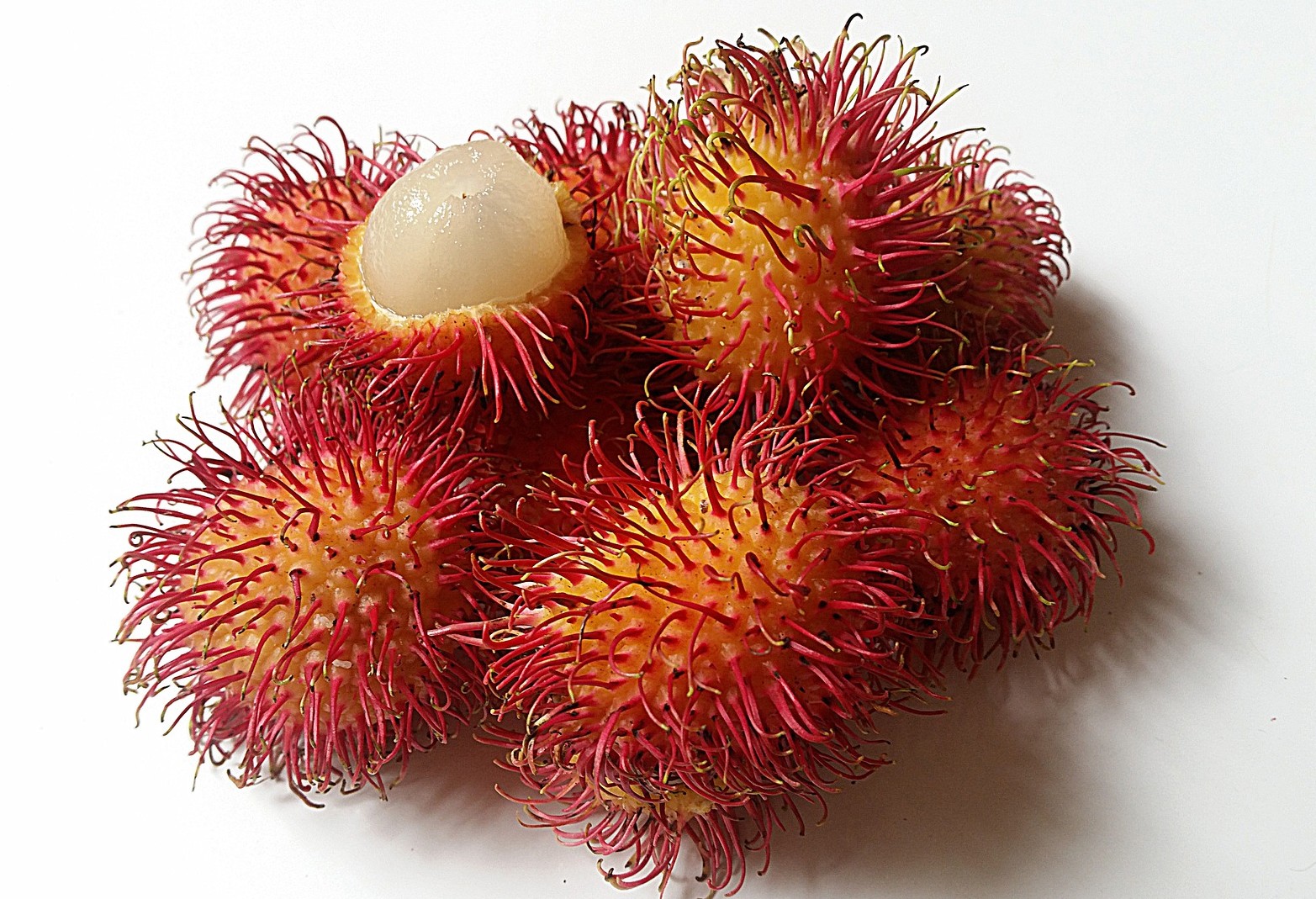
The Rambutan is a fruit of a plant native to Malaysia and is closely related to the lychee. The tree is cultivated on all the islands and in Southeast Asia. The Rambutan is a fragile fruit that does not ship well. The fruit is used in many recipes and is considered a medicinal herb, and the seeds produce oil for candles and soap. The fruit can be purchased at major supermarkets and online.
The rambutan tree has a straight trunk topped by a wide crown of evergreen leaves. The leaves are compound and grow in an alternate pinnate arrangement. The immature leaves are hairy, growing from one to four pairs of leaflets and are oblong to elliptical in shape. They have a leathery texture with color ranging from yellow-green to dark green. The flowers are small without petals and have hairy panicles.
The fruit is oval to elliptical in shape with colors that can be pinkish red, bright red, deep red, orange-red, brown, and dark purple. The pulp ranges from white to pink, is translucent and juicy with a slightly sour and sweet taste, and contains flat oblong seeds.
Properties and benefits of Rambutan
- The nutrients in rambutan include the vitamins thiamine, riboflavin, niacin, pyridoxine, folic acid, A, and C. It also contains calcium, iron, magnesium, phosphorus, potassium, sodium, and zinc. It is a good source of dietary fiber.
- Rambutan has been shown to be effective in a weight loss diet and its fiber content helps maintain a healthy digestive system.
- Its mineral content strengthens bone mass, reducing the risk of developing osteoporosis and other age-related diseases. B vitamins act as a catalyst in converting carbohydrates into usable energy.
- The antioxidants contained in the fruit inhibit the development of chronic diseases such as cancer and cardiovascular diseases. Antioxidants have been shown to be effective in promoting fertility.
- Rambutan is used in Chinese medicine to reduce fever and has been found to have anti-inflammatory properties.
Rambutan is usually eaten fresh. It can be served as a dessert, either fresh or stewed. The fruit can be made into syrup and preserves. Seeds can be roasted but not eaten raw, as they might be toxic. Other ways to eat rambutan include as an ingredient in cakes, ice cream, and sorbet; they can also make a refreshing cocktail.