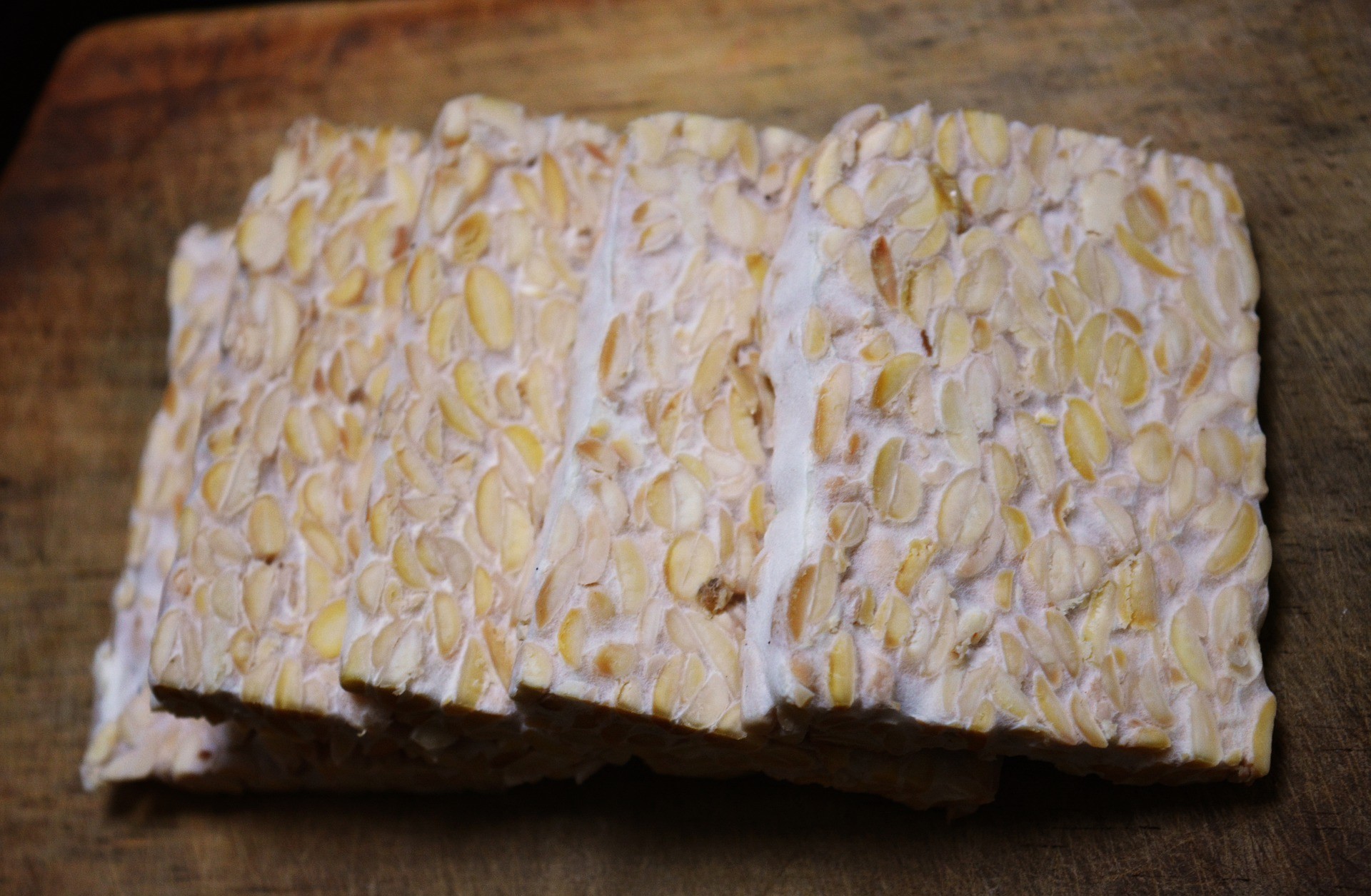
When it comes to meat alternatives, it’s about stir-fried potatoes with tofu and vegetarian burgers. But what about tempeh? Tempeh is a vegetarian staple food traditionally made from whole cooked and lightly fermented soybeans. The mixture is then formed into a dense cake with other ingredients (such as beans, grains, and seeds). Tempeh’s texture is firm and does not crumble easily. Soy-free tempeh is made with other beans or grains (like this one made with peanuts and hemp seeds).
Differences with tofu. Although both ingredients are soy-based, tempeh uses whole beans while tofu is made from condensed soy milk. Tempeh also has a stronger, richer nutty flavor compared to tofu, which can be somewhat bland. Many people describe tempeh as having a mushroom-like taste that easily absorbs other flavors: try marinating it before cooking. And while tofu is soft and spongy, tempeh is denser.
Properties and benefits of tempeh
- Tempeh is very rich in calcium. It also has specific isoflavones that fight breast cancer and tumor growth. It has also been shown to lower LDL cholesterol and regulate blood pressure.
- Tempeh is rich in protein, low in fat, and cholesterol-free. It is also high in fiber, with about 4 grams of fiber per serving (compared to less than half a gram for tofu, depending on the brand).
- Tempeh contains healthy fats, iron, calcium, niacin, and omega-3s and has more protein than tofu. And because it is made with fermented soybeans, it contains probiotics, which may be beneficial for digestive health.