
Sicily is a land rich in unique and fascinating culinary traditions, each with its own history and particular charm. Among the most representative symbols of this gastronomic culture we undoubtedly find the arancino or arancina, a true emblem of Sicilian street food. However, behind this simple and delicious bite lies an age-old debate that divides the island into two opposing factions: Arancino o Arancina? Which is the correct denomination?
The Arab origins and characteristic shape
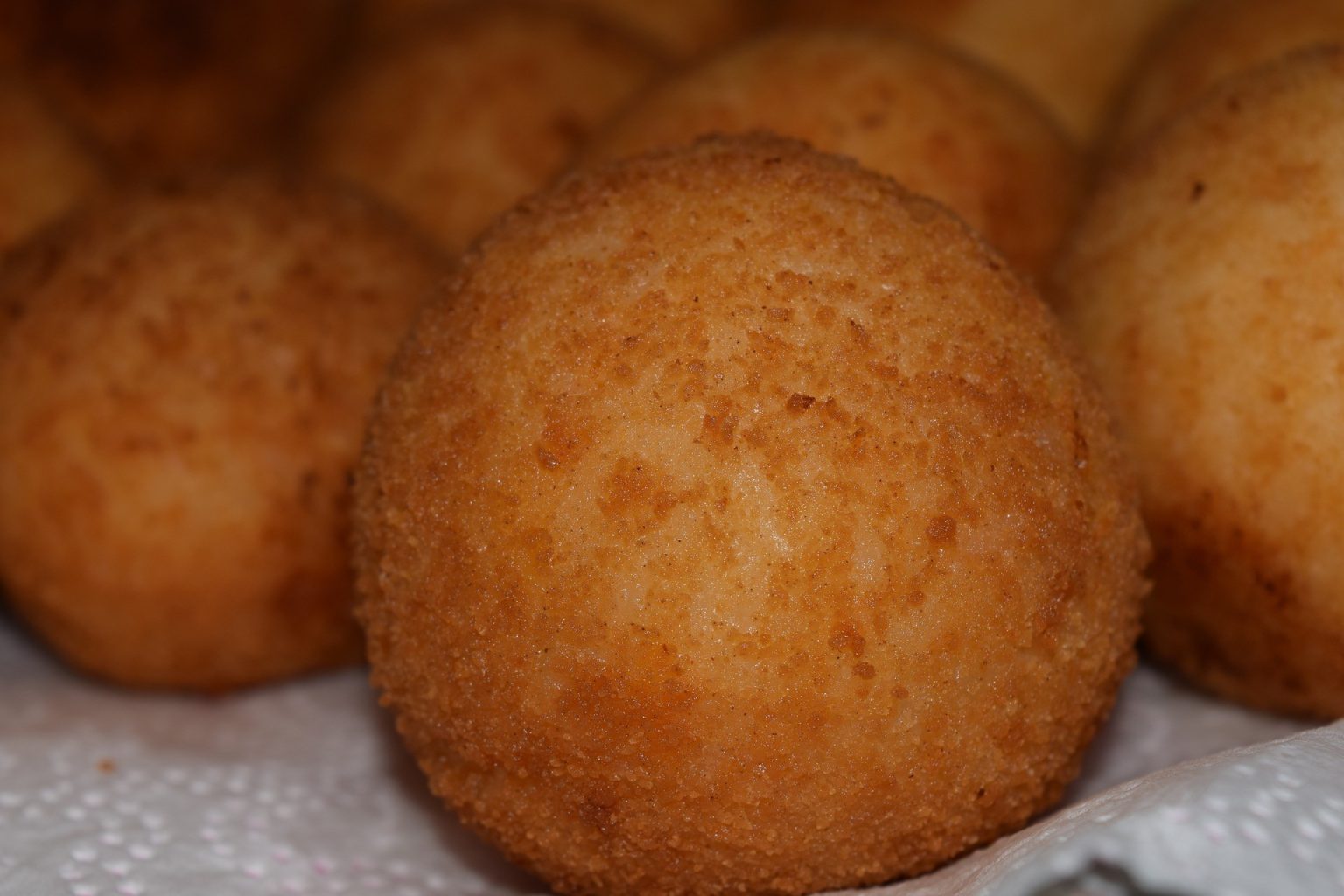
The origins of the arancino o arancina go back to the time of Arab rule in Sicily, between the 9th and 11th centuries. At that time, nobles and local notables used to serve on their tables a dish based on saffron-flavored rice, seasoned with small pieces of lamb. This dish was hand-shaped into rounded balls, which resembled the shape and size of the orange fruit, introduced to the island by the Arabs themselves. Hence the name “arancino o arancina“, which precisely recalls the shape of this citrus fruit.
The linguistic dispute: Arancino or Arancina?
Despite their common origins, Sicily has been divided over the centuries between the denomination “arancino” (masculine) and “arancina” (feminine). This linguistic opposition has deep roots and stems from the dialectal and cultural differences between western and eastern Sicily.
The Western view: the Arancina
In the western part of the island, particularly in Palermo and the surrounding provinces, the term used is undoubtedly “arancina“. This choice is motivated by the fact that, in standard Italian, the name of the fruit “arancia” is feminine. Consequently, the diminutive “arancina” is the grammatically correct form.
The Eastern view: the Arancino
Instead, in eastern Sicily, particularly in Catania, the prevailing denomination is “arancino“. This preference is linked to the fact that, in the Sicilian dialect, the name of the fruit “arancio” is masculine (“arànciu”). Consequently, the diminutive in this case becomes “arancino”. This choice is also supported by the fact that the first historical documents mentioning the dish, such as the Sicilian-Italian Dictionary of Giuseppe Biundi from 1857, precisely use the masculine form.
The mediation attempt by the Accademia della Crusca
Faced with this heated dispute, the Accademia della Crusca, the highest Italian linguistic institution, intervened in 2016 to try to find a compromise solution. After thorough research, the experts of the Academy concluded that both denominations are correct and acceptable. On one hand, “arancina” is valid as it derives from the standard Italian term “arancia”, which is feminine. On the other hand, “arancino” is equally legitimate, being linked to the Sicilian dialectal variant.
Despite the mediation attempt by the Accademia della Crusca, the dispute between Palermo and Catania, the two main Sicilian cities, continues unabated to this day. Both factions proudly claim their own denomination, considering it the only authentic and legitimate one.
The linguistic controversy over arancino/a has not been limited to the theoretical level but has also had concrete repercussions in the commercial realm. An emblematic example is the case of the “Savia” bar in Catania, active since 1897 and known for its delicious arancini. For decades, the establishment chose to use the term “arancina”, considering it more faithful to the dish’s origin. However, following the publication of the Accademia della Crusca article, customers began to protest, forcing the owner to change the label to “arancinu“.

The contemporary variants of the arancino o arancina
Despite the ongoing linguistic dispute, the arancino o arancina remains one of Sicily’s most beloved and recognizable culinary symbols. Over time, this gastronomic specialty has undergone numerous evolutions and interpretations, giving rise to a wide range of variants.
Classic filling: ragù and béchamel
The traditional filling of the arancino o arancina is undoubtedly meat ragù and peas, or the version with butter, cooked ham, and béchamel. These two variants represent timeless classics.
New trends: salmon, pistachios and more
However, in recent years, many other stuffing options have been experimented with, such as salmon, pistachios, mushrooms, ‘nduja, and even sweet versions filled with chocolate or ricotta. These innovative interpretations testify to the ongoing evolution and creativity characterizing Sicilian cuisine.
The Festival of Santa Lucia in Palermo and Syracuse
The arancino o arancina is deeply rooted in the culture and traditions of Sicily. In some parts of the island, such as Palermo and Syracuse, on December 13th, on the occasion of the Festival of Santa Lucia, the arancino o arancina becomes the undisputed protagonist of the celebrations. According to legend, Santa Lucia miraculously saved Sicily from two terrible famines by bringing loads of grain by sea. For this reason, on December 13th Sicilians avoid consuming foods made from wheat, such as bread and pasta, replacing them with rice. The arancino o arancina, filled with ragù or butter, therefore becomes the symbolic dish of this occasion.
Where to taste the best arancino o arancina in Sicily
Whether it’s “arancini” or “arancine,” Sicily offers countless opportunities to savor this gastronomic delight. Here are some of the most famous places to enjoy them:
Catania
In Catania, you can’t miss the chance to try arancini at Savia, a historic venue on Via Etnea or at Spinella, located nearby. Another must-visit stop is Uzeta Bistrò, at Via Penninello 7, while for a more rustic experience, you must try those from Antica Friggitoria Stella, on Via Monsignor Ventimiglia 66.
Palermo
In Palermo, the go-to spot for arancine lovers is undoubtedly Oscar, a historic pastry shop open since 1965. Another option not to be missed is Bar Touring, in Via Lincoln 15, which serves extra-large portions filled with butter, meat, salmon, sausage, mushrooms, and even chocolate. Finally, you can’t leave Palermo without tasting the arancine from Scatassa, located at Via Ammiraglio Rizzo 65, also known for their delicious “fried calzone“.
Arancino or Arancina? In brief
Whether they are called arancini o arancine, it doesn’t really matter: the essence of this Sicilian street food remains the same, a delicious bite of golden, crispy rice filled with tasty ingredients. The linguistic dispute that divides Sicily into two factions does not diminish at all the goodness and popularity of this specialty, loved and celebrated worldwide. So, don’t get involved in the quarrel and simply enjoy the unique taste of the arancino o arancina, whatever name you choose to give it.