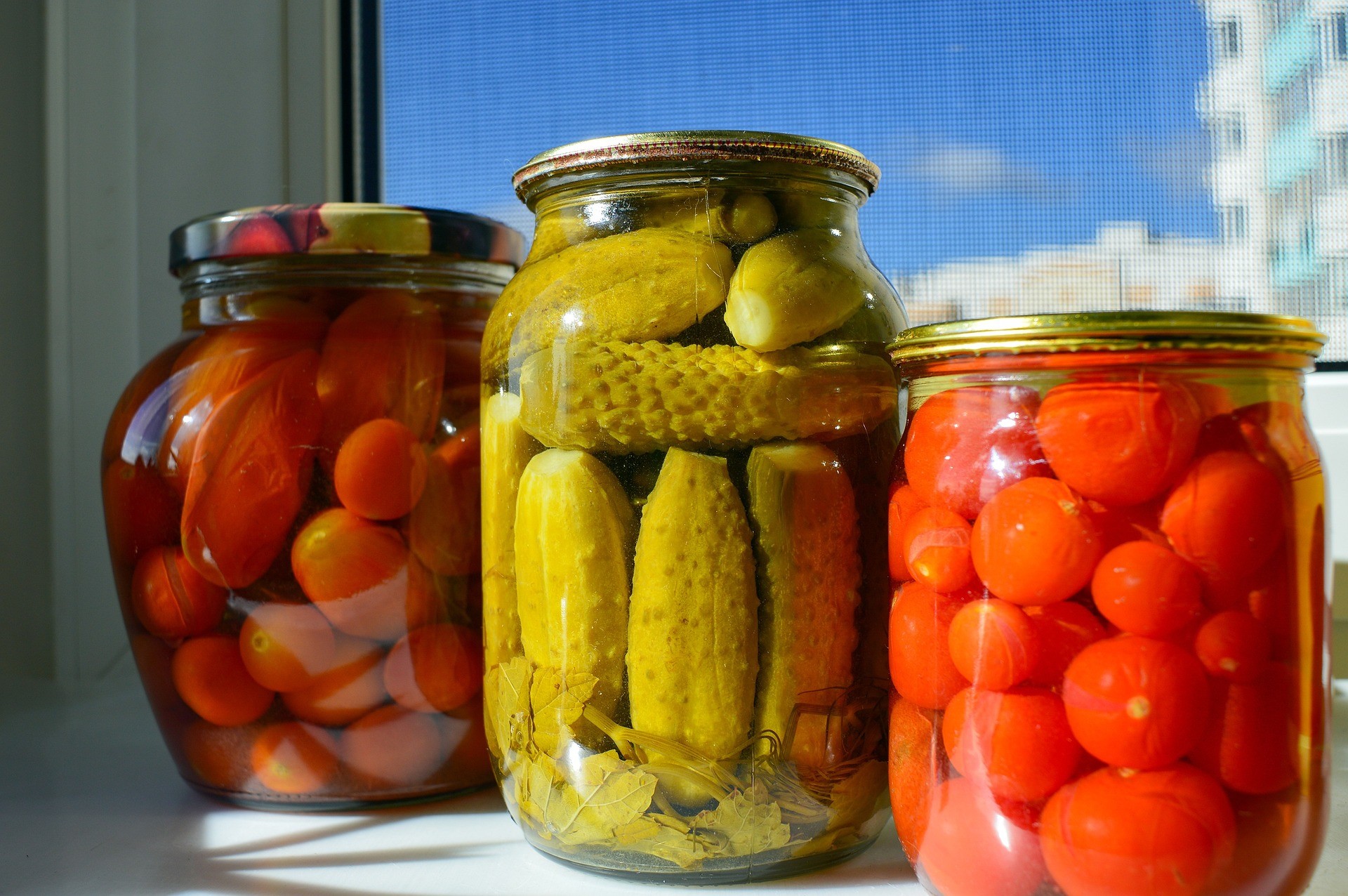

In summer we have officially reached the point where the garden produces far more vegetables than we could eat. I’m talking about 3 or 4 kilos of cucumbers a day! Since I hate to see anything go to waste, I started learning how to preserve produce a few years ago and now canning is one of my favorite summer activities.
Canning can be a bit tricky, since you need to follow recipes precisely and properly sterilize your equipment to ensure the food is safe to eat along the way.
Do All Jars For Preserves Need To Be Sterilized?
If you’re wondering whether you need to sterilize jars before filling them with delicious preserves, the answer lies in the recipe processing times. “Jar sterilization is not necessary before canning unless the recipe used has a processing time of less than 10 minutes,” explains Stephen Galucki, head of research and development Fresh Preserving at Newell Brands. “In recipes where the processing time is 10 minutes or more, sterilization is achieved during the food processing stage.” Also, there is no need to pre-sterilize jars if you are pressure canning.
However, if you are water bath canning and the recipe will be processed for less than 10 minutes, you will need to sterilize the jars before filling them. Even if your recipe is longer than 10 minutes, you can still sterilize the jars if you want: it won’t hurt! I tend to sterilize mine just to be safe.
How To Sterilize Jars For Preserves
Although you might find “hacks” online telling you to sterilize jars in the dishwasher or microwave, there is only one USDA-approved method to sterilize jars. “The only way to sterilize jars is to boil them in water for at least 10 minutes at an altitude between 0 and 1,000 feet, with additional time added for higher altitudes,” says Galucki.

1. Gather Your Equipment
To sterilize glass jars, you’ll need a container for boiling water or a pot with a rack: the pot should be at least 2 inches taller than the jars you are processing. A jar lifter will also be helpful, but a pair of kitchen tongs will work as well.
2. Prepare Your Setup
Place the rack inside the pot and arrange the jars on top, right side up. It’s important to use a rack, otherwise the bubbles formed when the water boils cause the jars to bounce and knock against each other, causing cracks.
3. Cover the Jars With Water
Next, fill the pot with hot water to “},{water bath” can. Often it’s easier to pour the water into the jars first and then the surrounding area, otherwise they will float. You want to fill the pot until the water is at least 1 inch above the tops of the jars.
4. Boil for 10 minutes
Put the pot on the stove and turn the heat to high. Bring the water to a boil and process the jars for 10 minutes to sterilize them at altitudes up to 1,000 feet. If you live at a higher altitude, you need to add one minute more for every 300 meters of additional altitude.
5. Fill Your Jars
After 10 minutes, your jars will be sterilized: easy, right? From here, you can remove them from the water using a jar lifter, carefully drain the water, and fill them with processed food. Be careful handling the jars as they will be quite hot!
If you’re not ready to fill the jars yet, you can simply turn off the heat and leave them in the water until you are ready to fill them.
What about the lids?
Canning lids, on the other hand, do not need to be sterilized in boiling water. High heat can actually damage the sealing ring on the underside of the lid, preventing proper sealing during processing.
“It is not necessary for dome lids to be sterilized outside the processing time or preheated before use,” explains Galucki. Instead, you can simply wash the lids with warm soapy water before placing them on the jars.
Source food52