
Mozzarella in mortella
The mozzarella in mortella (co’ a mortedda) is more than just a product of Cilento tradition.
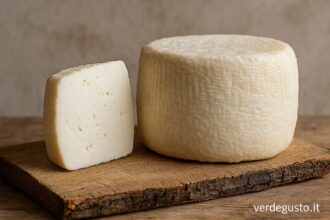
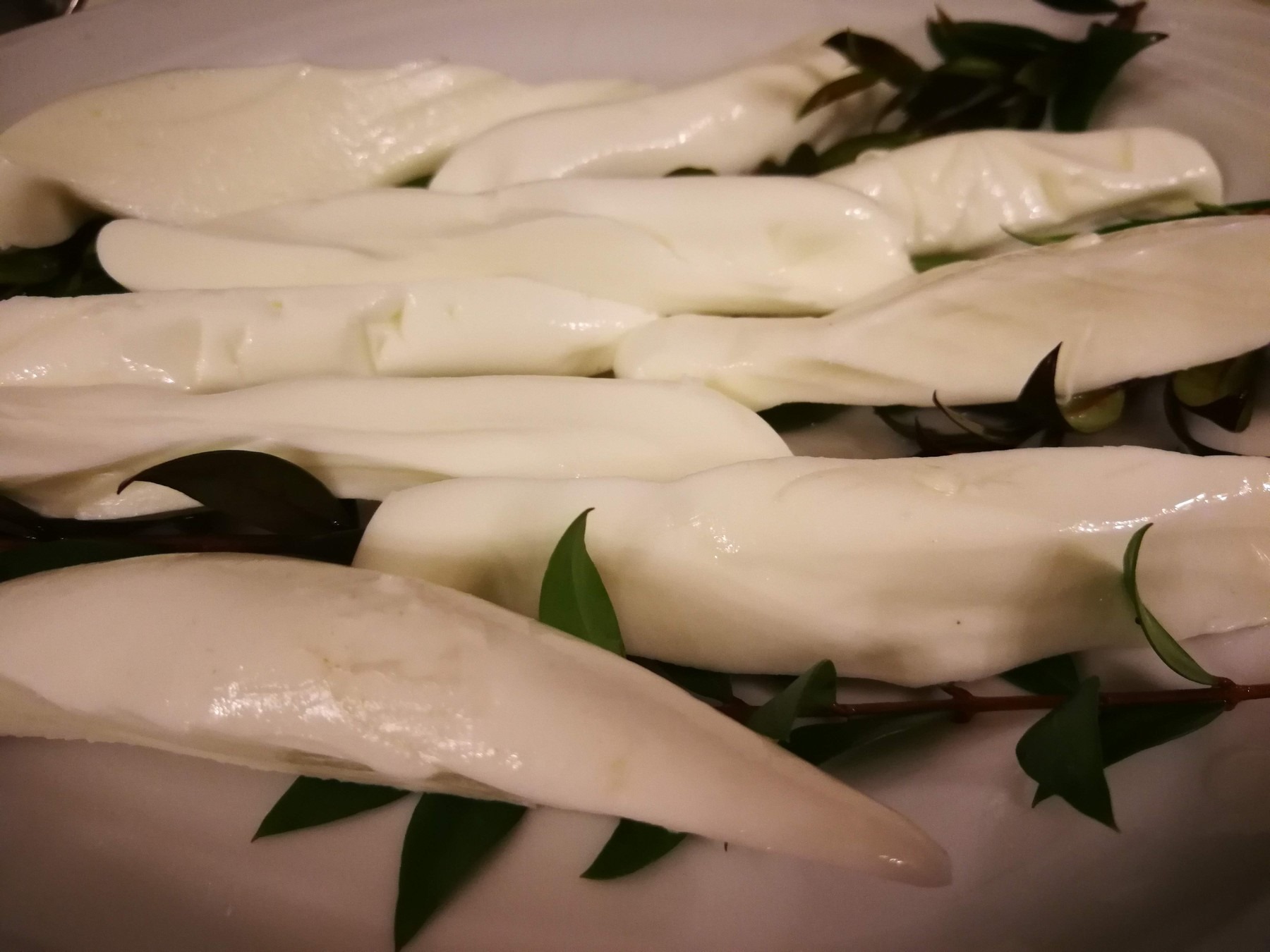
It is a stretched curd cheese made from cow’s milk and then wrapped in bundles of “mortella” (myrtle branches) to keep it fresh.
The name comes from the custom of packaging mozzarella in freshly picked myrtle leaves, which are then tied at the ends with thin, flexible broom branches.
In ancient times, the mozzarella co’ a mortedda was produced in grazing areas, and thus it was important to preserve it during transport to the villages where it would be sold. The shepherds of Cilento decided to use myrtle as a wrapping for preservation because, in addition to being evergreen and easily found, it kept the cheese fresh and gave the mozzarella in mortella a particularly unique aroma.
One characteristic in the process is the maturing of the curd almost without whey, which makes the cheese compact and dry.
Mozzarella in mortella, once the myrtle is removed, keeps its markings and aroma.
Mozzarella in mortella, excellent in any circumstance, is mainly used as an appetizer, served with fine cured meats, olives, and sottoli typical of Cilento tradition.
Menaica anchovies, flavors of the Cilento sea

The menaica anchovies are obtained with a very ancient fishing technique, once widespread throughout the Mediterranean, which now survives mainly in Pisciotta, Cilento, thanks to a small group of fishermen who go out to sea at night with a boat and net (both called menaica or menaide, and once, minaica).
“Menaica anchovies” are caught on calm sea days, between April and July: fishermen go out at dusk and cast the net across the migratory path offshore. The net selects them by size, catching the largest and letting the smaller ones go through. Restless and lively, once trapped, the anchovies quickly lose much of their blood. The net is hauled in by hand strength, and gently, they are removed from the mesh one by one, with the heads separated and the innards removed. Then they are placed in wooden crates and – a very important fact – neither ice nor other coolants are used in transport. The anchovies must be processed immediately: first washed in brine, then arranged in terracotta jars, layered with salt. Then the aging process starts, which takes place in the so-called magazzeni, cool and humid rooms where, before the port was built, boats were also kept. Here the anchovies must mature, but not dry out too much, for at least three months.
The menaica anchovies preserved in salt are characterized by their pale-pink flesh and intense yet delicate aroma, making them truly unique.
They are eaten fresh or salt-cured, raw or cooked. Many recipes are very simple, such as raw anchovy salad, just blanched by lemon and dressed with oil, garlic, and parsley, or anchovy sauce, perfect on spaghetti and very quick to make: simply fry the anchovies with a little oil, cherry tomatoes, garlic, and chili pepper. More complex, but still based on few ingredients: inchiappate (menaica anchovies opened and stuffed with goat cheese, eggs, garlic, and parsley, floured, fried, and cooked in tomato sauce), ammollicate (anchovies split and dressed with bread crumbs, garlic, oil, and parsley), or cauraro, made with potatoes, fava beans, anchovies, and wild fennel.
Salella Ammaccata Olive from Cilento

The ammaccata olive from Cilento is one of the most distinctive sottoli (vegetables in oil) from Cilento.
For preservation, the most suitable and meaty olives that haven’t started ripening yet are selected and crushed one by one with a sea stone.
Once crushed, the olives are carefully pitted and soaked in water for a few days. After four or five days, a brine is prepared with water, salt, bay leaves, and wild fennel; the olives are then left to soak in this solution for several days. Before being placed under oil, the olives are pressed to remove excessive water. Next, they can be dressed with extra virgin olive oil, garlic, oregano, or thyme and placed in jars, kept pressed down to prevent soaking up too much oil. The olives must be crushed, pitted, and soaked in water the very same day they’re harvested for a top-quality product.
Only the skill and patience of Cilento’s farmers, combined with the availability of the salella olive variety (which also provides the preserving oil), make it possible to still enjoy the flavor of ammaccata olives from Cilento today.