
Cheeses are one of the most appreciated and widespread dairy products in Italy and worldwide. According to Italian regulations, a cheese, or “cacio,” is the result of coagulating whole or partially skimmed milk, or cream, through acidification or the use of rennet, to which cultures and salt may be added. This definition therefore excludes ricotta, as it is obtained from whey and not from the direct coagulation of milk.
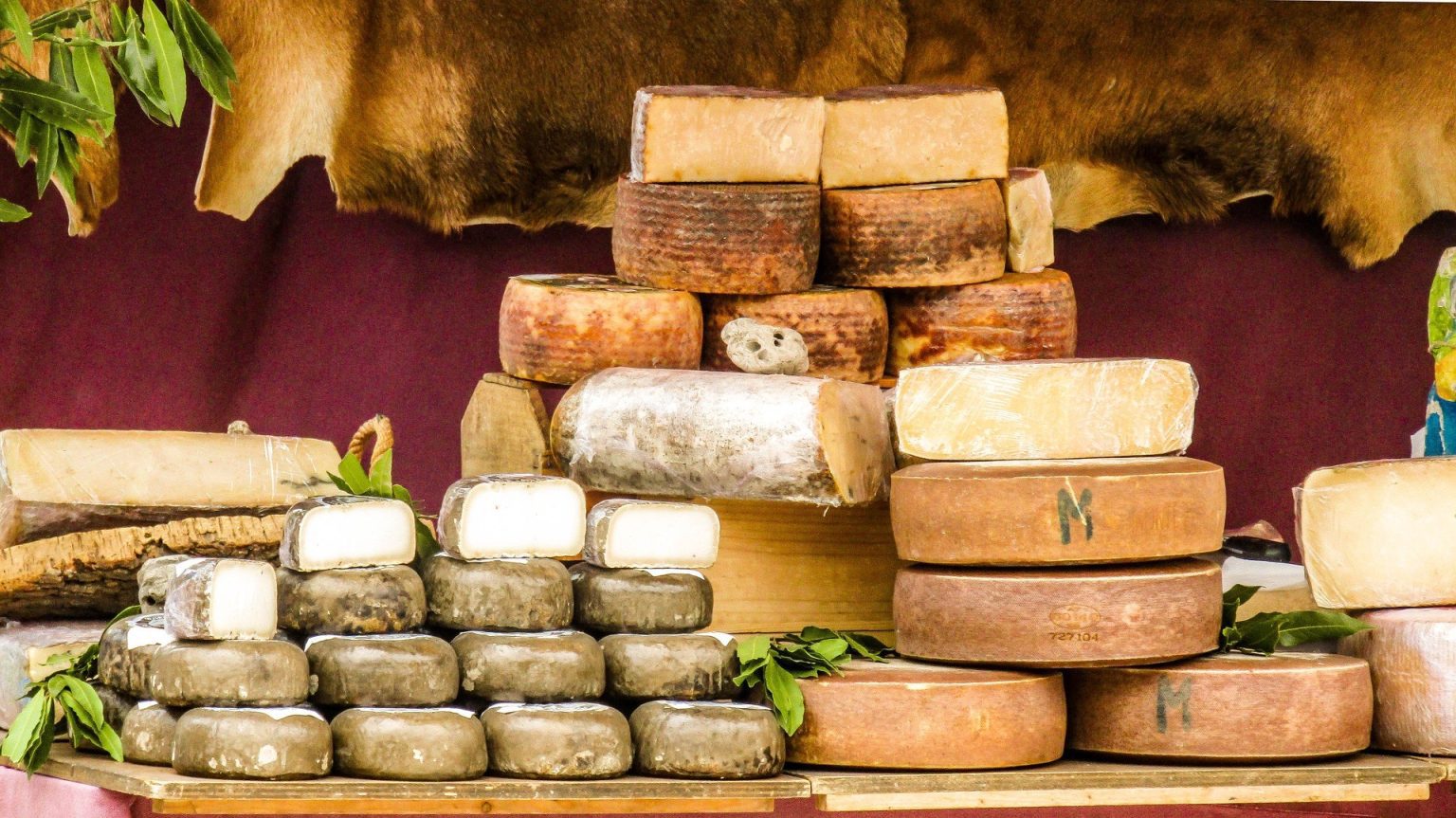
The wide range of cheeses on the market can be classified according to various parameters, which often combine, such as the type of milk used, fat content, texture, production technology, aging period, and denomination.
Classification by type of milk
A first criterion of distinction concerns the type of milk used for cheese production. Based on this characteristic, we can identify:
- Cow’s milk cheeses. Made from cow’s milk, they represent the most widespread and well-known category.
- Pecorino cheeses. Produced with sheep’s milk, they are typical of certain Italian regions such as Sardinia and Lazio.
- Buffalo cheeses. Obtained from buffalo milk, they are a specialty of Campania and Puglia, with Mozzarella di Bufala Campana DOP as the best-known example.
- Goat cheeses. Prepared with goat’s milk, they are characteristic of some mountainous and hilly areas.
If a cheese is produced from milk other than cow’s milk, it is mandatory to indicate the species of origin on the packaging.

Classification by fat content
Another relevant parameter for cheese classification is their fat content, expressed as a percentage of the dry matter. According to Italian law no. 142/1992, we can distinguish:
- Fatty cheeses. With a fat content greater than 35% of the dry matter. Well-known examples include Robiola, Gorgonzola, Taleggio, Bitto, Fontina, Montasio, Bra, Raschera, Grana Padano, Parmigiano Reggiano, and Pecorino cheeses.
- Light cheeses. With a fat content between 20% and 35% of the dry matter.
- Lean cheeses. Prepared with skimmed milk and with a fat content lower than 20% of the dry matter.
It is important to note that for many DOP cheeses made from partially skimmed milk, such as Grana Padano, Parmigiano Reggiano, Asiago, Castelmagno, and Raschera, the production regulations only establish a minimum fat content on the dry matter. Therefore, these cheeses, formerly defined as “semi-fat,” now fall into the fatty cheese category, following the reduction of the cutoff limit from 42% to 35% and the tendency to retain more fat in the cheese to increase yield and economic benefit.

Classification by texture and water content
The texture of cheeses, closely linked to their water content, represents another distinctive characteristic. Based on this aspect, cheeses can be divided into:
- Soft cheeses. With a water content higher than 45%. Products such as Robiola, Quartirolo, Stracchino, Crescenza, Mozzarella, Burrata, Gorgonzola, goat cheeses, Casatella and Squacquerone. They can have a rind (for example, the Taleggio) or be rindless (like the Pannerone).
- Semi-hard cheeses. With a water content between 35% and 45%. Examples include Ragusano, Asiago, Bitto, Fontina, Bra, Castelmagno and Italico.
- Hard cheeses. With a water content below 35%. Included in this category are the Grana Padano, Parmigiano Reggiano, Pecorino Romano, Montasio, Pecorino Sardo and Fiore Sardo.
It is important to emphasize that the water content of generic cheeses is not defined by law and only for some DOP cheeses the production guidelines specify a minimum moisture content. Moreover, the cheese’s texture can also be influenced by other factors such as fat content and the degree of aging.

Classification by production technology and processing temperature
Another classification criterion for cheeses concerns the technology used and the temperature at which the curd is processed during production. Based on these aspects, we can distinguish:
- Raw curd cheeses. When the curd is not heated beyond the coagulation temperature. Examples are Robiola, Mozzarella, Crescenza and Gorgonzola.
- Semi-cooked curd cheeses. If the curd is heated up to a maximum of 48°C. Included in this category are Asiago, Fontina and Italico.
- Cooked curd cheeses: Obtained by heating the curd above 48°C, as with Grana Padano, Parmigiano Reggiano, Montasio and Bitto.
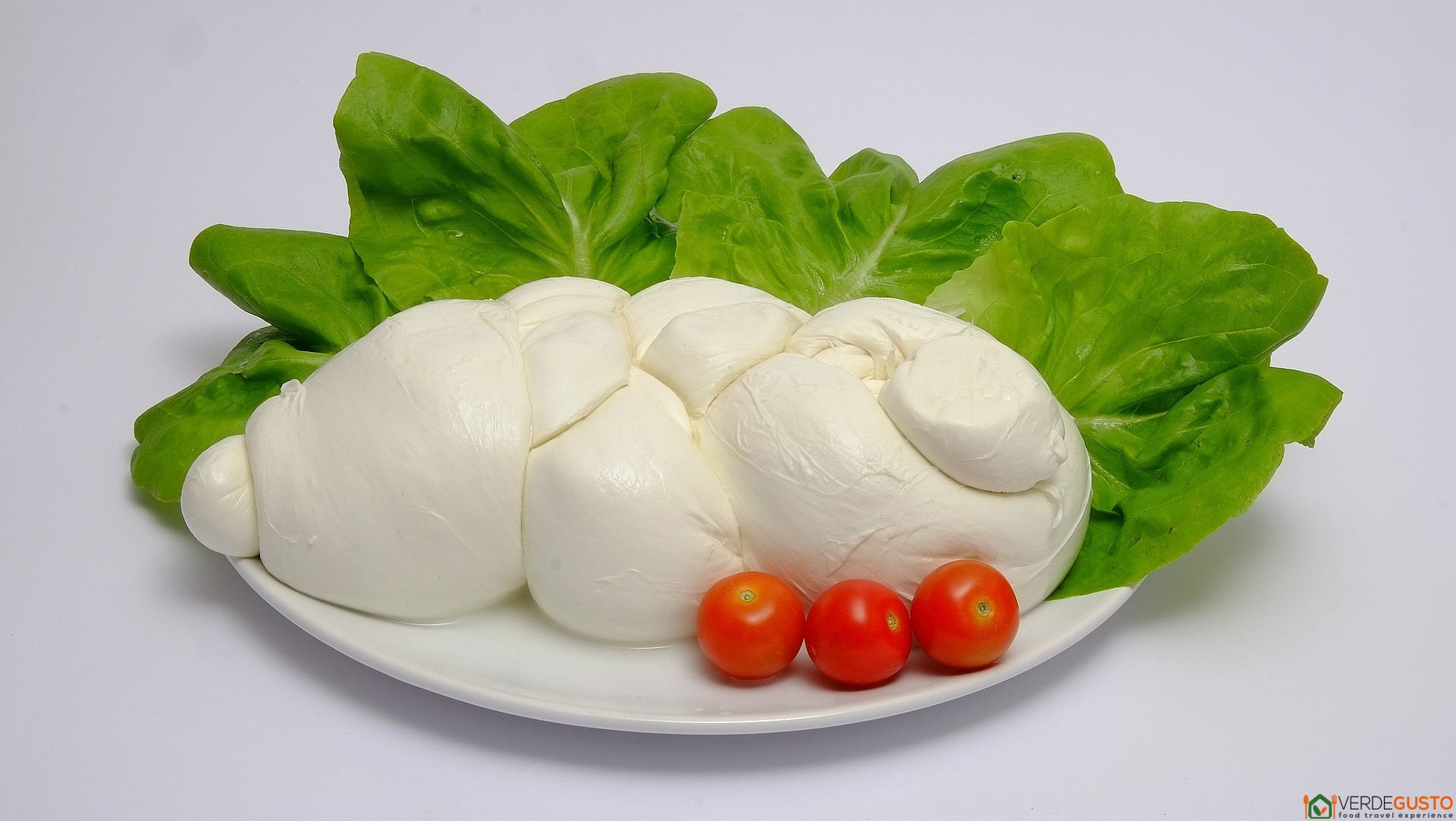
- Pasta filata cheeses. Characterized by stretching the curd in hot water at temperatures between 70°C and 90°C. Examples include Mozzarella, Fiordilatte, Caciocavallo, Provolone and Ragusano.
- Blue cheeses. Molds are deliberately inoculated to contribute to the cheese’s maturation with specific enzymatic activities. Included in this category is the Gorgonzola and the Castelmagno.
Classification by aging period
The aging period represents another decisive factor for cheese classification. Based on this parameter, we can identify:
- Fresh cheeses. Obtained by acid or rennet coagulation and not subjected to aging, they have neither rind nor surface microflora and must be consumed within a few days of production. Examples include Mozzarella, Fiordilatte, Crescenza, and Casatella.
- Short-aged cheeses. With an aging period not exceeding 30 days. Included in this category are Taleggio, Murazzano, Bra, Quartirolo Lombardo, Asiago, Monte Veronese, and Casciotta d’Urbino.
- Medium-aged cheeses. With an aging period not exceeding 6 months. Examples are Fontina, Castelmagno, Raschera, Toma Piemontese, Valtellina Casera, Provolone Valpadana, Caciocavallo Silano, Canestrato Pugliese, Pecorino Siciliano, Pecorino Sardo, and Bitto.
- Long-aged cheeses. With an aging period longer than 6 months. Included in this category are the Grana Padano, Parmigiano Reggiano, and Fiore sardo.

Classification by denomination
A final important distinction for Italian cheeses concerns their denomination, which certifies their origin and production characteristics. We can identify:
- Protected Designation of Origin (PDO) cheeses. Produced in defined geographical areas, observing loyal and consistent local practices, whose characteristics mainly derive from the production environment conditions. This designation is protected at the European level by Regulation (EC) No. 510/2006. Examples of PDO cheeses are Asiago, Bitto, Bra, Caciocavallo Silano, Canestrato Pugliese, Casciotta d’Urbino, Castelmagno, Fiore Sardo, Fontina, Formaggella del Luinese, Formai de Mut dell’Alta Val Brembana, Gorgonzola, Grana Padano, Montasio, Monte Veronese, Mozzarella di Bufala Campana, Murazzano, Parmigiano-Reggiano, Pecorino Romano, Pecorino Sardo, Pecorino Siciliano, Pecorino Toscano, Piave, Provolone Valpadana, Puzzone di Moena, Quartirolo Lombardo, Ragusano, Raschera, Robiola di Roccaverano, Squacquerone di Romagna, Spressa delle Giudicarie, Taleggio, Toma Piemontese, Valle d’Aosta Fromadzo and Valtellina Casera.
- Protected Geographical Indication (PGI) cheeses. Produced on the national territory, observing loyal and consistent practices, whose characteristics derive from particular qualities of raw materials or production techniques, according to Regulation (EC) No. 510/2006. Currently, Italy has not yet requested registration of cheeses under this label.
- “Traditional Specialty Guaranteed” (TSG) cheeses. Their specificity consists in the respect of a detailed traditional production method, without a link to a specific geographical area. They can therefore be produced throughout the national territory and are protected by Regulation (EC) No. 509/2006. In Italy, the only example is Mozzarella TSG.
- Traditional cheeses. There are over 450 so-called “regional” cheeses, such as the Formaggio di Fossa, Burrata, Cacio Marcetto, Bagòss, Piacentinu di Enna, Casieddu di Moliterno, Casolet Val Camonica, Dobbiaco, Paglierina Rifreddo, Tosèla del Primiero, Formaio Embriago, and Morlacco del Grappa.

Complete lists of these categories of cheeses are available on the website of the Ministry of Agricultural, Food and Forestry Policies.