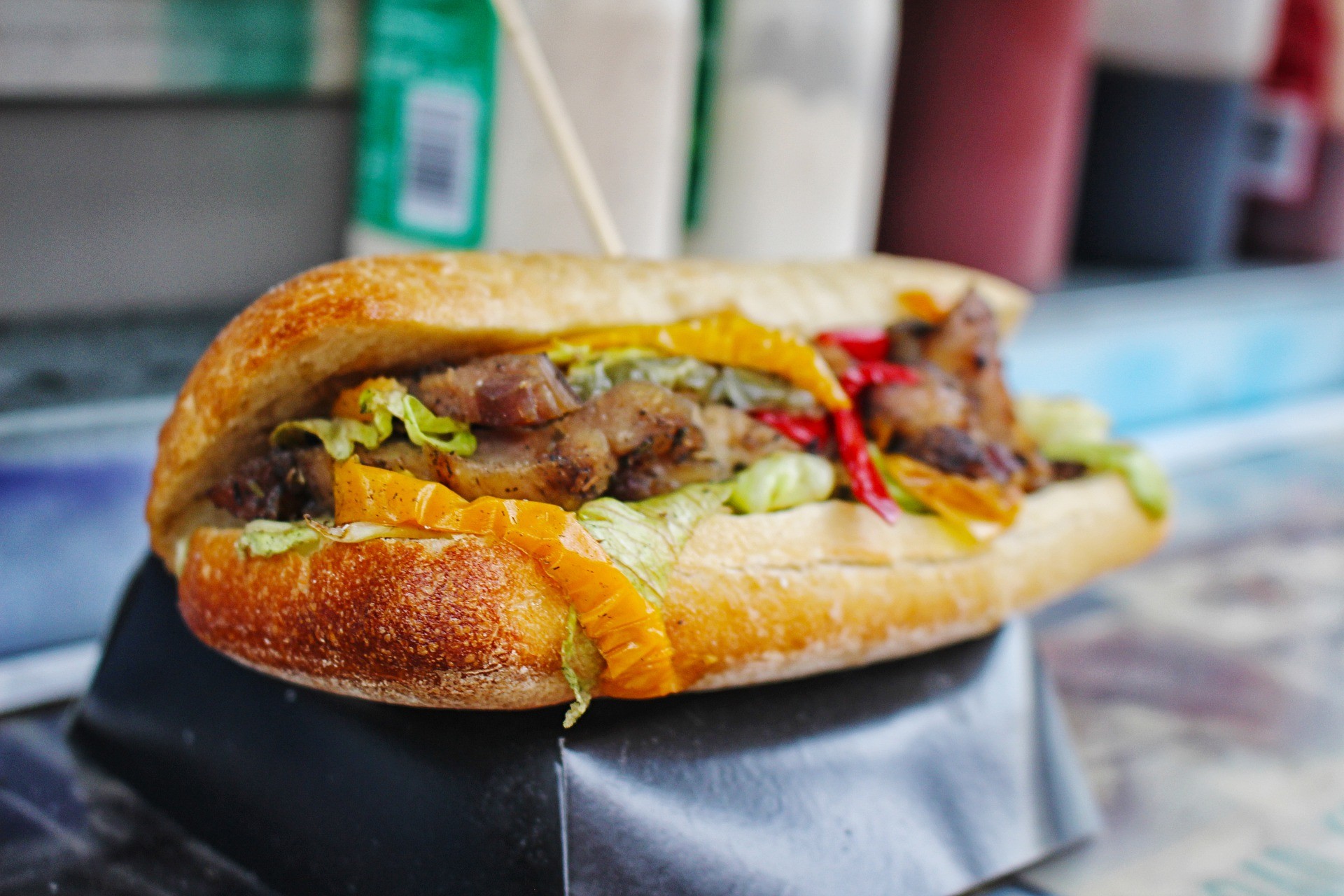

Today the tortas is entirely Mexican, proudly modern. The sandwich is popular and commonplace, sold in markets, at bodega counters, in minimarkets, and in puestos, the fixed stalls scattered in every neighborhood. Tortas are the everyday sandwich of the people: cheap, abundant, and infinitely customizable. Striated like the layers of minerals preserved in the rocky substrate, the combination of ingredients reflects the creativity of their creator.
As with every national dish, regional variations have emerged, which have become iconic sandwiches in their own right: the huge cemitas of Puebla; the lonch from the north; the pambazo filled with potatoes and chorizo; the tortas ahogada à la française, literally “drowned” in sauce. There are tortas filled with bacalao a la vizcaína, a Basque-style salt cod stew appreciated during Lent; vegan tortas sold at punk markets; tortas topped with cochinita pibil (citrus-roasted pork) and pickled red onions; and tortas stuffed with chilaquiles. Even the varieties offered in places dedicated to the preparation of tortas, called torterías, have evolved: the “hawaiana” almost always features canned pineapple rings; the “cubana” is not related to the Cuban sandwich but rather a local invention of ham, roast pork, soppressata, two kinds of proper cheese.
If there are so many varieties, what actually defines a tortas?
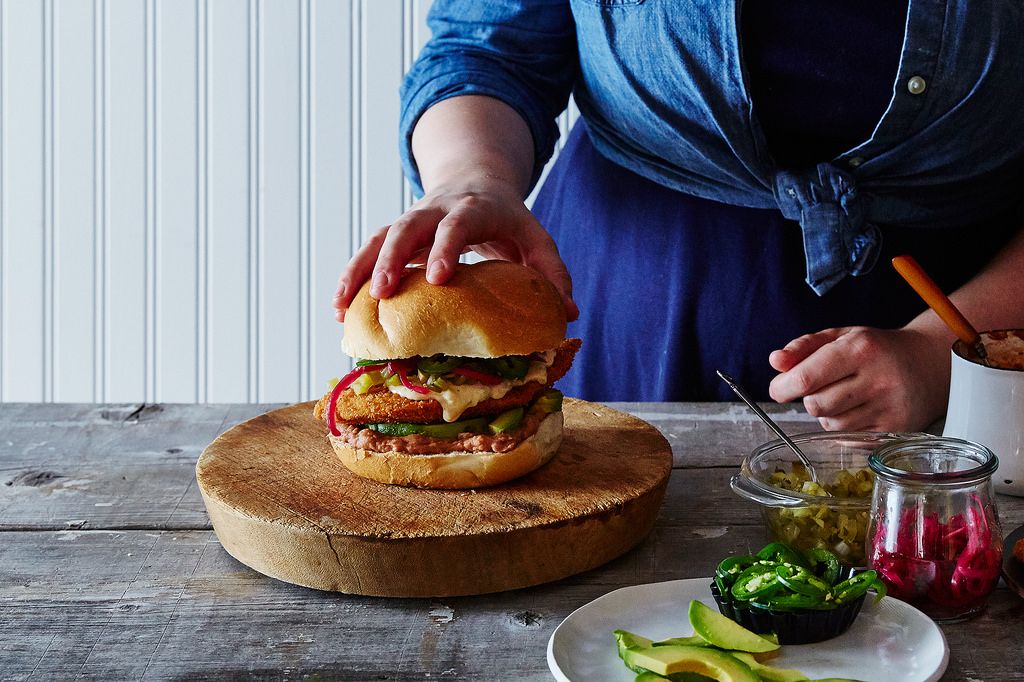
First and foremost the bread: a simple, salty wheat dough sandwich roll, most commonly a bolillo (also called birote or francés), which are inexpensive rolls with a soft inside and a dry, crunchy crust; or a telera roll, which is flatter, softer, and marked twice lengthwise. Fresh bread is essential. Tortas are not always toasted, so bread made the same day is a common practice. The toppings are added to the bread first: a spread of refried beans, to add richness and moisture; mayonnaise, for the same reason; avocado, layered in slices; thin rings of raw white onion; tomato, for freshness contrast. Lettuce is rare.
Once vegetables and seasonings have paved the way, proteins arrive. Standard offerings include pierna (thickly sliced roast pork leg coated with a scarlet marinade), turkey ham, regular ham, American cheese, queso Oaxaca, panela cheese, breaded and fried beef or chicken cutlets (cut into pieces before adding), and hot dogs, which are more tubular meatballs than crisp sausages, cut into thin strips: if you didn’t know a hot dog can be sliced this way, welcome to tortas school. Three or more proteins are typical.
Another key element is the pickled vegetables, to cut through richness: common choices are rajas, which means strips of pickled jalapeño with accompanying carrot, cauliflower, and onion, or chipotles en adobo, a vinegar-based marinade seasoned with piloncillo syrup that plumps the dried peppers. Both those pickles can come from a can, but old-school tortas joints often make their own.
The modern tortas tends to showcase a macho weight, boasting layer upon layer of ingredients; however, even the more modest varieties have a decent following. Contained and slim, the bacalao tortas, for example, stews the dried fish with onion and tomato, adds a few green olives to the mix, then spreads the fish paste on the bread without any of the necessary vegetable additions. Along the same lines is the pierna con mole tortas of Churrería El Moro, open since 1935, which piles dry pork leg on a roll and sprinkles it with liquid black mole. That’s it. Another classic is the morning tortas guajolota, which pulls a steaming tamale from its corn husk and slips it into a bolillo, the ultimate starch-on-starch sandwich that every Chilango has eaten at least once. No sauce. No vegetables. Just corn and wheat, an edible portmanteau.
Surely, all this talk of tortas makes you want to eat one, and the best news is you can easily do so at home. When you decide to create your own tortas, there are some notable elements to help you succeed:
1. Fresh and inexpensive bread
Most Latin American bakeries will sell both bolillos and teleras, and every supermarket bakery will carry a type of simple, crunchy roll. Bread is fundamental. Here, no sourdough, natural yeast, or seeded bread; and while there is a variety of tortas served on industrial white bread, pre-cut, crunchy rolls are preferred. Open it and toast it if you want.

2. The spreads, sauces, and condiments
Refried beans (the legume must be on most sandwiches, am I right?!). Mayonnaise, always. Avocado also adds moisture. Any crunchy vegetable you have: tomato, shredded cabbage, sliced serrano pepper. Some thinly sliced white onion. Drained canned crushed pineapple? Do it.

3. The meats
Whatever you want, and more protein if you have it: cold cuts, a mix of ham and turkey, scrambled eggs, and so on. Got vegan chorizo? It’s easy to veganize the tortas. Cocktail weenies. Leftover rotisserie chicken. Canned sardines in tomato sauce. A fried chile relleno. Spam. The possibilities are endless: see below for evidence and some other ideas.
- Crispy chicken cutlet
- Meatballs
- Eggs (hard-boiled, fried or scrambled)
- Braised anything (chicken thighs, pork shoulder, and ribs are some of my favorites for tortas-ing)
- Marinated tofu
- Ham or bacon
- Grilled shrimp
- Chorizo (in casing or loose and ground, in which case it’s like a sloppy Mexican Joe)

4. The cheese
I’d say you can leave it out (and really, you can), but all kinds of cheeses are the glue of this tortas: melted cheese helps hold things together and softer cheese can be spread or crumbled for fun textures. Don’t forget the cheese sauce I pushed on you above. And if you’re super cheese-crazy, using lots of cheese is a great way to go vegetarian. Some of my suggestions aren’t super traditional but provide all the necessary beauty and messiness that make a tortas great.
- Panela, or any of those super-firm cheeses you can grill/bake without melting (like halloumi)
- Goat cheese
- Cozia
- Affresco cheese
- Jack

5. Pickles (don’t forget the pickles!)
The final topping of a great torta is the pickled pieces; they bring essential spice and flavor to the mix. Some recipes to start with:
- Pickle anything: jalapeños (or any other pepper), onions, nopales, tomatoes.
- Citrus squeeze: lime, lemon, or grapefruit.
However you slice it, the best tortas are made with love, with care. Any slapped-together torta that falls apart before it reaches your mouth is a bad torta, so build the torta with intent: spread those beans to the edge! Evenly distribute the carrots and pickled peppers. Season each layer of ingredients as you go, then slice and admire the careful layering and structural integrity of the sandwich. The key to a successful torta, according to Aburto, who has assembled these sandwiches for 46 years, is this: “There are many factors, but first you have to love what you’re doing.”

Excerpted from food52