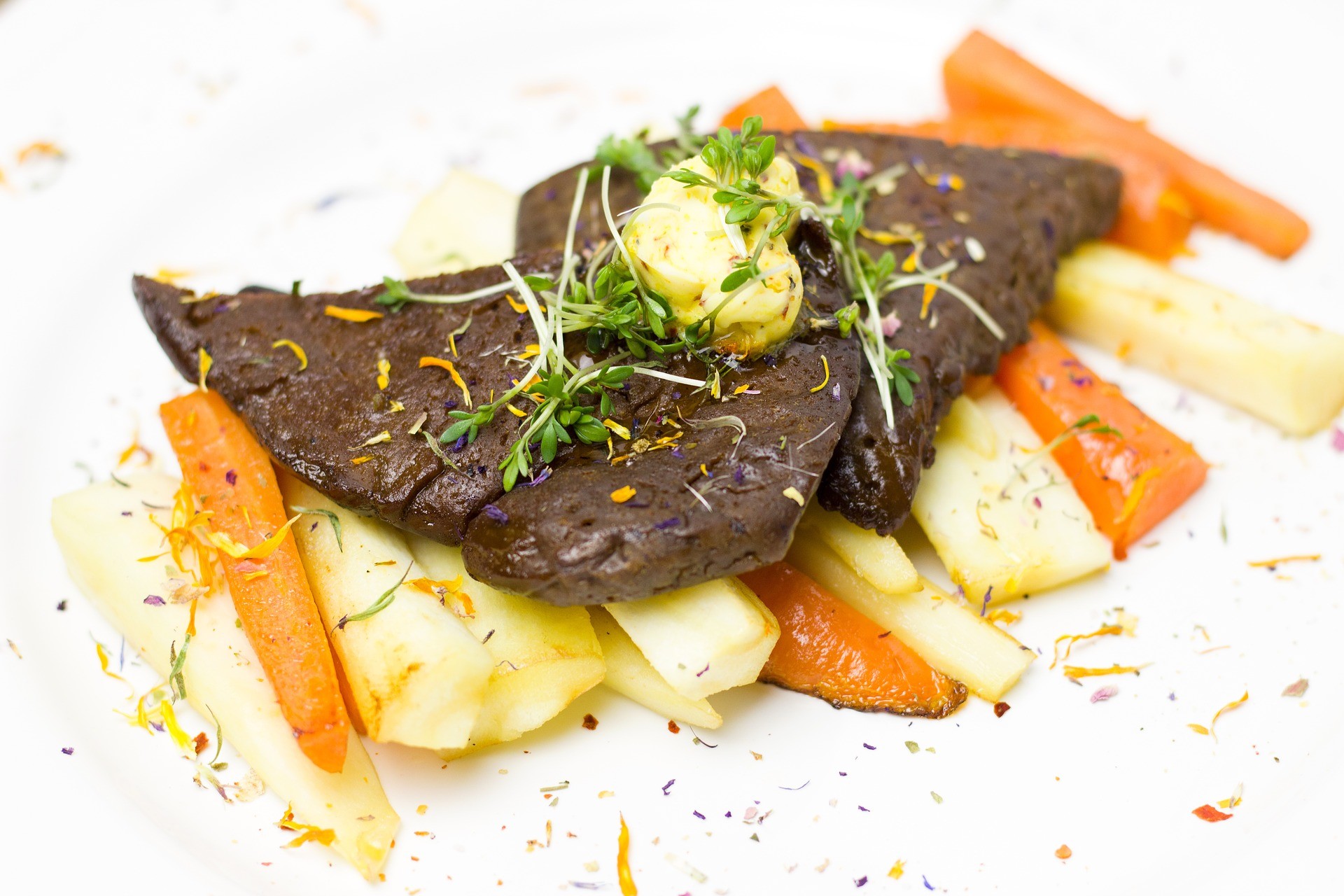
The seitan is made from pure vital wheat gluten. The starch is washed out from the whole dough and what remains is called seitan. It has a chewy and stringy texture similar to meat which makes it a good vegan substitute for recipes. The flavor of seitan is comparable to chicken, it has little taste on its own. Just like real meat, it absorbs the seasonings and flavors with which it is cooked. Unlike tofu or tempeh, seitan has the texture of real meat. This is what people like the most. The history of seitan dates back at least to the 6th century AD. Its use was first recorded in Chinese literature for making noodles.
Today it is a popular dish not only in China but also in Japan and many Southeast Asian countries. In particular, it is one of the favorites among Buddhists and Hindus in these regions who follow a vegetarian diet. In just a couple of decades, it has gone from being an obscure ethnic food to a staple food.
Properties and benefits of seitan
- More protein than beef and steak on a calorie basis
- Less fat than grilled chicken breast
- Cholesterol-free as it is 100% plant-based
- Zero heterocyclic amines which are carcinogenic in meat
- Moderate amounts of iron and zinc
- High amount of vitamin B6
- Meets the daily value of riboflavin (B2) and niacin (B3)
- Very low in carbohydrates
- Food for weight loss
- Sugar-free
- Non-GMO
While protein and fat content will vary depending on the brand, the traits described above of seitan compared to beef and chicken will generally remain true. What seitan is prepared with traditionally consists of vital wheat gluten and shoyu or soy sauce. It should be oil-free. Sometimes spices such as garlic and kombu (seaweed) are used. Almost all seitan recipes that stick to the basic ingredients will be healthier than chicken when it comes to fat content and better than beef when it comes to total protein.