

How many times have you thought about trying your hand at the art of pizza and wondered: what is the best flour for pizza? This entirely reasonable question deserves a detailed answer, which we attempt to summarize in this article. But first, let’s start with the type of flour to use for pizza.
Which flour to use for pizza
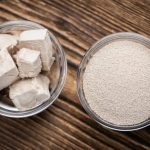
Let’s begin with what you need to know to make a good pizza. The basic ingredient is obviously the flour which, along with the preparation and the right pizza equipment, certainly makes a difference. Pizza flour must be strong soft wheat flour which, thanks to its very high protein content, allows gluten formation. And then there’s the yeast. It can be natural yeast or brewer’s yeast. For homemade pizza, I finally recommend using a baking stone for oven cooking.
What is the difference between flours?
Soft wheat flours are mainly used for leavened products, pizza, desserts, leavened doughs, fresh pasta, and fresh egg pasta, unlike durum wheat semolina which is used for making dry pasta or bread like Matera or Altamura bread, couscous, and bulgur. Both soft wheat flour and durum wheat flour contain no cholesterol. However, due to minerals and fiber content, less processed ones are recommended. There are different types of flours derived from various grains or ingredients. Here are some.
Soft wheat flour (white color)
- 00 flour (the most refined, low in minerals and fiber, the most commercialized and easiest to work with);
- 0 flour (contains a lot of gluten, widely used for baking),
- 1 flour (less refined, contains bran. Used for bread, pizza, desserts, and baked goods)
- 2 flour (coarsely ground, very rich in fiber and minerals. Can be considered a semi-whole grain flour)
- Whole wheat flour (hard to work with because it’s coarse but the best for the health benefits it provides)
Petra 5037 UNICA flour

Durum wheat flour (amber yellow color)
- semolina
- semi-whole semolina
- whole semolina
- durum wheat flour
Organic Senatore Cappelli Semolina Flour

Other flours used in cooking
- Manitoba flour(soft wheat from Canada with high protein content, used for brioche)
- Flour ofChickpeas(used in some typical products, also good for pizza and focaccia)
- Khorasan flour (also known as kamut from the producer’s name. It is a flour made from ancient wheat and is not suitable for celiacs)
- Rice flour(white or whole, mainly used for celiacs and as a thickener for sauces and creams)
- Chestnut flour(used to prepare savory or sweet dishes)
- Legume flours (not only chickpeas but also fava beans, beans, peas, and soy)
- Flour ofspelt
- Rye flour
- Flour ofcorn (used for polenta, tortillas, and sweets)
- Flour ofhemp
- Flour ofbuckwheat (for gray polenta, bread, and cookies)
- Tapioca flour
- Flour ofquinoa
- Amaranth flouramaranth.
What strength should pizza flour have?
Besides the type of flour, another aspect to consider when buying the best flour for pizza is the strength. But what does flour strength mean? Strength indicates resistance to processing time (baking factor) and is represented by the letter WW. The weakest is 130 W while the strongest is 500 W.
- High baking factor W: flour with high gluten content, absorbs a lot of water, rises slowly (bread, pizza, panettone, rustic pizzas with cheese).
- Low baking factor W: flour that needs little water, rises quickly, dough is light and less consistent.
Flours with strength up to 170 W
These are weak flours that absorb about half the liquids. They are mainly used for cookies.

Flours with strength from 180 W to 260 W
These flours fall into the category that absorbs about 65% of liquids. They are usually used for making rolls or products with medium liquid absorption.
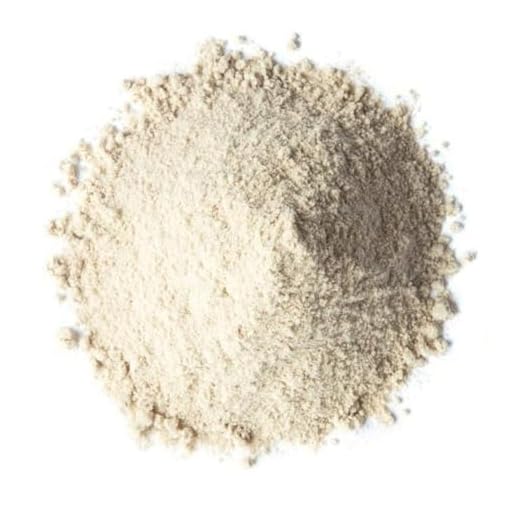
Organic Soft Wheat Flour Type 0 Weak (cookie)
Flours with strength from 270 W to 350 W
These are the ideal flours for pizza. Liquid absorption ranges from 65% to 70%. Some pizza makers blend these flours with Manitoba flour, which has a strength of 350W and absorbs up to 90% of liquids.
The best seller
Caputo Pizzeria Flour

Our choice
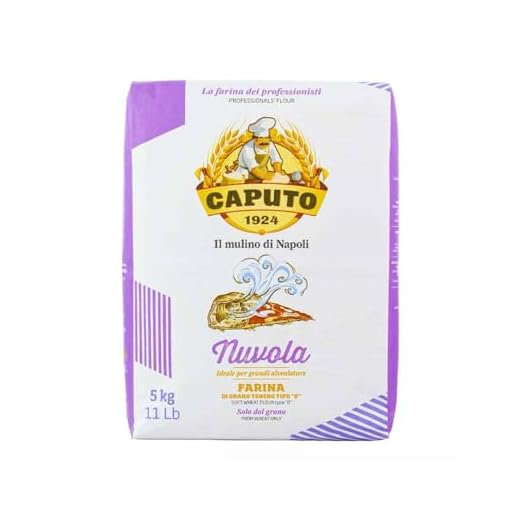
Caputo Nuvola Flour for Neapolitan pizza
Manitoba type 00 flour
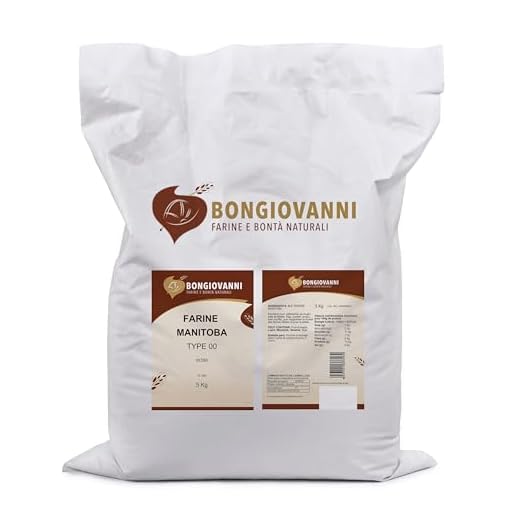
Flours with strength up to over 350 W
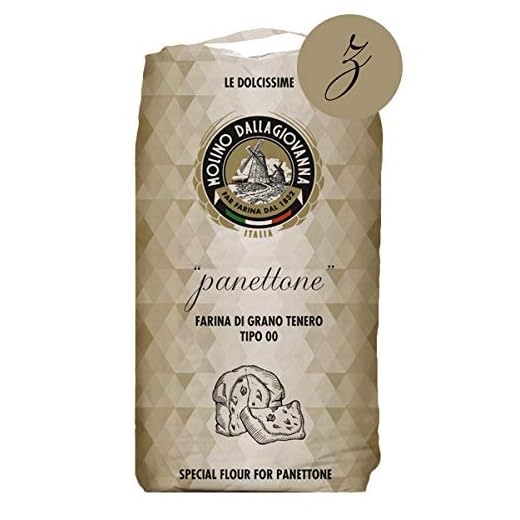
Flours of this type, with strength above 350 W, are usually used in pastry or bakeries for making panettone.
Panettone flour for desserts
To simplify, we can say that a good flour for pizza should have a W value between 240 (quick rising) and 300 (for long fermentations, such as the traditional Neapolitan style, which also involves a cold rest in the refrigerator).
Which flour to choose for pizza?
At this point, after a brief overview of all the aspects to consider when choosing flour for pizza, the question returns: which flour to choose for pizza? The answer is: it depends! The factors influencing flour choice, as we’ve seen, include the type of fermentation (fast or slow?) and how much water you want to use in your dough (the stronger the flour, the more water it absorbs).
Another element to consider for pizza dough is resistance and elasticity. Here again, some symbols are used. The P indicates resistance, while the letter L denotes the dough’s elasticity. Based on what you want to achieve, the choice of dough should be made according to the P/L ratio.
The 10 best flours for pizza
1 S15 type “00” flour Mulino Padano
For those who love making pizza at home and want a well-developed, extensible, and easy-to-stretch dough, the S15 type “00” flour from Mulino Padano is, in our opinion, the best choice given its versatility. It’s suitable for doughs with medium fermentation times and maintains excellent strength both during handling and resting phases, even when proofed in the refrigerator. Its ability to absorb a good amount of water allows preparing soft and light pizzas, with a well-aerated dough and a pleasantly developed crust. It can be used for classic round pizza, for pan pizza and for high hydration preparations, such as Roman-style pizza in pala. It is also suitable for those who want to experiment with indirect methods, such as with pre-ferments like biga or poolish.

The S15 is part of the range of professional pizza flours by Mulino Padano, which includes options designed for different dough types, hydration levels, and fermentation times. Although originally created to meet the needs of professional pizza makers, some references are also available for enthusiasts who want to achieve results closer to pizzeria quality at home. The S15 pizza flour can be purchased directly onlinealso in a smaller format, more practical for home use.

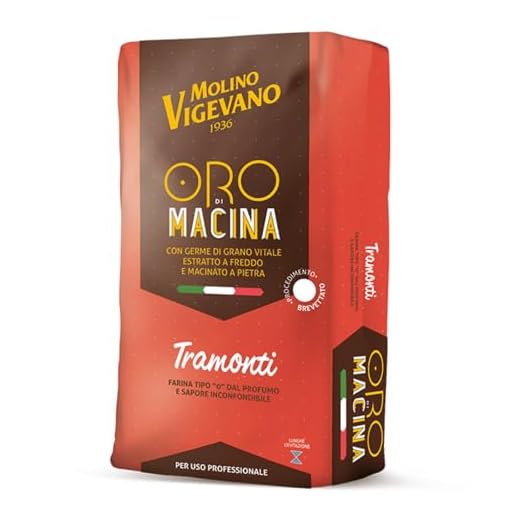
Tramonti Oro flour is ideal for long leavening times from 12 to 24 hours at room temperature. Thanks to the careful selection of raw materials, the long milling tradition, and the cutting-edge technology applied, it ensures excellent stability for the doughs; for this reason, they are easy to stretch without fear of “tears.” The doughs will be particularly light and easily digestible thanks to the presence of the vital wheat germ, which promotes perfect leavening and maturation of the doughs. Ideal for pizzas, focaccias, and bread.
Tramonti Oro Molino Vigevano flour type 0
2 Neapolitan pizza flour
Ingredients: Soft wheat flour 00 Usage: Ideal for making Neapolitan pizza with high hydration dough. Usage instructions: Long leavening and high hydration doughs. Leavening times are indicative and vary according to production conditions, yeast characteristics, and room temperature. Allergens: Gluten. Packaging: 5 Kg. Expiry: 1 year from milling. Storage: In a cool, ventilated, and dry place avoiding direct exposure to sunlight.
L Pizza flour
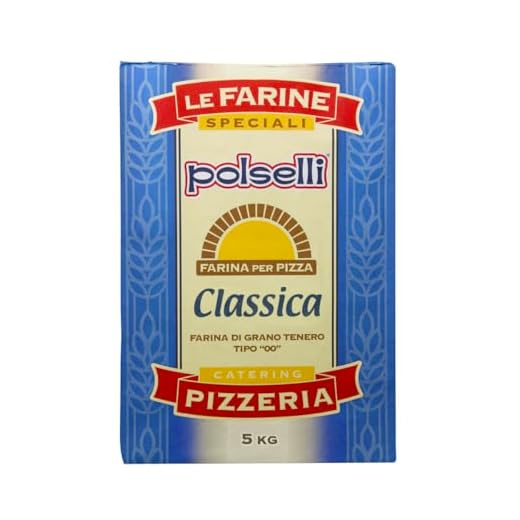
“00” Type soft wheat flour Classic is a blend of flours obtained from selected national and foreign soft wheats. Recommended for direct dough preparation with medium leavening times, it is suitable for preparing the typical Neapolitan pizza. Laboratory yield: – More than 225 dough balls of 180g for each sack of flour. Baking: – Excellent resistance to high temperatures, ideal for use with a wood-fired oven. Leavening time: – 8-10 hours.
Polselli Classic flour type 00
Caputo soft wheat flour Type 00 blue pizzeria Flour with elastic and resistant gluten, ideal for light doughs with perfect leavening. Ideal for classic Neapolitan pizza. One of the most used flours worldwide, especially in Neapolitan pizzerias.
Caputo pizzeria flour
3 Sheet pan pizza flour
Flour ideal for sheet pan pizza with Strength W 290 (tolerance +-5%). Used for Roman sheet pan and pizza alla pala. Good absorption and workability.
Petra 3 flour
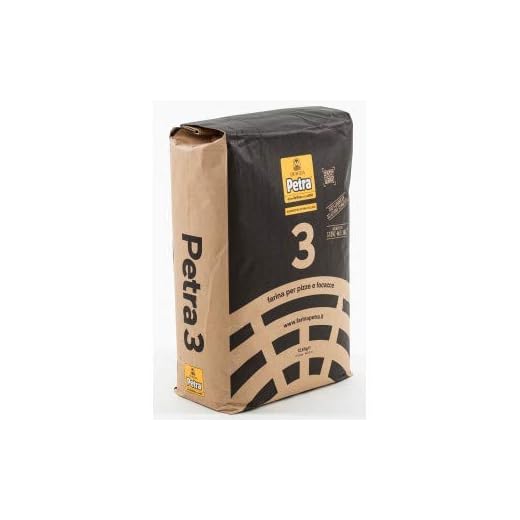
PROFESSIONAL FLOUR, EVEN for Non-PROFESSIONALS Petra 3 is flour made from annually selected cereals in direct contact with the agricultural world and depending on the quality of the harvests (preferring climatic selection rather than buying cheap wheat); the soft wheats for Petra are passed through Italy’s most advanced optical sorter at the mill, which discards impure and defective grains; this eliminates any presence of weeds and mycotoxins before the actual milling process, which takes place in complete isolation from the external environment to guarantee the highest possible food safety today; Petra 3 is milled by Molino Quaglia with the innovative Augmented Stone Milling process, which combines the benefits of a first low-temperature stone milling with the subsequent passage through rollers to obtain absolute qualities of stability and predictability that make it a flour easy to work with and suitable for professional as well as home use. Flour with good elasticity and high liquid absorption capacity. Ideal for medium/long leavening times, for savory and sweet products (table pizza, sheet pan pizza and pizza alla pala, puff pastry, breadsticks and crackers, and all bread types).
4 Flour for highly hydrated doughs
Nuvola flour from Molino Caputo is a new type 0 flour that allows highly hydrated doughs, very digestible, and gives the pizza a crust rich in air typical of the Neapolitan style round pizza. Born from Caputo Mill’s research & development to create alveolated and fragrant crusts. A careful selection of raw materials ensures volume and softness of the doughs thanks to the high fermentative capacity naturally present in the grains. Nuvola is a 100% natural product without the use of additives or preservatives. FLOUR TYPE “0” PROTEINS 12.50% BAKING W 270/290 ELASTICITY P/L 0.50 / 0.60
Nuvola Caputo flour
5 Flour for easy-to-work doughs
Flour produced from selected grains to obtain an easy-to-work dough, characterized by elasticity and excellent leavening strength. For direct method processing or medium-short resting times. This flour allows you to get crispy pizzas with regular alveolation.
Gaiero and Gabutti pizza flour type 00

6 Flour for pizzas with high crust
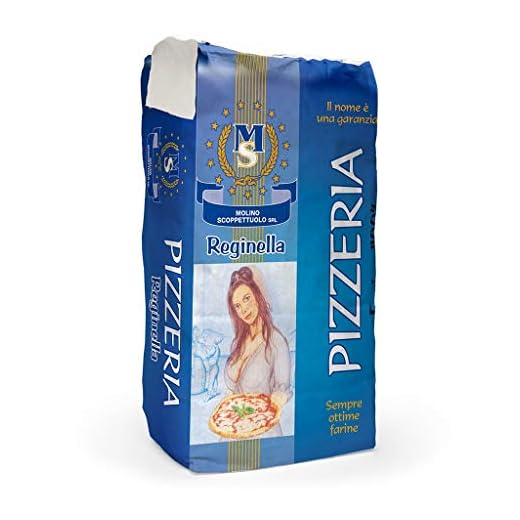
Soft wheat flours 0 Usage: Special for the production of pizzas with high and alveolated crust. Usage instructions: Long leavening and high hydration doughs; leavening times are indicative and vary according to production conditions, yeast characteristics, and room temperature. Allergens: Gluten. Packaging: 5 Kg.
Reginella Oro d’Irpinia pizza flour

7 Flour for meter-long pizzas
This flour is obtained from a medium/strong blend of the best Italian and foreign grains, with a good balance between extensibility and strength. Special attention is given to the quality of gluten/proteins. Its excellent water hydration/absorption promotes a wide alveolation resulting in a light, crispy, and aromatic pizza. It is ideal for moderately soft and stretchable doughs, for meter-long pizza, pizza on a wooden paddle, pan pizza, and focaccia.
Caputo Viola flour for meter-long pizza

8 Flour for Roman pizza
Super is a flour derived from the milling of the best strong wheat grains, with high protein value. Recommended for indirect dough processing with long fermentation times, it is suitable for preparing the typical Roman pizza, crispy and light. Ideal for preparing the characteristic Roman pizza, crunchy and light. Laboratory yield: More than 230 dough balls of 180g each per sack of flour. Baking: Excellent resistance to high temperatures. Proofing time: 24 – 26 hours Available packages: 5 Kg Moisture: Max 15.50% Ashes: Type “00”, max 0.55% Proteins: Min 15.50% Wet Gluten: Min 36 Chopin Alveograph W 360 (±5% tolerance) P/L 0.50 (±5% tolerance) Brabender Farinograph Absorption: Min 60% Stability: Min 18’ Kneading time: Medium Extensibility: High Ideal for: Roman Pizza.
Polselli Super 00 soft wheat flour for Roman pizza

9 Flour with balance between tenacity and extensibility (P/L 0.55-0.65)
Type 0 soft wheat flour, W 260-280, designed for medium duration processing, with notable versatility: good fermentation capacity and excellent dough stability allow maintaining all its qualities up to 8-12 hours at room temperature (20-25°C), and up to longer times under refrigerated controlled temperature at 4°C. This guarantees the pizzaiolo can ensure consistent product quality throughout the whole evening. Liquid absorption about 58.5% of its weight guarantees excellent yield (higher number of dough balls per weight of flour), great alveolation, and the crispiness and flakiness of the pizza once cooked. The composition is designed to provide an excellent balance between tenacity and extensibility (P/L 0.55-0.65), ensuring even development, making it very easy to work and stretch. Ideal for plate pizzas, pan pizzas, and meter-long pizzas prepared with a direct method and medium fermentation; it also performs well with longer fermentation times managed at controlled temperature (4°C).
Petra 5063 flour

10 Very strong flour
Petra 3 is a 100% soft wheat climate-selected blend, stone-milled with the innovative augmented stone milling process for perfect optical selection of grain and controlled sifting and calibration in the most advanced industrial milling plant in Italy. A more complete flour, source of noble fibers and balanced in the parts of the grain. Storage must take place in a cool, dry, and ventilated environment, as storage conditions determine the flour’s behavior and yield during use. This flour is very strong, the gluten is highly extensible, it has a high capacity to absorb liquids, very versatile and suitable for medium/long fermentations of savory and sweet products. Thanks to these characteristics, Petra 3 ensures excellent production yield, high liquid absorption, and prolonged dough life. It is used for all types of plate pizza, pan pizza, pizza on a paddle, breadsticks and crackers, puff pastry, and also all types of bread doughs.
Petra 3 flour
How to store flour
To prevent flour from being attacked by insects and parasites, it is important to store it in a dry place. But not only that. It is necessary to keep flour in an airtight container, preferably glass. In this way, it will be protected from external attacks and moisture. Avoid linen bags as they are easily affected by humidity. The final advice is to store flour in a glass container and keep it away from heat sources.