

Christmas Eve in the Marche
Maccheroni di Campofilone
On December 24th, as tradition goes, in the Marche it is a day “of fasting”. On the table of the Marche cuisine there must therefore not be missing the Maccheroncini di Campofilone.
Maccheroncini di Campofilone
It may seem strange to say it, but here the real delicacy of the Maccheroncini di Campofilone is really the pasta: typically Marchigiano, – awarded the protected geographical indication IGP and therefore produced only in Campofilone – the maccheroncini appear as very thin little spaghetti, up to 60 cm long and made only with durum wheat flour and eggs. They are so thin that they are often not even boiled, but cooked directly in the sauce, and so good to be tasty even with a simple tomato sauce.
The Brodetto
For fish lovers, then, one must not forget that the Marche Region is the home of the Brodetto. Born as a poor dish destined to reuse fish scraps, the brodetto has then developed into different variations; just think that almost every city on the coast has its own secret recipe. But whatever brodetto is discussed, Anconetano, Fanese, Recanatese, Sangiorgese o Sanbenedettese, the warning is always the same: the soup must never be too dry, but rather must be so succulent that you can dip plenty of toasted bread slices in it.
Stockfish Ancona style
Finally, we come to the main dish of the Christmas Eve, the delicacy symbol of the regional capital Ancona: the Stoccafisso all’anconitana. It is a dish so deeply rooted in the culinary tradition of the Marche region that, to protect its recipe, the Academy of Stoccafisso.
Christmas lunch in the Marche
And here we are at the Christmas lunch with a selection of starters, first courses, main courses, and desserts that will allow you to fully enjoy the traditions of the Marche.
Married cups
We start with the Married cups: a very simple but truly tasty dish made of simple slices of bread dipped in egg and then fried. They can be eaten hot or cold, alone or accompanied by cheeses and cold cuts.
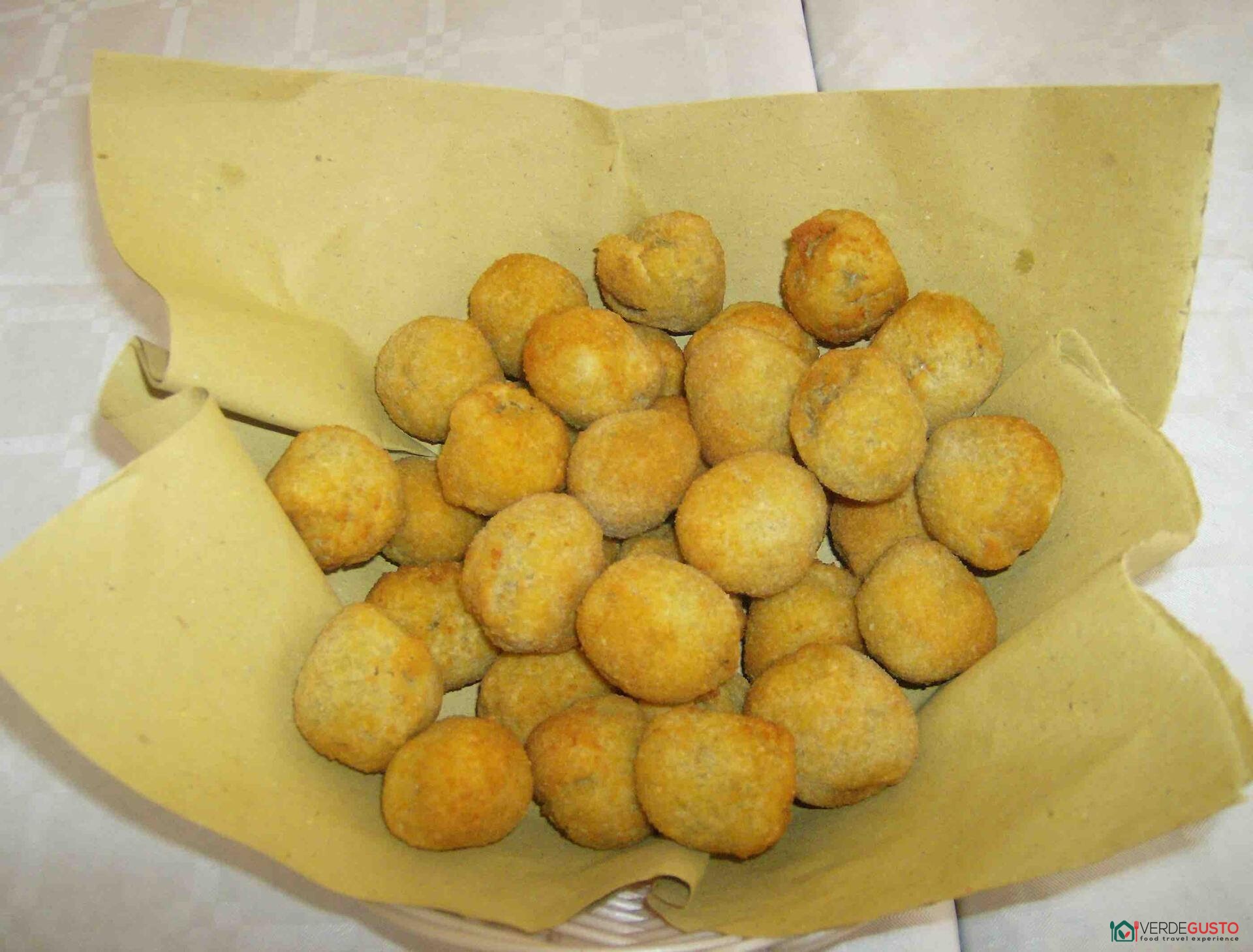
Olive all’ascolana
The Olive all’ascolana cannot be missing: a crunchy coating and a flavorful meat filling distinguish this delicious recipe handed down from generation to generation in the province of Ascoli Piceno.
Vincisgrassi
Then, moving on to first courses, the Vincisgrassi, a special baked pasta dish (don’t call it lasagna!) made of various layers of egg pasta sheets, seasoned with a mixed meat ragù enriched with offal. Some add béchamel, others prepare fresh pasta flavored with marsala or cooked wine, while others add rooster combs.
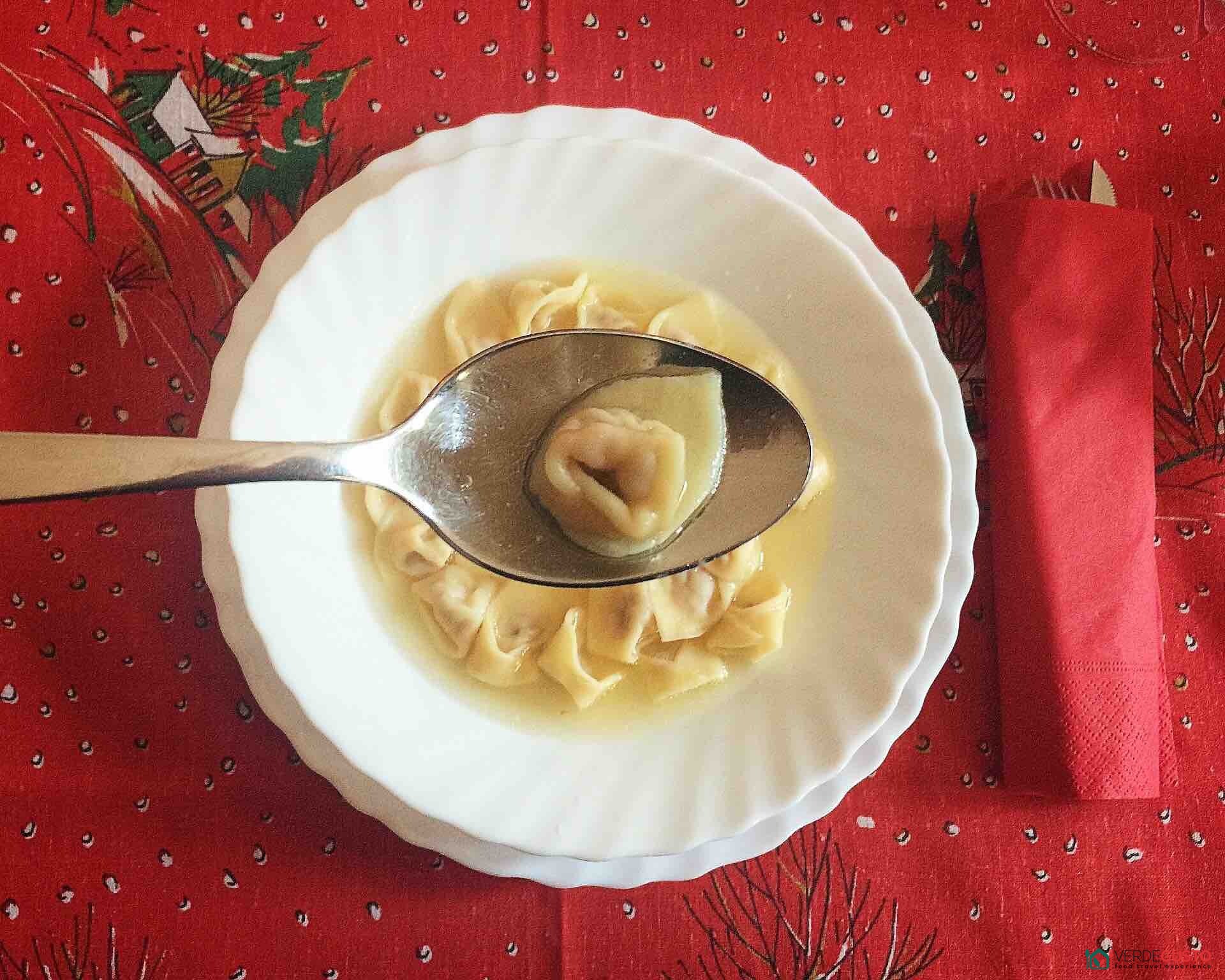
Cappelletti
And again, the Cappelletti cannot be missing from the table, a truly typical Marche Christmas dish to be enjoyed in broth. Below is the recipe, and the preparation is rigorous: as tradition dictates, it starts a week earlier and every family member must contribute!
Rabbit in salmì
For the main course, mention must be made of rabbit in salmì, an original recipe based on rabbit, tuna, and peppers that will certainly surprise you.

Christmas sweets from Marche
We come to the “dulcis in fundo”. Here you really can let your imagination run wild: you can prepare the Cavallucci di Apiro, sweets of peasant origin made with sapa, cooked grape must; the Frustingo, the typical Christmas sweet from Marche made with dried fruit, raisins, and figs; Lu serpe, typical especially of Falerone, so much so that it is said its recipe was invented in the monastery of this small town in the Fermano area. It takes the shape of a serpent made of shortcrust pastry with a filling of almonds and amaretti flavored with cinnamon. Finally, the Dolce 3-6-9, typical of the tradition of Offida, whose curious name comes from the proportions used to make it. It requires few and simple ingredients (milk, cocoa, flour, sugar, and lemon zest) and is very easy to prepare.